Laser-Sealed Paper Packaging: A New Era for Sustainable Manufacturing with AI Optimization
Explore how innovative laser technology seals paper packaging without glue, boosting recyclability. Discover how AI and IoT solutions optimize this process for efficiency, quality, and sustainability.

The global push towards environmental responsibility is fundamentally reshaping manufacturing and supply chains, with packaging at the forefront of this transformation. While paper has long been heralded as a more sustainable alternative to plastic, its widespread use in packaging often comes with a hidden environmental cost: the adhesives and plastics used for sealing. These additives complicate recycling processes, degrade the quality of recycled materials, and ultimately undermine paper's eco-friendly potential. However, a significant innovation from German researchers, detailed in recent studies such as those published in March 2026, promises to eliminate this problem entirely: laser-sealed paper packaging.
Revolutionizing Packaging with Additive-Free Sealing
The "Papure project," spearheaded by four Fraunhofer institutes, introduces a groundbreaking manufacturing process that utilizes a carbon monoxide laser to seal paper packaging without the need for traditional glues or plastics. This ingenious method transforms existing paper compounds into a natural, self-adhesive substance, creating packaging that is inherently more recyclable and truly sustainable. The core idea is to leverage the intrinsic properties of paper itself, rather than relying on external, contaminating materials. This breakthrough could mark a pivotal shift towards genuinely circular packaging economies, offering a clean, efficient, and environmentally superior alternative for various industries.
The Science Behind Laser-Activated Adhesion
The sophisticated process begins with a meticulous analysis of the paper's chemical composition and morphology. Researchers employ advanced techniques like scanning electron microscopy and X-ray photoelectron spectroscopy to ascertain the precise amounts of ingredients such as hemicellulose, cellulose, lignin, talc, and calcium carbonate. This detailed understanding is critical, as the varying ratios of these components directly influence the paper's suitability for laser sealing and the ultimate strength of the bond. Only paper types deemed suitable for additive-free sealing proceed to the next stage, ensuring optimal results.
Once approved, the paper surface is irradiated with a CO laser in a highly controlled manner. This intense, localized laser energy rapidly heats the paper's surface, initiating a chemical transformation. During this process, the natural lignin, hemicellulose, and cellulose within the paper are converted into short-chain compounds. These newly formed substances, which researchers refer to as "fusible cleavage products," remain on the paper's surface. When subsequently subjected to heat and pressure, these products act as a natural glue, creating a robust, tight seal without any external adhesive. This innovative technique not only provides a strong seal but also maintains the paper’s material integrity for easier recycling.
Enhancing Efficiency and Quality with AI and IoT
While the laser sealing technology itself is a remarkable advancement, its real-world implementation and widespread adoption require sophisticated control and optimization. This is where Artificial Intelligence (AI) and the Internet of Things (IoT) play a transformative role, elevating the Papure project from a laboratory success to an industrial powerhouse. Integrating AI and IoT into the manufacturing unit ensures precision, efficiency, and consistent quality, addressing the complex parameters involved in laser sealing.
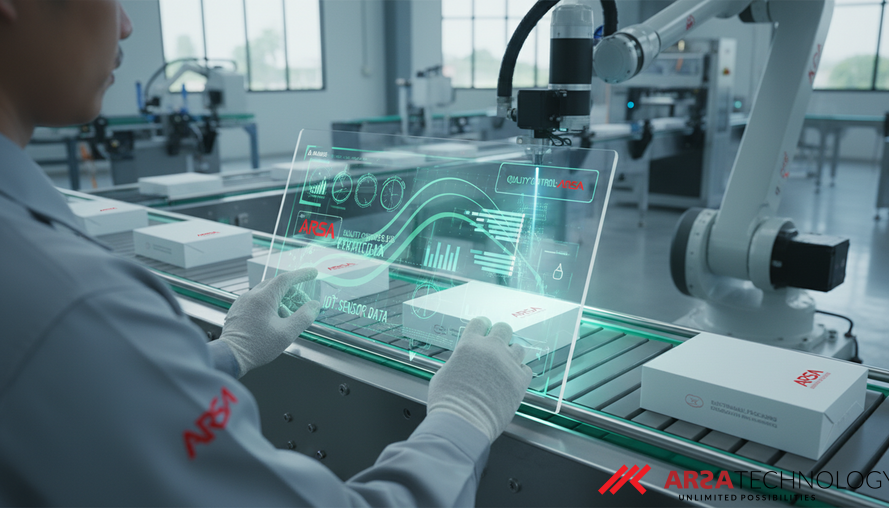
For instance, AI-driven AI Video Analytics can provide real-time quality control. High-resolution cameras, continuously monitored by computer vision algorithms, can immediately detect any imperfections in the laser-sealed bonds. This eliminates human error and drastically reduces waste by flagging and correcting issues instantaneously. Similarly, IoT sensors embedded throughout the production line can collect data on critical variables such as laser intensity, temperature, pressure, and even the micro-composition of the paper being processed. This constant stream of data feeds into predictive analytics models, which can then automatically adjust various settings to maintain optimal bond strength and maximize throughput. Companies like ARSA Technology, which has been experienced since 2018 in delivering AI and IoT solutions, are crucial in deploying such intelligent systems in manufacturing environments.
Operationalizing Advanced Sealing Technology
The researchers behind the Papure project are actively fine-tuning various parameters, including laser intensity, exposure duration, and paper seam design, to achieve maximum bond strength and processing speed. Early tests have demonstrated impressive results, with a 2cm seal, just 3mm wide, capable of supporting a significant load of 44 pounds. This illustrates the robust nature of the laser-induced bond, comparable to or exceeding traditional adhesive strengths.
To prove commercial viability, a laboratory-scale modular paper processing manufacturing unit has already been constructed. This prototype is designed to produce flat, four-sided paper bags, a common packaging format for items like toys. The goal is for this pilot machine to reach a production rate of 10 packages per minute by September. Beyond speed, the focus is also on miniaturizing and streamlining the laser and sealing modules for easier integration into existing production lines. The integration of advanced measurement systems is key, allowing for continuous assessment of seal quality and automatic parameter adjustments to meet specific bond strength targets. This adaptive manufacturing approach is critical for high-volume industrial applications.
Scalability and Industry Impact
The potential applications of laser-sealed paper packaging span numerous sectors, from food and beverage to pharmaceuticals, e-commerce, and consumer goods. Imagine a future where every paper-based carton or pouch is perfectly recyclable, contributing significantly to reducing landfill waste and minimizing environmental impact. For manufacturers, this innovation translates into several tangible benefits:
- Cost Savings: Reduced reliance on expensive adhesives and plastics, along with simplified recycling processes.
- Enhanced Product Integrity: Potentially stronger and more consistent seals, leading to less product damage and spoilage.
- Regulatory Compliance: Proactive alignment with increasingly stringent environmental regulations and consumer demands for sustainable products.
- Brand Reputation: A stronger brand image associated with ecological responsibility and innovative practices.
Implementing such a high-tech manufacturing process demands robust underlying infrastructure. Edge AI systems, like the ARSA AI Box Series, can be deployed directly on the factory floor to perform real-time AI processing close to the data source. This minimizes latency and ensures that critical decisions, such as adjusting laser parameters or diverting faulty packages, can be made instantaneously. Such solutions are vital for achieving the high efficiency and reliability required in modern manufacturing.
The development of laser-sealed paper packaging is a testament to the ongoing innovation in sustainable manufacturing. By harnessing the power of lasers and integrating advanced AI and IoT systems for optimization, industries can move closer to a truly green and efficient future for packaging.
To explore how AI and IoT can transform your manufacturing processes and improve sustainability, contact ARSA today for a free consultation.
Source: A new manufacturing process uses lasers to seal paper packaging instead of glue by Andrew Liszewski (The Verge).