Multi-Agent AI for Smart Home Energy Management: Beyond Basic Automation
Discover how multi-agent AI systems, like HEMA, revolutionize home energy management by enabling adaptive, human-centered collaboration for optimizing costs, enhancing comfort, and improving grid stability.

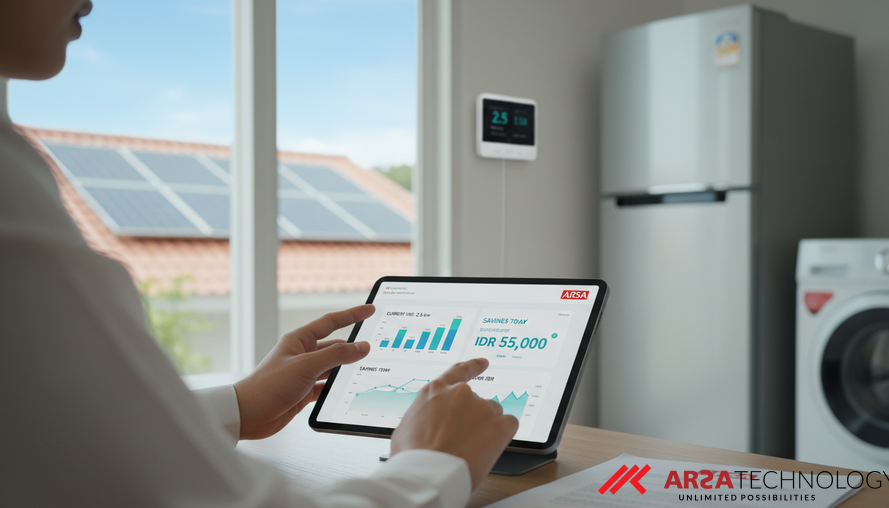
The Evolving Landscape of Home Energy Management
The demands on residential energy systems have become increasingly intricate. Modern homes are multifunctional hubs, often integrating distributed energy sources like rooftop solar photovoltaics, alongside high-power consumption technologies such as electric vehicle chargers. This complexity is further exacerbated by the growing unpredictability of global climate patterns. As a result, there's a critical need for advanced home energy management systems (HEMS) that can intelligently coordinate diverse energy assets, anticipate dynamic operating conditions, and balance competing objectives for various stakeholders. These systems are vital for optimizing energy costs, maintaining occupant comfort, enabling participation in demand response programs, and educating residents about their energy consumption habits. From a broader perspective, sophisticated HEMS also play a crucial role in mitigating peak demand, reducing load volatility, and enhancing grid reliability.
However, many current home energy management practices and commercial HEMS fall short. They often rely on centralized optimization, static rule-based logic, or basic single-agent control schemes embedded in smart thermostats or in-home displays. While these methods have provided some automation and efficiency gains, they frequently treat occupants as passive recipients of control actions. This approach offers limited support for continuous interaction, explicit preference elicitation, or transparency regarding system decisions. Consequently, these systems struggle to adapt to evolving user needs, constraining their ability to learn and deliver truly personalized, context-aware energy management over time.
The Promise of Large Language Models (LLMs) in HEMS
Recent advancements in Artificial Intelligence, particularly Large Language Models (LLMs), have opened new avenues for intelligent home energy management. LLMs are a class of AI models adept at understanding, generating, and reasoning over natural language at scale. Integrating these powerful AI capabilities into HEMS shows significant promise in addressing the long-standing limitations of traditional systems. LLMs can interpret and reason about specific household characteristics and user preferences, allowing HEMS to tailor responses and control actions adaptively to individual contexts. This not only enhances the quality of decision support but also improves the natural language interaction with occupants, leading to more transparent, interpretable, and human-centered energy management.
However, early LLM-integrated HEMS faced their own set of challenges, often exhibiting limited system customizability or a narrow functional scope. Furthermore, their performance was primarily evaluated through single-turn or single-task assessments, where systems responded to isolated queries. While useful for gauging basic capabilities, these evaluations failed to capture the dynamics of prolonged interaction, iterative user engagement, and the evolving nature of human-AI collaboration that is critical in real-world scenarios. Addressing these gaps requires a more robust architectural approach that fosters continuous, adaptive collaboration.
Introducing HEMA: A Multi-Agent Approach to Intelligent Energy Management
To overcome these challenges and truly unlock the potential of AI in home energy management, a new study introduces the Home Energy Management Assistant (HEMA). This innovative system is a multi-agent AI architecture, designed to provide comprehensive, adaptive, and intelligent solutions for real-world HEMS use cases. Built using advanced frameworks like LangChain and LangGraph, HEMA offers full system customization and fine-grained control over agent behavior, enabling transparent modeling of agent roles, decision logic, and interaction flows. This level of customization allows HEMA to adapt precisely to the unique needs of any household.
HEMA operates by first employing a self-consistency classifier to accurately categorize user queries. It then dispatches these requests to three specialized agents:
- Analysis Agent: Responsible for processing data, running simulations, and providing quantitative insights.
- Knowledge Agent: Specializes in retrieving information, explaining concepts, and offering context-aware advice using Retrieval Augmented Generation (RAG). RAG enhances the LLM's knowledge base with up-to-date and specific factual information, preventing hallucinations and improving accuracy.
- Control Agent: Executes actions within the home, such as adjusting smart devices or implementing energy-saving strategies.
These agents work collaboratively under a "Reasoning and Acting" (ReAct) mechanism, a sophisticated approach where the AI reasons through a problem and then acts based on that reasoning, iteratively refining its approach to achieve optimal outcomes. This contrasts sharply with simpler systems that might only respond or only act in isolation. ARSA Technology implements similar sophisticated AI systems, such as its AI Video Analytics, which processes complex visual data in real-time to provide actionable insights for various industries.
Rigorous Evaluation and Proven Performance
The effectiveness of HEMA was rigorously assessed through two comprehensive experimental analyses, utilizing an "LLM-as-user" approach. This innovative evaluation method uses one LLM to simulate diverse user personas and scenarios, interacting with HEMA as a real user would, allowing for scalable and reproducible testing under interaction-intensive conditions.
The first analysis focused on HEMA's analytical and informative capabilities, using combinatorial test cases of various user personas and differing scenarios. HEMA was compared against three alternative system configurations: a "vanilla" LLM (a basic, unenhanced language model), an LLM with analytics tools, and an LLM utilizing Chain-of-Thought (CoT) prompting (a technique that guides the LLM through a series of logical steps). The second analysis evaluated HEMA's control capabilities across various specific control scenarios.
Out of 295 test cases, HEMA achieved an impressive 91.9% goal achievement rate. It successfully fulfilled user requests while providing high levels of factual accuracy, action correctness, interaction quality, and system efficiency. Notably, HEMA significantly outperformed the alternative system configurations, particularly in tasks requiring domain-specific knowledge, adaptive personalization, or multi-step reasoning. This robust performance demonstrates the clear advantages of its multi-agent, highly customizable architecture in real-world energy management applications. For organizations seeking similar high-accuracy solutions for specific operational tasks, ARSA offers the AI BOX - Basic Safety Guard for industrial compliance or the AI BOX - Traffic Monitor for smart infrastructure.
The Significance of Multi-Agent HEMS for Human-AI Collaboration
The development and successful evaluation of HEMA represent a significant advancement in human-centered design for LLM-integrated HEMS. The study highlights the feasibility and substantial value of agentic architectures in managing the complexities of home energy use. By providing fine-grained, code-level control over agent behavior, such systems can explicitly model roles, decision logic, and interaction flows, leading to full transparency and customizability that was previously unattainable. This is crucial for fostering sustained and adaptive human-AI collaboration, ensuring that AI systems enhance, rather than dictate, occupant decisions.
HEMA's systematic comparative evaluation also clarifies the trade-offs involved in architectural complexity versus performance. It definitively shows that sophisticated agentic designs far surpass simpler prompt-based alternatives when tasks demand deep domain knowledge, personalized adaptation, or intricate multi-step reasoning. This is a vital insight for developers and enterprises planning to deploy AI solutions in complex environments. ARSA Technology, with its AI Box Series, similarly focuses on delivering production-ready, edge AI systems that prioritize real-world deployment realities over experimental limitations, offering robust performance for diverse industrial and commercial applications.
The multi-turn evaluation framework introduced in this study, combining an LLM-as-user simulation with 16 objective metrics, provides a scalable and reproducible method for assessing LLM-integrated HEMS under interaction-intensive conditions. This sets a new standard for evaluating AI systems designed for continuous, collaborative interaction, ensuring they can effectively support evolving user needs and scenarios over time.
In conclusion, the work on HEMA contributes significantly by demonstrating the practical value of multi-agent AI for intelligent energy management, clarifying the architectural requirements for effective human-AI collaboration, and establishing comprehensive evaluation criteria for these advanced systems.
Source: Jung, Wooyoung. "Multi-Agent Home Energy Management Assistant." arXiv preprint arXiv:2602.15219 (2024). Available at: https://arxiv.org/abs/2602.15219
Engineer Your Future with ARSA Technology
Ready to integrate advanced AI and IoT solutions into your operations? ARSA Technology specializes in developing and deploying custom AI solutions that turn complex challenges into intelligent, actionable insights. Explore our range of products and services, from cutting-edge AI video analytics to specialized edge AI hardware, and discover how our expertise can drive efficiency, enhance security, and unlock new value for your enterprise.
To learn more about how ARSA can tailor an AI or IoT solution for your specific needs, we invite you to contact ARSA for a free consultation.