NeuroAI: Bridging Neuroscience and AI for Smarter, More Efficient Systems
Explore NeuroAI, a revolutionary approach integrating neuroscience into AI for enhanced efficiency, safety, and understanding. Discover its impact on robotics, language, learning, and neuromorphic engineering.

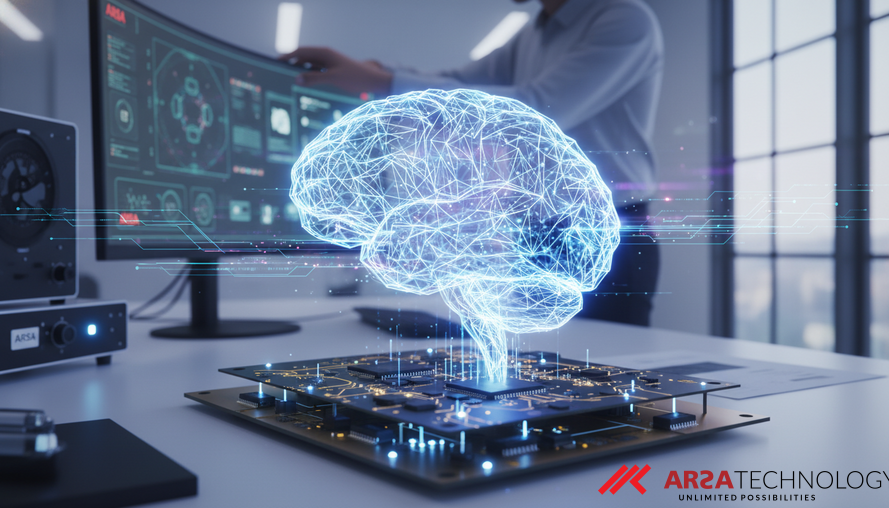
Neuroscience and Artificial Intelligence (AI) have both seen incredible advancements in recent years, yet their interconnectedness has often been limited. A recent workshop, summarized in the academic paper NeuroAI and Beyond, highlights critical areas where these two fields can synergize, proposing a transformative new paradigm: NeuroAI. This approach aims to create Neuroscience-informed Artificial Intelligence, promising to significantly improve AI algorithms' scope and efficiency while simultaneously deepening our understanding of biological neural computations.
Bridging the Divide: The Promise of NeuroAI
NeuroAI advocates for a deeper integration of neuroscience principles into the design and function of AI systems. Instead of merely drawing superficial inspiration, NeuroAI seeks to understand the fundamental mechanisms of the brain—from its learning processes to its structural organization—and translate these insights into more capable and robust artificial intelligence. This interdisciplinary effort extends beyond theoretical concepts, aiming for practical applications across various domains, fundamentally reshaping how we approach AI development.
Embodied Cognition: Intelligence Beyond the Abstract
A central theme in NeuroAI is the concept of embodiment. In the context of AI, embodiment refers to an agent's ability to interact with and learn from the physical world through a body, much like living organisms do. Current AI often operates in abstract data environments, disconnected from real-world sensory experiences and physical constraints. Embodiment is crucial for NeuroAI because physical interaction provides rich, diverse data that can ground intelligence, foster common sense, and enable more adaptive learning.
Developing embodied AI involves creating systems that can perceive, move, and manipulate objects in real time, building a deeper understanding of cause and effect. This tactile, sensory feedback loop could lead to AI that learns more efficiently, generalizes better, and adapts to unforeseen situations in dynamic environments. Imagine robots that learn new tasks not just from simulations, but by physically experiencing and correcting their movements, akin to how a child learns to walk or play. This approach could enhance industrial automation systems, which ARSA Technology offers, particularly in areas like heavy equipment monitoring.
Language, Communication, and Cognitively Plausible AI
The way humans acquire and use language offers profound lessons for AI. NeuroAI challenges us to build language models that are not just statistically powerful but also cognitively plausible and developmentally plausible. This means designing AI that learns language through interaction and experience, much like humans do from infancy, rather than purely through massive text datasets. Such models could better understand context, nuance, and intent, moving beyond superficial pattern matching to achieve genuine comprehension.
The workshop participants also raised concerns about cognitive atrophy from over-reliance on AI, emphasizing the need for AI that augments human capabilities rather than replacing them entirely. By studying how the brain processes information and guards against biases, NeuroAI could lead to more aligned AI systems that enhance human reasoning. This holistic view of language and communication, informed by neuroscience, is vital for developing AI that interacts more naturally and ethically with humans.
Robotics: Efficiency, Safety, and Biological Grounding
Current Deep Learning (DL) models are powerful but often computationally intensive. NeuroAI seeks inspiration from the brain's remarkable energy efficiency to design more sustainable robotic systems. The human brain, for instance, operates on roughly 20 watts of power while performing complex tasks that challenge supercomputers. Applying biological principles to robotics could drastically reduce the energy footprint of AI-powered machines, making them more practical for long-term deployment in various industries.
Moreover, the drive for safety and reliability in robots is paramount. Neuroscience provides models for how biological systems achieve robustness and adapt to unexpected situations. By incorporating principles like hierarchical stacks (layered control systems) and distributed control (where intelligence is spread across different components), robots can be designed to be more resilient and certifiably safe, especially in critical applications. For example, ARSA's AI Video Analytics can enhance robot safety by monitoring their operational environments and detecting anomalies in real time.
This biological grounding extends to full-stack codesign, where hardware and software are developed in tandem, much like the brain's integrated structure. Such an approach could lead to robots with superior performance and adaptability, crucial for challenging environments in manufacturing, logistics, and mining, where solutions like Industrial Automation: Heavy Equipment Monitoring & Product Defect Detection are invaluable.
Learning in Humans and Machines: Towards Lifelong Intelligence
One of the most significant challenges for AI is learning continuously from real-world interactions without forgetting previous knowledge – a concept known as lifelong learning. Inspired by human learning, NeuroAI aims to develop AI architectures that can adapt over their lifetime, process new information, and store it efficiently. This involves understanding how the brain handles temporal dynamics and continually updates its internal models.
Key areas of focus include:
- Robustness: Creating AI systems that can withstand unexpected inputs or disruptions, similar to how human cognition remains stable despite sensory noise.
- Modular Learning: Developing AI that can learn specific skills or pieces of information and integrate them into a broader knowledge base without having to retrain the entire system from scratch. This avoids the high computational costs of retraining massive foundation models.
- Common Sense: Building AI agents that possess an intuitive understanding of the world, going beyond learned patterns to grasp fundamental causal relationships.
- Energy Efficiency in Training: Reducing the substantial energy consumption associated with training large-scale AI models, drawing parallels with the brain's metabolic efficiency.
Neuromorphic Engineering: Building Brain-Inspired Hardware
**Neuromorphic engineering is the field dedicated to designing hardware that mimics the biological structure and function of the brain. This involves moving beyond traditional von Neumann architectures to create chips that process and store information in integrated, highly parallel ways, much like neurons and synapses. A critical question is whether binary spikes**—the simple electrical impulses used by biological neurons—are still the most effective way to represent and transmit information in future NeuroAI systems, or if more complex signaling methods are required.
The goal is to harness the brain's organizing principles, such as analog computation and local processing, to build highly energy-efficient and fault-tolerant AI. This field explores what biological components are truly necessary for advanced AI performance and how developmental neurobiology can inform the creation of AI that "grows" and organizes itself more effectively. ARSA Technology, an AI and IoT solutions provider experienced since 2018, leverages edge AI with its AI Box Series to deliver real-time, privacy-first video analytics, demonstrating the shift towards more localized and efficient processing inherent in neuromorphic ideas.
The Future of NeuroAI: A Transformative Outlook
The workshop laid out an ambitious roadmap for NeuroAI:
- 5-year Outlook: Expect to see the first demonstrations of NeuroAI principles leading to more energy-efficient AI systems. Progress in embodied cognition will enable robots with greater autonomy and learning capabilities in unstructured environments.
- 10-year Outlook: NeuroAI is projected to significantly impact mainstream AI development, leading to a new generation of cognitive architectures that can learn throughout their lifetime and exhibit a rudimentary form of common sense.
- 20+-year Outlook: The long-term vision is for NeuroAI to fundamentally transform our understanding of both natural and artificial intelligence, potentially leading to truly general AI that can match or exceed human cognitive flexibility, while simultaneously deepening our insights into the human brain.
NeuroAI represents a paradigm shift, recognizing that the most powerful and efficient intelligence yet known resides within our own biological systems. By systematically exploring and integrating these biological lessons, AI can overcome current limitations and unlock unprecedented capabilities across all industries.
To learn more about how cutting-edge AI and IoT solutions can transform your operations, we invite you to explore ARSA Technology’s offerings. For a free consultation to discuss your specific needs, contact ARSA today.
Source: NeuroAI and Beyond, by Fellous, J.-M., Cauwenberghs, G., Fermüller, C., Sandamisrkaya, Y., & Sejnowski, T. (2026). Available at https://arxiv.org/abs/2601.19955