PDRNN: Revolutionizing Pedestrian Tracking with Modular AI and Sensor Fusion
Explore PDRNN, a modular AI system that fuses inertial and radio data for highly accurate pedestrian tracking in dynamic environments. Learn how its innovative architecture enhances real-time insights, reduces error, and adapts to complex movements for enterprise applications.

The Evolution of Pedestrian Tracking: Beyond Traditional Methods
Accurately tracking human movement, particularly in dynamic environments, is a persistent challenge across many industries, from smart cities to virtual reality. Pedestrian Dead Reckoning (PDR) systems aim to determine a person's current position, velocity, and orientation by continuously calculating their movement from a known starting point. While invaluable, traditional PDR relies on combining noisy and often biased data from various sensors. The core difficulty lies in effectively fusing these "loosely coupled" sensor streams—data that comes from different sources and at varying rates—especially when individuals are moving rapidly with high accelerations and quick changes in direction.
Existing methods often fall short. Classical approaches, such as those relying on fixed thresholds and kinematic constraints, struggle with unpredictable movements and sensor quirks. More recent machine learning (ML) models, while more sophisticated, often treat the entire tracking process as a "black box." This monolithic structure makes it difficult to understand how errors accumulate or to fine-tune specific components without redeveloping the entire system. To overcome these limitations, a new modular, AI-assisted approach called PDRNN has emerged, offering enhanced precision, robustness, and adaptability in complex, real-world scenarios, as detailed in the academic paper "PDRNN: Modular Data-driven Pedestrian Dead Reckoning on Loosely Coupled Radio- and Inertial-Signalstreams".
Addressing the Shortcomings of Current PDR Systems
Traditional PDR systems, despite their utility, are often hampered by several fundamental issues. They are typically designed around predefined thresholds and generic kinematic rules, which fail to account for the highly variable and non-deterministic nature of human motion. For instance, a system might use a fixed step length calculation, but this doesn't adapt well to individual gait differences or changes in speed. Moreover, sensors used in PDR, like accelerometers and gyroscopes (inertial sensors), are prone to noise and drift, leading to cumulative errors over time. This makes them particularly unreliable in situations characterized by high accelerations and rapid changes in orientation, such as sports or complex industrial environments.
While machine learning has promised a leap forward, many early ML-based PDR solutions adopted a "black-box" methodology. These systems, while sometimes achieving higher accuracy by modeling intricate movement patterns, often sacrifice transparency and control. When an error occurs, it’s challenging to pinpoint the source within the opaque model. This lack of granular control means that errors can propagate unchecked through the entire system, ultimately affecting the final position estimate. Furthermore, fine-tuning or updating a single aspect of the system often requires a complete overhaul, making continuous improvement costly and time-consuming. These issues underscore the need for a more flexible, transparent, and robust approach to pedestrian tracking.
Introducing PDRNN: A Hybrid, Modular AI Architecture
PDRNN (Pedestrian Dead Reckoning Neural Network) offers a significant evolution in motion tracking by proposing a modular hybrid AI-assisted system. At its core, PDRNN utilizes a recurrent neural network (RNN) architecture. RNNs are a type of artificial intelligence particularly adept at processing sequences of data, making them ideal for interpreting continuous sensor streams over time. This allows PDRNN to implicitly forecast asynchronous sensor data streams—meaning it can predict missing or delayed data points from various sensors, even if they aren't perfectly synchronized.
The key innovation of PDRNN lies in its modularity. Instead of a single black-box model, PDRNN treats each component of the PDR process—such as estimating orientation, velocity, or distance from inertial data—as an independent ensemble of machine learning models. An "ensemble" means multiple ML models work together to provide a more robust and accurate estimate. Crucially, these individual models not only estimate the key parameter means (e.g., the exact velocity) but also their variances (how uncertain the system is about that velocity). This explicit uncertainty estimation is vital for enhancing the system's robustness, as it allows the final fusion model to weigh data from different sources based on their reliability. For example, if a gyroscope reading is known to be less accurate in a certain environment, the system can give it less weight in the final calculation. This granular control over components makes PDRNN highly adaptable, allowing individual modules to be updated, replaced, or fine-tuned without disrupting the entire system, ensuring more accurate and resilient position estimates.
How PDRNN Transforms Real-Time Motion Tracking
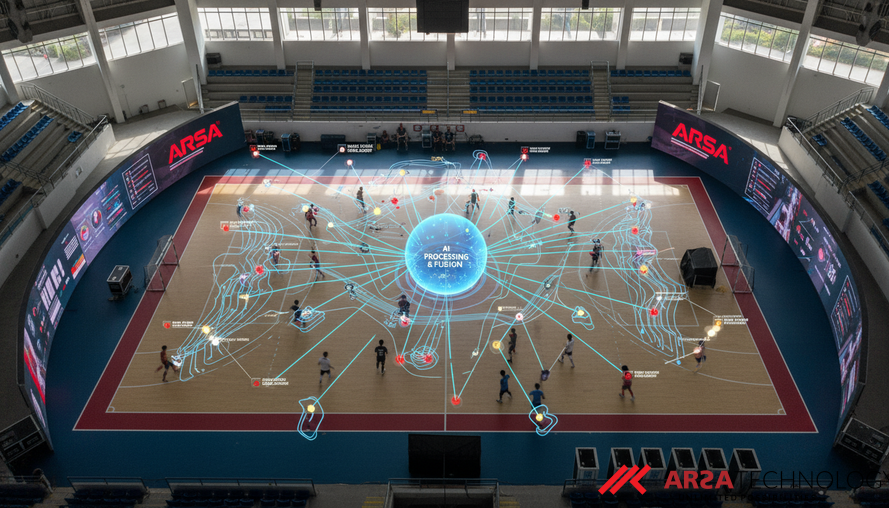
PDRNN’s modular design and intelligent sensor fusion capabilities translate into tangible improvements for real-world motion tracking. By treating each aspect of pose estimation as an independent ML task, the system can incorporate various data sources seamlessly. This includes accelerometer and gyroscope data for relative motion, and optionally, absolute positioning data from synchronized radio systems like 5G (FR1) for stabilization and improved accuracy. The final fusion model intelligently combines these outputs—position, velocity, and orientation—leveraging the uncertainty estimates from each component to deliver a highly robust and precise overall pose.
The impact of PDRNN is evident in its performance. Experiments conducted on dynamic sports movement data showcased superior accuracy and precision compared to both classic and other ML-based methods. For instance, in terms of resilience, PDRNN achieved a CEP 95 (Circular Error Probable 95%) of 0.14 meters, significantly outperforming traditional PDR (1.25 m) and even advanced ML-based systems like RoNIN (0.46 m). This means 95% of PDRNN's position estimates were within a 0.14-meter radius of the true position. Furthermore, PDRNN demonstrates impressive forecasting capabilities, achieving a CEP 95 of 0.05 meters at a 1-second prediction horizon. This capability to anticipate movement is critical for applications requiring proactive responses. By preventing the uncontrolled error accumulation common in black-box approaches, PDRNN offers a reliable foundation for capturing even the most unpredictable motion patterns, providing a level of control and flexibility that was previously unattainable.
Practical Applications and Business Value
The enhanced accuracy, modularity, and real-time forecasting capabilities of PDRNN unlock significant business value across a multitude of industries. In industrial and manufacturing settings, precise tracking of personnel can significantly improve safety. For instance, in hazardous zones or large facilities, PDRNN can provide real-time location data, ensuring compliance with safety protocols and enabling rapid response in emergencies. Integrating this with AI Video Analytics systems for restricted area monitoring or PPE detection can create a comprehensive safety and operational intelligence platform.
For smart cities and public institutions, PDRNN can contribute to optimized traffic management, crowd control, and emergency services. Accurate pedestrian flow analysis can inform urban planning, while real-time tracking in public spaces enhances security and resource deployment. In the logistics and transportation sector, precise indoor and outdoor positioning of workers or mobile assets can streamline operations, improve efficiency, and reduce misplacement errors in large warehouses or complex transit hubs. ARSA Technology, with its AI Box Series, offers edge AI solutions that can deploy such real-time analytics directly where the data is generated, ensuring low latency and privacy for mission-critical operations. The flexibility to integrate with existing infrastructure and provide full data ownership aligns perfectly with the needs of regulated industries.
The Future of Precision Localization
The PDRNN architecture represents a significant step forward in human motion estimation and general object tracking. By moving beyond rigid, threshold-based systems and the opaque nature of black-box AI, it provides a transparent, controllable, and highly accurate solution for complex, dynamic environments. Its ability to intelligently fuse diverse sensor data, explicitly manage uncertainty, and adapt to asynchronous inputs makes it a robust tool for scenarios demanding precision and reliability. While it introduces increased system complexity, the benefits of superior accuracy, proactive forecasting, and unparalleled component control far outweigh these considerations, paving the way for more sophisticated and trustworthy AI-powered localization systems. This approach ensures that future AI and IoT deployments can confidently bridge advanced research with practical operational realities, delivering measurable impact for enterprises globally.
Source: Bauer, P., Porada, A., Ott, F., Mutschler, C., & Feigl, T. (2026). PDRNN: Modular Data-driven Pedestrian Dead Reckoning on Loosely Coupled Radio- and Inertial-Signalstreams. arXiv preprint arXiv:2605.15252. https://arxiv.org/abs/2605.15252
To explore how advanced AI and IoT solutions can transform your operations and enhance precision localization, we invite you to contact ARSA for a free consultation.