Personalized Brain-Computer Interfaces: How Spiking Neural Networks & Ferroelectric Synapses Drive Ultra-Efficient Edge AI
Explore how advanced Spiking Neural Networks on ferroelectric hardware are enabling personalized, low-power Brain-Computer Interfaces for real-time EEG processing, driving the future of adaptive Edge AI.

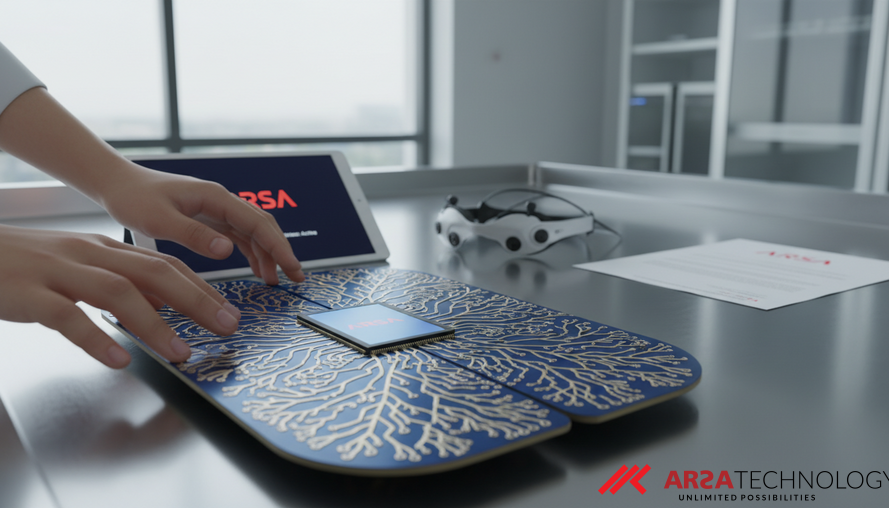
The Revolution of Personalized Brain-Computer Interfaces
Brain-Computer Interfaces (BCIs) represent a frontier in assistive technology, offering immense potential for individuals with severe motor impairments to communicate and interact with their environment. Imagine controlling devices with thought alone – a capability that promises to profoundly change lives. However, realizing this vision in practical, everyday applications presents significant challenges. Neural signals, captured through electroencephalography (EEG), are inherently complex and dynamic, varying significantly from person to person and even across different sessions for the same individual. This variability necessitates highly adaptive and personalized AI models that can learn and adjust in real-time.
Traditional AI models often struggle with the "extreme edge" demands of BCIs, especially when deployed on resource-constrained platforms like wearable or implantable devices. These applications require ultra-low latency (instantaneous decisions), minimal power consumption (long battery life), and limited heat generation (to ensure user comfort and safety). This research explores how innovative hardware and AI architecture, specifically Spiking Neural Networks (SNNs) coupled with ferroelectric memristive synapses, are paving the way for truly personalized and efficient BCI solutions.
Spiking Neural Networks: Mimicking the Brain for Efficiency
At the heart of this advancement are Spiking Neural Networks (SNNs) and the concept of neuromorphic computing. Unlike conventional Artificial Neural Networks that process data in continuous, dense streams, SNNs mimic the biological brain's sparse, asynchronous communication. Information is encoded in discrete "spikes" or events, offering a far more energy-efficient way to process time-series data like EEG signals. This event-driven paradigm is perfectly suited for handling the dynamic nature of biosignals while consuming significantly less power.
Neuromorphic computing takes this inspiration further, aiming to build hardware that fundamentally blurs the lines between memory and computation. This "in-memory computing" approach drastically reduces the energy overhead associated with moving data between separate processing and storage units, which is a major bottleneck in traditional computer architectures. For businesses looking to deploy advanced AI at the edge, solutions utilizing these principles, such as the ARSA AI Box Series, offer robust performance with minimal resource demands. These devices can transform existing infrastructure into intelligent monitoring systems without heavy cloud dependency.
Ferroelectric Synapses: The Hardware Backbone of Adaptive AI
To achieve this brain-inspired efficiency, a new generation of hardware is required. This is where memristive devices, and particularly ferroelectric synapses, come into play. These devices act as programmable "memory resistors" that can store and modify connection strengths (weights) within an SNN. Essentially, they function as artificial synapses, enabling the network to learn and adapt directly on the hardware. Ferroelectric synapses, made from ultra-thin ferroelectric films, offer several advantages crucial for adaptive learning at the edge. They are nonvolatile, meaning they retain their stored information even without power, and exhibit multi-level programmability, allowing for fine-tuned weight adjustments. Furthermore, they boast high endurance (withstanding over 10^12 cycles) and can be easily integrated with existing CMOS (Complementary Metal-Oxide-Semiconductor) technology.
However, deploying AI models on such hardware is not without its challenges. These memristive synapses have limitations, including finite weight resolution, variability between individual devices, complex and nonlinear programming dynamics, and a finite operational lifetime. Overcoming these practical constraints is key to realizing reliable and accurate real-world applications.
Smart Strategies for Hardware-Aware AI Deployment
This research addresses these practical deployment challenges head-on by exploring two complementary strategies. The first involves "device-aware training," where the SNN is trained using a precise model of the ferroelectric synapse's behavior, essentially teaching the AI to account for the hardware's quirks from the start. The second strategy focuses on "transfer learning": initially training the AI model in software, then transferring these weights to the hardware, followed by a low-overhead re-tuning process directly on the device.
A significant innovation introduced in this work is a "device-aware weight-update strategy." This method digitally accumulates subtle gradient-based adjustments and only translates them into discrete physical programming events on the ferroelectric device when a certain threshold is crossed. This smart approach effectively emulates the complex, state-dependent programming behavior of the hardware while drastically reducing the frequency of programming operations, thus extending the device's lifespan and conserving energy. For businesses leveraging ARSA AI API for integrating advanced AI into their applications, understanding these hardware-aware optimizations highlights the depth of innovation that makes such solutions robust and reliable.
Unlocking Personalized Performance at the Edge
The findings of this research are highly promising. Both deployment strategies—device-aware training and software-to-hardware transfer with re-tuning—achieved classification performance comparable to state-of-the-art software-based SNNs. This demonstrates the viability of deploying complex, adaptive AI on specialized neuromorphic hardware under realistic constraints. Crucially, the study also showed that "subject-specific transfer learning," where only the final layers of the network are retrained for a new user, significantly improved classification accuracy. This capability for rapid, personalized adaptation is vital for BCIs and other personalized Edge AI applications.
The success of these programmable ferroelectric devices in supporting robust, low-overhead adaptation in SNNs opens a practical pathway toward personalized neuromorphic processing of highly dynamic neural signals. This means future BCIs could offer a truly tailored experience, adapting to an individual's unique brain patterns with minimal effort. ARSA Technology, leveraging expertise experienced since 2018, is committed to translating such cutting-edge research into practical, scalable solutions for various industries, ensuring real-world impact.
Business Impact: The Future is Adaptive and Efficient
For businesses, particularly in healthcare, advanced manufacturing, and IoT, the implications of this research are profound.
- Enhanced Healthcare Solutions: This technology can lead to more effective and personalized assistive devices for patients with neurological conditions, potentially improving quality of life through highly responsive BCIs. Furthermore, it paves the way for real-time diagnostics on wearable medical devices, moving healthcare closer to the user. ARSA’s Self-Check Health Kiosk is an example of an AI/IoT solution improving health monitoring.
- Ultra-Low Power Edge AI: The ability to run complex AI models with extreme energy efficiency will extend the battery life of a myriad of IoT devices, from medical implants to industrial sensors, reducing maintenance costs and enabling deployment in previously inaccessible environments.
- Robust & Adaptive Systems: The development of hardware-aware training and adaptive re-tuning strategies ensures that AI systems can reliably perform, even with the inherent variability and limitations of advanced hardware. This means more stable, long-lasting intelligent systems.
- Data Privacy and Security: Processing data locally on edge devices, as emphasized by neuromorphic computing and this research, inherently enhances data privacy by minimizing the need to transmit sensitive information to the cloud.
The journey towards fully adaptive, personalized AI at the extreme edge is complex, but innovations like these are making it a tangible reality. By combining brain-inspired algorithms with specialized hardware, the foundation is being laid for a new era of intelligent systems that are faster, safer, and smarter.
Explore ARSA Technology's advanced AI and IoT solutions designed to tackle complex industrial challenges and drive your digital transformation. To learn more or discuss your specific needs, contact ARSA today for a free consultation.