Powering the Edge: Why High-Quality USB-C AA Lithium-Ion Batteries Matter for Modern Devices
Discover why the Zepath 3600mWh USB-C AA battery stands out for its performance and internal quality, and how reliable power sources are crucial for your AI and IoT edge deployments.

In an increasingly connected world, the performance and reliability of our portable devices are often only as good as their power sources. This is especially true for the growing ecosystem of Internet of Things (IoT) sensors and edge AI devices, where consistent energy delivery is paramount. While many focus on the capabilities of the devices themselves, the underlying battery technology plays a critical, often overlooked, role. Recent independent analysis has shed light on the superior design and performance of certain USB-C rechargeable AA lithium-ion batteries, demonstrating that not all power solutions are created equal.
According to a detailed review published by The Verge on April 8, 2026, which included intricate scans by Lumafield, the Zepath 3600mWh emerged as a top contender among USB-C rechargeable AA batteries. This particular model, sold in an eight-pack, impressed with its higher capacity, user-friendly design, and remarkable affordability, costing less per cell than traditional premium NiMH options like Panasonic's Eneloop batteries. Its robust performance was observed in demanding applications, providing significantly longer operational times in high-power devices such as a screen-modded Game Boy Advance and a 1,000-lumen flashlight. (Source: The Verge)
The Critical Difference: Internal Design and Charging Philosophy
A key takeaway from Lumafield’s comprehensive scanning of 12 different lithium-ion AA battery types was the stark contrast in internal build quality, particularly between batteries with integrated USB-C ports and those relying on external charging cases. Alex Hao from Lumafield revealed that many batteries with built-in USB-C ports exhibited design compromises. Some attempted to cram a tiny pouch cell into the battery’s can, while others utilized a "can-within-a-can" approach, nesting a smaller 14400 cell inside the AA form factor. These designs frequently suffered from poor alignment and inconsistent anode overhang, a defect that raises concerns about safety and long-term reliability.
The Zepath 3600mWh, in contrast, uses a clamshell USB-C charger for its cells, avoiding the internal compromises seen in integrated-port designs. Lumafield’s scans of multiple Zepath cells consistently showed high quality, characterized by straight alignment and even anode overhang. This meticulous internal construction allows Zepath to maximize the available space for electrodes within the battery can, leading to higher capacity and more reliable performance. Other batteries, despite strong brand reputations like Coast and Nitecore, displayed varying degrees of internal inconsistency, from "wonky" designs with low anode overhang to quality control issues like crooked terminals and inconsistent internal layers. Certain brands, such as Spyong, NTONPOWER, and CZVV, were found to have severe defects like deformation and virtually non-existent anode overhang, leading to their removal from major retail platforms. Even well-known brands like Paleblue showed anodes bending inward, posing a potential short-circuit risk.
Performance and Practical Considerations for Edge Deployments
Beyond internal integrity, the practical performance implications for devices at the edge are significant. The Zepath’s superior capacity translated directly into extended runtime in testing, outperforming integrated USB-C batteries by 1.5 to 2 hours in demanding applications. This extended operational window is crucial for AI Box Series and other edge AI deployments where device uptime directly impacts data collection and real-time insights. Moreover, the integrated USB-C ports on many competitor batteries proved cumbersome and tight, creating a risk of damage during repeated plugging and unplugging – a minor annoyance for consumers, but a potential failure point in industrial or commercial deployments.
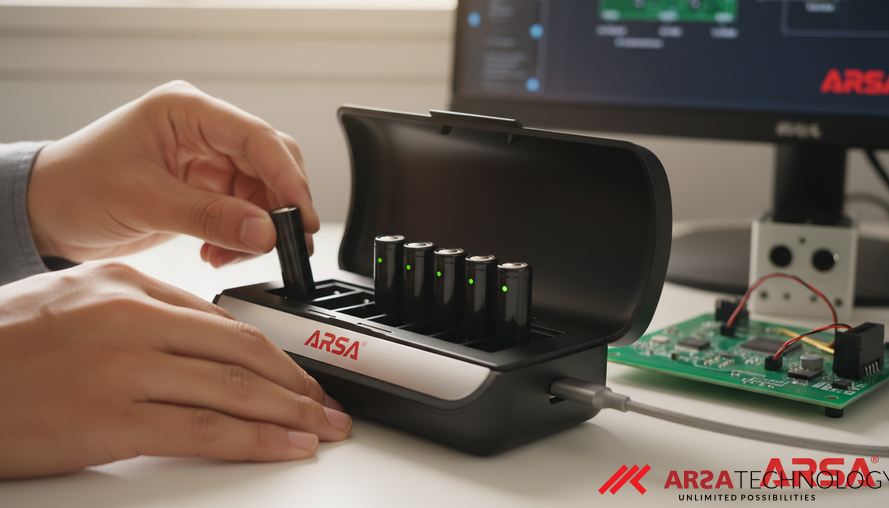
The Zepath's external charger also offers several advantages. It provides a secure magnetic snap closure, protecting the batteries during transport, and features intelligent charging. Built-in safety precautions prevent incorrect battery types (like alkaline or NiMH) from being charged, indicated by blinking red LEDs, while blinking green signifies charging and solid green indicates a full charge. This smart charging system, drawing about 10 watts for a full eight-pack, can be powered by standard USB-A-to-USB-C cables or even laptop USB-C PD chargers, offering versatile deployment options. For robust solutions like AI Video Analytics, stable and consistent power is non-negotiable, and the Zepath's regulated 1.5-volt output until depletion offers predictable performance for demanding electronics.
Battery Chemistry and Strategic Power Management
While lithium-ion AA batteries offer significant advantages, such as a consistent 1.5-volt output throughout their discharge cycle (unlike NiMH batteries, which gradually decline), it's important to recognize their inherent characteristics. Lithium-ion chemistry is more energetic and, despite metal casings offering some protection, inherently carries a flammability risk, though modern designs mitigate this. For devices that operate continuously at low power, NiMH batteries might still offer a longer overall lifespan, albeit with a slower voltage decay. Therefore, strategic power management and selection of the appropriate battery chemistry are critical decisions, especially for enterprise-grade solutions.
For organizations deploying mission-critical AI and IoT solutions, understanding these nuances is essential. The reliability and safety of components, even down to the batteries powering edge devices, contribute to the overall resilience and effectiveness of the system. ARSA Technology, having been experienced since 2018 in developing and deploying robust AI and IoT solutions, emphasizes the importance of every component in ensuring system integrity and performance.
Conclusion
The choice of battery may seem small, but for applications demanding precision, scalability, and measurable ROI—especially in enterprise AI and IoT—every component matters. The Zepath 3600mWh USB-C rechargeable AA battery exemplifies how superior engineering and thoughtful design translate into tangible benefits: higher capacity, better reliability, and competitive pricing. For businesses operating with critical edge devices, investing in high-quality power solutions like the Zepath ensures operational continuity and safeguards against unexpected downtimes.
To explore how robust power solutions integrate with advanced AI and IoT systems, or to discuss your specific operational challenges, we invite you to contact ARSA for a free consultation.