Proactive Traffic Safety: Predicting Secondary Crashes in Real-Time with Advanced AI
Discover how AI is revolutionizing traffic management by predicting secondary crashes in real-time, leveraging innovative hybrid models and edge computing to enhance road safety and mitigate congestion.

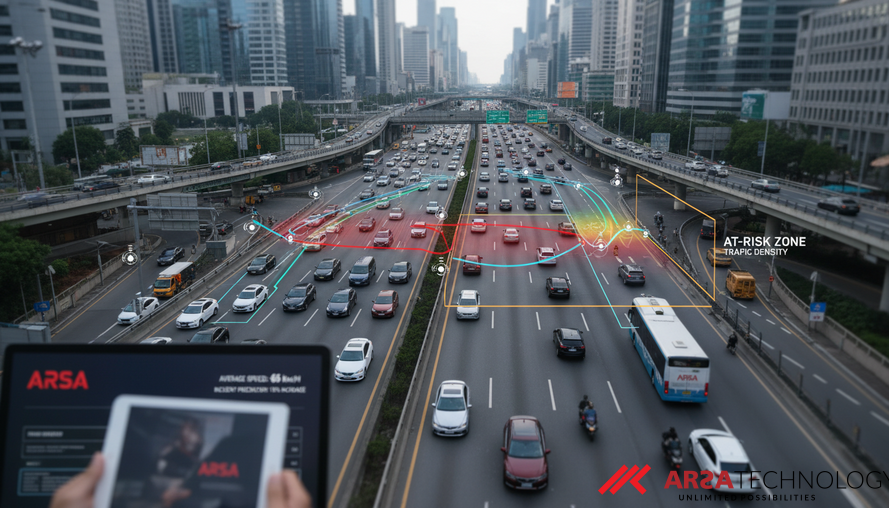
The Hidden Cost of Traffic Incidents: Understanding Secondary Crashes
Traffic incidents, particularly on busy freeway systems, are more than just isolated events; they often trigger a cascade of further problems. Among the most dangerous of these are secondary crashes, defined as incidents occurring within the spatial and temporal vicinity of a primary crash. While they might seem like a small percentage of overall crashes (estimated at 1-2% on freeways), their impact is disproportionately severe. These subsequent accidents dramatically reduce freeway capacity, exacerbate congestion, and lead to greater crash severity, resulting in significant loss to people and property. The Federal Highway Administration (FHWA) reports that secondary crashes contribute to a staggering 25% of traffic delays and are responsible for approximately 18% of all freeway crash fatalities in the US. This underscores the urgent need for more effective, proactive strategies to prevent them.
Historically, efforts to address secondary crashes have largely been reactive, focusing on identifying contributing factors after the events have occurred. Factors such as weather conditions, traffic congestion, and characteristics of the primary crash (e.g., type, duration, severity) have all been linked. However, the limitation of this passive approach is glaring: relying on data that is only available post-event—sometimes days later after police and transport agency verification—renders real-time intervention impossible. To truly mitigate these dangerous events, a shift from passive analysis to active prevention is crucial. This means developing systems capable of predicting secondary crash likelihood before they happen.
Revolutionizing Prediction: A Real-Time, Post-Crash Feature-Free Approach
The core challenge in real-time secondary crash prediction has been the dependence on "post-crash features." Imagine trying to prevent a second accident when you don't even have immediate, detailed information about the first one's impact or severity. Recognizing this critical gap, a new approach focuses on entirely excluding these unavailable post-crash features. Instead, the innovation lies in extracting real-time traffic flow and environmental data using a dynamic spatial-temporal window. This window defines a specific road segment and time period, allowing the system to analyze traffic conditions around both primary and potential secondary crash locations dynamically. This methodology transforms passive monitoring into active, intelligent forecasting, making it practical for modern traffic management systems.
The significance of this methodology lies in its ability to empower proactive traffic safety management. By capturing "high-risk" traffic patterns and precursors—such as high traffic volume, turbulent conditions, or adverse weather—the system can predict the likelihood of secondary crashes within a short timeframe (e.g., 5-10 minutes) using live traffic dynamics. This moves beyond traditional reactive methods, enabling transportation agencies to anticipate and prevent secondary crashes, thus reducing response times, easing congestion, and ultimately saving lives and minimizing economic losses. Solutions like AI Video Analytics, commonly deployed by ARSA Technology, embody this proactive spirit by converting passive CCTV feeds into actionable operational insights for traffic flow and incident detection.
The Hybrid Model: A Multi-Layered Intelligence System
To achieve robust real-time prediction without relying on elusive post-crash data, a sophisticated hybrid model system has been developed. This system comprises three distinct models, each contributing a unique perspective to the overall likelihood assessment, combined through an advanced ensemble method.
First, a primary crash prediction model is trained to assess whether an initial incident is likely to generate secondary crashes. This acts as the initial filter, identifying high-risk primary events based on live conditions. Then, for the segments where secondary crashes are most likely to occur (both at the primary crash site and upstream), two additional models refine the prediction:
Model 1 compares the traffic status before observed secondary crashes against traffic conditions observed before* "normal crashes"—those that did not lead to secondary incidents. This helps distinguish precursors unique to secondary crashes from general crash-related traffic anomalies. Model 2 takes a different comparative approach, evaluating traffic status before* secondary crashes against completely "crash-free" conditions. This helps identify the absolute deviation from normal, safe traffic flow that precedes secondary incidents.
By combining these three perspectives, the hybrid model gains a comprehensive understanding of the complex traffic dynamics leading to secondary crashes. This multi-faceted approach enhances the system's ability to discern subtle risk factors that a single model might miss.
Powering Prediction: Ensemble Learning and Dynamic Data
The robustness of this hybrid model is significantly amplified by employing an ensemble method—a technique that combines the predictions of multiple machine learning models to improve overall accuracy and stability. In this research, six distinct machine learning models, including advanced algorithms like XGBoost, Random Forest, and Convolutional Neural Networks (CNNs), are leveraged. Each of these models brings its strengths in pattern recognition and data analysis, and their collective "wisdom" is superior to any single model. A voting-based strategy then synthesizes the outputs from these six models across the three predictive stages, leading to a final, highly accurate secondary crash likelihood prediction.
Furthermore, the system addresses previous limitations by effectively extracting traffic status not only at the primary crash segment but also at crucial upstream secondary crash segments. This is critical because fluctuating traffic and congestion between the primary and secondary crash segments are major causal factors. The use of dynamic spatial-temporal windows ensures that relevant real-time traffic flow, weather, and road geometric features are continuously captured and analyzed across these critical zones. This comprehensive data capture, combined with the power of ensemble AI, ensures that the system is built on solid, real-time intelligence, providing accurate and stable predictions for proactive traffic management.
Demonstrated Impact and Practical Applications
The effectiveness of this innovative hybrid model has been rigorously demonstrated through experiments conducted on Florida freeways. The results are compelling: the proposed model successfully identified 91% of secondary crashes while maintaining a remarkably low false alarm rate of just 0.20. This means the system is not only highly accurate in detecting potential threats but also minimizes unnecessary alerts, ensuring that traffic management centers can focus their resources effectively. The model’s Area Under ROC Curve (AUC), a key metric for evaluating predictive power, saw a substantial improvement from values ranging between 0.654, 0.744, and 0.902 for the individual models to an impressive 0.952 for the hybrid system. This achievement surpasses the performance reported in previous studies, marking a significant advancement in the field. (Source: https://arxiv.org/abs/2602.16739)
From a practical standpoint, this technology offers substantial benefits for urban planners and traffic management agencies worldwide. By enabling proactive intervention, it allows for strategies such as dynamic speed limit adjustments, lane closure planning, and intelligent traffic rerouting to be implemented before secondary incidents escalate. This not only reduces the devastating human and economic costs associated with crashes but also optimizes traffic flow and reduces congestion, leading to more efficient and safer transportation networks. Companies like ARSA Technology, with expertise experienced since 2018 in developing and deploying enterprise AI and IoT solutions, can implement such systems. Their AI Box Series, for instance, provides the edge computing capabilities necessary for real-time, on-premise video analysis vital for intelligent traffic monitoring.
The Future of Proactive Traffic Management
This research represents a critical step forward in the evolution of active traffic management systems. By delivering real-time, accurate predictions of secondary crash likelihood without the need for post-event data, it addresses a long-standing challenge in transportation safety. The hybrid model, powered by ensemble machine learning and dynamic spatial-temporal data analysis, offers a blueprint for how AI can transform our roadways from reactive to truly proactive. This capability allows for immediate, informed decision-making, significantly enhancing overall road safety and operational efficiency. The integration of such intelligent systems into city infrastructure marks a new era where technology actively works to prevent accidents and optimize urban mobility.
Strategic technology transformation requires partners who understand both operational realities and the art of the possible. ARSA Technology combines deep engineering expertise with proprietary technology and a commitment to measurable business outcomes, making them ideal for high-stakes projects. To explore how advanced AI and IoT solutions can transform your traffic management and enhance public safety, we invite you to contact ARSA for a free consultation.