Revolutionizing 3D Design: How AI and Editable Models Transform Creative Industries
Discover Proc3D, an AI-powered system enabling real-time, text-based generation and parametric editing of 3D models with unprecedented speed and flexibility.

The Hurdles of Traditional 3D Modeling and Static AI Outputs
Creating high-quality 3D models has historically been a demanding process, requiring extensive expertise and countless hours. Even with the recent surge in generative AI, which can automate parts of this task, many existing methods fall short. They often produce static 3D representations, such as meshes or point clouds, which are difficult to modify once generated. This rigidity severely limits their utility for iterative design, where constant adjustments and refinements are part of the creative journey.
Imagine generating a complex industrial component or an architectural rendering, only to realize a minor detail needs changing. With traditional or current AI methods, even a small tweak might necessitate regenerating the entire model from scratch—a time-consuming and resource-intensive endeavor. This lack of editability hampers agility, stifles creativity, and drives up project costs, presenting a significant bottleneck for businesses striving for efficiency and innovation.
Introducing Proc3D: A New Era for Editable 3D Generation
Enter Proc3D, a groundbreaking system designed to overcome these limitations. Proc3D introduces a paradigm shift in 3D modeling by focusing on editable outputs and real-time modifications. At its core lies the Procedural Compact Graph (PCG), a novel representation for 3D models that encodes the fundamental algorithmic rules and structures required for their generation. This means instead of a static image, you get a "recipe" for the 3D model that can be easily changed.
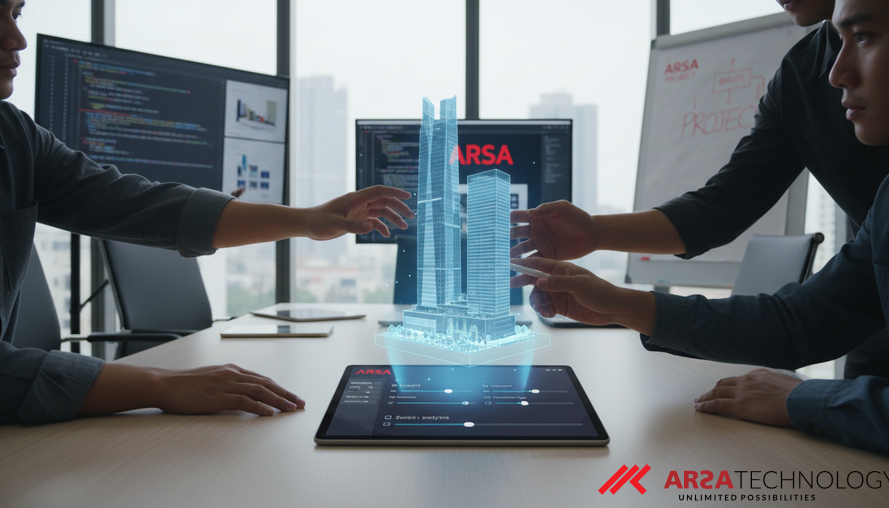
Unlike conventional methods that yield fixed 3D files, Proc3D's PCG exposes crucial parameters, making models intuitively adjustable. Users can manipulate these parameters manually through simple interfaces like sliders and checkboxes, witnessing real-time changes. Moreover, Proc3D leverages the power of Large Language Models (LLMs) to enable automated modifications through natural language prompts. This allows designers to simply describe the changes they want, and the AI translates those instructions into precise adjustments.
How Proc3D Transforms the 3D Design Workflow
The Proc3D system streamlines the entire 3D design and editing pipeline. Starting with a high-level text description, a Large Language Model (LLM) processes the input to construct a Procedural Compact Graph (PCG). This graph is then interpreted into formats compatible with popular 3D modeling engines like Blender or Unity3D, enabling immediate visualization and use.
The real magic happens during the editing phase. If a user wishes to modify the 3D model, they can simply provide new text prompts. The LLM intelligently integrates these instructions, updating the PCG, and consequently, the 3D mesh is regenerated almost instantly. This iterative, text-driven modification capability empowers designers to experiment freely, accelerate their workflows, and achieve precise results with unprecedented speed. This approach aligns with modern digital transformation initiatives, similar to how AI Video Analytics transforms raw video into actionable data for businesses.
Beyond Static: The Power of Procedural Compact Graphs (PCGs)
The Procedural Compact Graph (PCG) is central to Proc3D's revolutionary capabilities. Traditional 3D representations like meshes (collections of interconnected polygons) or point clouds (sets of data points) are essentially static snapshots. Editing them requires complex algorithms to rebuild large portions of the model, which is why even minor changes can be so time-consuming. PCGs, however, function like a blueprint that describes how the model is built, not just what it looks like.
This "language-native, engine-agnostic" graph representation encodes 3D objects as a compact sequence of high-level operations. Think of it as a set of instructions: "create a cube, then stretch it, then add a cylinder to the top." Each of these operations has parameters that can be easily tweaked. This not only makes the 3D representation much smaller and more efficient (Proc3D achieves 4–10 times more compact representations than traditional code-based descriptions) but also exposes these parameters directly to the user. This allows for localized, real-time edits without the need for a complete regeneration of the model, drastically speeding up the design process.
Tangible Benefits for Businesses: Speed, Accuracy, and Flexibility
The practical implications of Proc3D for businesses are substantial. The system offers a remarkable 400x speedup in editing efficiency compared to conventional methods that demand full regeneration for every modification. This means designers can iterate on ideas hundreds of times faster, leading to significantly reduced design cycles and faster time-to-market for products. This kind of efficiency gain is critical in today's competitive landscape, much like the operational improvements seen with ARSA's AI Box Series in various industrial applications.
Furthermore, Proc3D enhances the alignment between generated 3D models and their text descriptions, improving ULIP scores by 28%. This means the AI understands user intent more accurately, resulting in 3D models that better match the initial textual prompts. This precision minimizes rework and ensures the final product aligns perfectly with creative visions. For organizations across various industries, such advancements translate directly into improved ROI and streamlined workflows.
Real-World Impact and Future Implications
Proc3D’s ability to generate text-aligned, editable 3D models with precise, real-time parametric adjustments opens up exciting possibilities across numerous sectors. In manufacturing, engineers can rapidly prototype and modify industrial designs, testing variations with unprecedented speed. Architects can iterate on building designs, adjusting parameters on the fly based on client feedback. The entertainment industry can create dynamic 3D assets for games and films, making complex scenes easier to modify and animate.
This innovation also has profound implications for creative professionals who may not have deep 3D modeling expertise but can articulate their vision in natural language. It democratizes access to advanced 3D content creation, making it more intuitive and accessible. For companies like ARSA Technology, which specializes in leveraging AI and IoT for digital transformation, solutions like Proc3D highlight the potential for intelligent automation to revolutionize design and operational processes. By integrating AI-powered insights, businesses can achieve faster, safer, and smarter outcomes.
Ready to explore how AI-powered solutions can transform your design workflows and operational efficiency? Learn more about cutting-edge AI technologies and contact ARSA for a free consultation.