Revolutionizing AI: Zero-Shot Human-Object Interaction Detection with MLLMs
Explore how Multi-modal Large Language Models (MLLMs) are advancing zero-shot human-object interaction (HOI) detection, enabling AI to understand complex scenes and unseen interactions for real-world applications in robotics, surveillance, and autonomous systems.

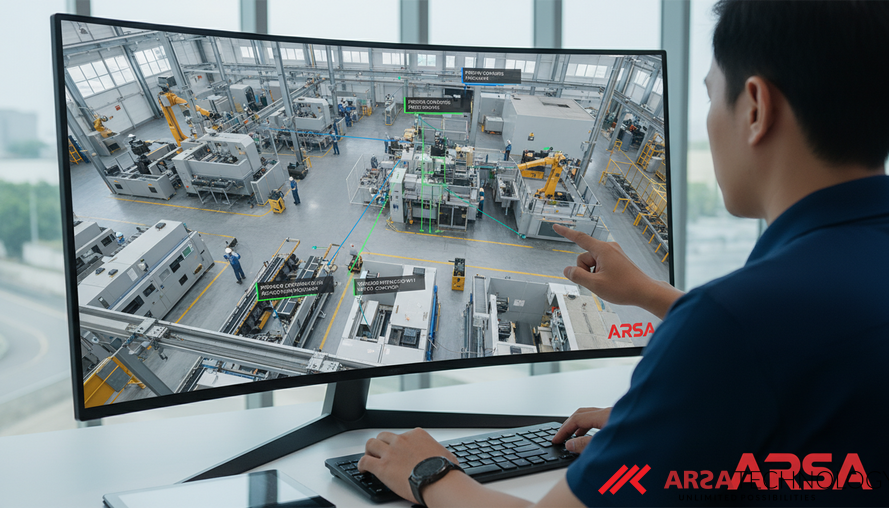
Human-Object Interaction (HOI) detection is a critical frontier in artificial intelligence, offering a deeper understanding of visual scenes by not just identifying objects and people, but also how they interact. Imagine an AI system that can not only see a person and a bicycle but also discern if the person is "riding a bicycle," "holding a bicycle," or "repairing a bicycle." This capability provides fine-grained insights crucial for a myriad of real-world applications, from enhancing robotic manipulation and autonomous driving to advanced video surveillance and image captioning. However, a significant challenge arises when these systems need to recognize interactions they haven't been explicitly trained on – a task known as "zero-shot HOI detection."
Traditional AI models often struggle with this combinatorial diversity, as the sheer number of possible interactions between humans and objects is vast. Recent research published at ICLR 2026 by Shiyu Xuan, Dongkai Wang, Zechao Li, and Jinhui Tang introduces a groundbreaking approach to tackle this problem, leveraging the power of Multi-modal Large Language Models (MLLMs) to dramatically improve interaction recognition and system flexibility.
The Challenge of Understanding Human-Object Interactions
Current HOI detection methods typically fall into two categories: two-stage methods that first locate humans and objects, then analyze their interactions; and one-stage methods that predict human-object-interaction triplets simultaneously. While significant progress has been made, these methods face several limitations, especially in zero-shot scenarios. Many rely on Vision-Language Models (VLMs) like CLIP, which, while effective for general image-text understanding, often lack the fine-grained visual detail required to differentiate subtle interactions. For instance, distinguishing between "holding a cup" and "drinking from a cup" requires a nuanced understanding of visual cues.
Furthermore, existing solutions often tightly couple interaction recognition with a specific object detector. This creates a rigid system where any change to the object detection component necessitates retraining the entire HOI system, limiting independent improvements and deployment flexibility. Such coupling means that the generalization capacity of the entire system is constrained by the weakest link, struggling to balance generalized VLM features with fine-grained detector details. This dependency restricts real-world adaptability, particularly in environments where new object types or interactions frequently emerge, making it difficult for enterprises to deploy AI that can continuously learn and adapt without costly overhauls.
Unlocking Potential with MLLM-Based Interaction Recognition
The novel framework addresses these limitations by proposing a decoupled approach: separating the task of object detection from interaction recognition (IR). This fundamental shift allows the system to integrate with any advanced object detector, becoming "detector-agnostic." The core innovation lies in harnessing Multi-modal Large Language Models (MLLMs) for interaction recognition. Unlike simpler VLMs, MLLMs are trained on vast datasets of image-text pairs and instruction-following tasks, endowing them with superior cross-modal generalization capabilities. This means they can understand and interpret complex visual contexts in relation to textual descriptions far more effectively.
By formulating interaction recognition as a visual question answering (VQA) task, the system encodes both the human-object pair information and a list of candidate interactions into a prompt for the MLLM. This allows the MLLM to "reason" about the scene and select the most appropriate interaction from a given list. A key feature of this approach is a "deterministic generation method," which constrains the MLLM's output to a predefined set of interactions, transforming its open-ended text generation into a precise multi-label classification. This enables "training-free zero-shot IR," meaning the system can recognize new, unseen interactions without requiring additional training data specific to those interactions. This dramatically reduces the burden of data collection and model retraining for enterprises.
Enhancing Performance and Efficiency with Advanced Modules
Despite the power of MLLMs for training-free zero-shot interaction recognition, the research identifies further opportunities for enhancement. The initial approach faced two main challenges:
- Spatial Information: Features extracted from simple bounding boxes of humans and objects might miss crucial pairwise spatial information, which is vital for understanding interactions (e.g., where a hand is in relation to a mug).
- Computational Overhead: Deterministic generation, especially with a large list of candidate interactions, could require multiple "forward passes" (individual calculations) through the MLLM, leading to significant computational cost.
To overcome these, the researchers introduced two innovative components:
- Spatial-Aware Pooling Module: This module integrates both the visual appearance of humans and objects with their precise spatial relationship. It captures how instances are positioned relative to each other, which is crucial for disambiguating visually similar interactions. For example, knowing if a person's hand is on top of or underneath an object can significantly impact the recognized interaction.
- One-Pass Deterministic Matching: To boost efficiency, this strategy re-conceptualizes generation as feature matching. Instead of running multiple passes, it allows the system to predict all candidate interactions in a single forward pass, significantly reducing computational overhead, particularly important when deploying these solutions at scale or on edge devices.
These components, when fine-tuned on a training set, further enhance both the performance and efficiency of the system. The result is a robust framework capable of superior zero-shot performance and strong cross-dataset generalization, demonstrating its ability to adapt to new datasets and environments without extensive re-calibration, outperforming methods like CMMP by 12.26% on tested benchmarks (Source: Zero-shot HOI Detection with MLLM-based Detector-agnostic Interaction Recognition).
Practical Implications for Enterprise and Industry
This advancement in zero-shot HOI detection holds profound implications for various industries. By providing AI systems with the ability to understand complex, unseen human-object interactions in real time, businesses can unlock new levels of automation, safety, and operational intelligence.
- Robotics and Automation: Robots can be programmed to understand and react to more nuanced human actions, improving collaborative robotics in manufacturing or logistics. For instance, a robotic arm could accurately distinguish if a worker is "passing" a tool or "retrieving" it, enabling safer and more intuitive human-robot collaboration.
- Autonomous Driving: Vehicles can better anticipate pedestrian and cyclist intentions by recognizing complex interactions with objects like shopping carts, phones, or even other vehicles, leading to safer navigation in dynamic urban environments.
- Surveillance and Security: Advanced AI video analytics can monitor restricted areas for specific, potentially unauthorized, interactions (e.g., "person tampering with equipment" vs. "person inspecting equipment"), even if those exact interactions weren't part of the initial training data. This capability can be integrated into systems like the ARSA AI Video Analytics to provide proactive security alerts and enhance situational awareness.
- Smart Retail and Customer Experience: Retailers can gain deeper insights into customer behavior by understanding interactions with products and displays, optimizing store layouts and personalize shopping experiences. With ARSA's AI BOX - Smart Retail Counter, for example, such advanced HOI detection could potentially offer granular insights into customer engagement with specific product categories, even for novel interactions.
- Industrial Safety and Compliance: In manufacturing and construction, AI can monitor for safety protocol adherence, such as "person operating machinery without PPE" or "person entering hazardous zone," improving worker safety and ensuring regulatory compliance. The flexibility of a detector-agnostic system means it can seamlessly integrate with existing CCTV infrastructure, turning passive cameras into active intelligence assets, a core benefit highlighted in products like the ARSA AI Box Series.
The ability to deploy AI that can understand "unseen" interactions without extensive retraining reduces development cycles and operational costs, making advanced AI solutions more accessible and adaptable for enterprises. This decoupled framework, especially with its emphasis on edge deployment capabilities, aligns perfectly with the need for privacy-by-design and low-latency processing in sensitive or high-stakes environments.
The Future of Intelligent Systems
This research represents a significant step towards creating more intelligent and adaptable AI systems that can reason about the visual world with human-like understanding. By decoupling core AI tasks and leveraging the advanced reasoning capabilities of MLLMs, future AI deployments will be more flexible, efficient, and robust. This paradigm shift will enable AI to move beyond simply identifying objects to truly comprehending the dynamic interplay within complex environments, transforming operational challenges into intelligent, actionable insights.
Ready to explore how advanced AI and IoT solutions can transform your operations? Our team specializes in implementing cutting-edge technologies that drive efficiency, enhance security, and unlock new business value. We invite you to explore ARSA's comprehensive solutions and contact ARSA for a free consultation tailored to your specific needs.