Revolutionizing Automotive AI: How Foundation Models are Transforming CAN Bus Data Analytics
Discover how foundation models, akin to LLMs, are transforming raw automotive CAN bus data into actionable insights for collision detection, predictive maintenance, and smart vehicle systems.

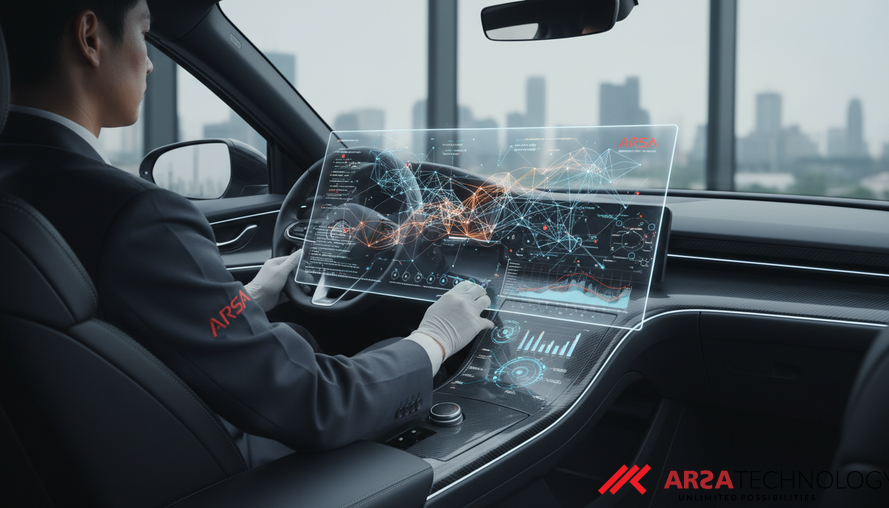
In the rapidly evolving landscape of automotive technology, vehicles are becoming sophisticated data centers on wheels. At the heart of this data exchange is the Controller Area Network (CAN) bus, an indispensable communication backbone that allows various electronic control units (ECUs) within a vehicle to share vital information. This data — from speed and braking signals to engine status — holds immense potential for innovative applications in both the automotive and auto insurance industries. However, unlocking this potential has traditionally been hindered by fragmented, task-specific AI models.
A groundbreaking academic paper, "Foundation CAN LM: A Pretrained Language Model For Automotive CAN Data" by Esashi et al. (2026), introduces a paradigm shift: treating CAN data as a "language" to enable a single, powerful AI foundation model that can adapt to diverse automotive tasks. This approach mirrors the success seen with large language models (LLMs) and computer vision foundation models, promising to revolutionize how vehicle data is processed and utilized.
The Challenge of Fragmented Automotive AI
Historically, leveraging CAN bus data for AI applications has been a piecemeal effort. Most existing systems involve developing and training isolated, task-specific models for each individual objective. For instance, a dedicated model might be built for collision detection, another for predictive maintenance, and yet another for driver behavior scoring. This fragmentation presents several significant drawbacks:
Firstly, it prevents shared representation learning. Each model essentially starts from scratch, learning its own interpretation of the raw CAN data, even if different tasks share underlying data patterns. Secondly, this approach incurs redundant data preparation and training costs. Every new application requires its own specialized preprocessing and model development cycle, which is resource-intensive. Finally, this limits cross-task generalization, meaning a model trained for one specific purpose struggles to adapt to even slightly different automotive challenges. This inefficiency can stifle innovation and slow down the deployment of new, intelligent vehicle features.
CAN Data as a Language: A Novel Approach
The concept proposed by Esashi et al. is elegant in its simplicity and profound in its implications: treat CAN data streams as a language, akin to human text. Just as large language models (LLMs) are pretrained on vast amounts of text to understand grammar, syntax, and context, a "Foundation CAN Model" can be pretrained on a massive corpus of unlabeled decoded CAN signals. This pretraining phase allows the model to learn deep, generalized representations of vehicular behavior and dynamics.
Once pretrained, this single backbone model can then be "fine-tuned" for a multitude of heterogeneous downstream tasks. This means that instead of building a new model for every application, developers can take the already intelligent foundation CAN model and adapt it with relatively small, task-specific datasets. This approach promises to streamline AI development, reduce costs, and significantly improve the adaptability and performance of automotive AI systems. For example, ARSA Technology leverages advanced AI Video Analytics to derive critical insights from diverse data streams, applying similar principles of intelligent data interpretation.
Overcoming Unique Technical Hurdles
While the language model paradigm offers immense benefits, applying it to CAN data comes with its own set of unique technical challenges that differ from traditional text or image processing:
One primary challenge is tokenization. Unlike text, which is composed of discrete symbols (words, punctuation), CAN signals contain a mix of discrete values (e.g., door open/closed) and continuous values (e.g., speed, engine RPM). Developing a unified, reproducible tokenization scheme that can effectively handle this mixed discrete-continuous data for large-scale pretraining is crucial. The paper proposes a novel scheme that integrates scaling and quantization to translate these diverse signals into a format understandable by the model.
Another significant hurdle is the temporal complexity of CAN data. Vehicle signals are inherently multi-scale time series, with dependencies ranging from ultra-short, millisecond-level sensor dynamics to long-horizon, trip-level patterns spanning hours. The foundation model must be capable of capturing these intricate dependencies across vastly different timescales. Furthermore, each individual trip introduces unique contextual factors—the driver's habits, environmental conditions, and the vehicle's specific state—demanding representations that can generalize across different trips while still accurately reflecting the dynamic behavior within a single journey. These are complex aspects that demand robust AI architectures.
Practical Impact Across Automotive and Insurance
The development of a foundation CAN model holds transformative potential for numerous applications, promising to deliver tangible business impacts across industries. In the automotive sector, this could lead to more sophisticated collision detection and avoidance systems, offering enhanced safety. Predictive maintenance, another critical application, would become far more accurate, allowing for proactive servicing based on nuanced vehicle data, thereby reducing downtime and operational costs. The enhanced capabilities of such a system can significantly improve the efficiency of solutions like ARSA's AI BOX - Traffic Monitor, enabling more precise predictions and management of vehicle flow.
For the auto insurance domain, the implications are equally profound. Better driver behavior scoring models could lead to more personalized insurance premiums and safer roads. Accurate point-of-impact detection and total loss assessment would streamline claims processing, reducing fraud and improving customer satisfaction. By generating more granular, context-rich insights from vehicle data, insurance companies can develop more precise risk models and offer innovative new services.
ARSA Technology's Alignment with Automotive AI Innovation
The principles driving the Foundation CAN model—leveraging AI for generalized insights, reducing fragmentation, and enhancing data utility—are at the core of ARSA Technology's mission. As a leader in AI and IoT solutions, ARSA understands the power of transforming raw data into actionable intelligence for global enterprises. Our expertise in computer vision, predictive analytics, and industrial IoT allows us to implement intelligent systems that align with the future vision of automotive AI.
For instance, our solutions for Smart Parking Systems utilize advanced AI and LPR technology to automate vehicle management, optimize access control, and provide real-time data analytics, directly addressing challenges in efficient vehicular data processing and utilization. We focus on delivering practical, immediately deployable solutions that reduce costs, increase security, and create new revenue streams for our clients across various industries. Our approach emphasizes privacy-by-design and the realities of practical deployment, ensuring that advanced AI delivers measurable ROI.
Conclusion and Future Outlook
The introduction of the Foundation CAN model marks a significant milestone in automotive AI, moving beyond fragmented, task-specific approaches to a more unified, intelligent paradigm. By treating CAN data as a language and applying foundation model principles, researchers have paved the way for more generalizable, efficient, and impactful AI applications in vehicles. This research, detailed in the paper "Foundation CAN LM: A Pretrained Language Model For Automotive CAN Data" by Esashi et al. (2026), demonstrates the viability of multi-objective downstream generalization for a critical automotive data source.
This development will accelerate digital transformation in the automotive and insurance sectors, enabling a new generation of smart, safe, and efficient vehicle-centric solutions. The future of automotive AI lies in these powerful, adaptable foundation models, turning complex streams of in-vehicle data into a comprehensive understanding of vehicular ecosystems.
To explore how ARSA Technology's AI and IoT solutions can transform your operations and to discuss potential implementations of cutting-edge automotive AI, we invite you to contact ARSA for a free consultation.
Source: Esashi, A., Lertpongrujikorn, P., Makino, J., Fujimoto, Y., & Salehi, M. A. (2026). Foundation CAN LM: A Pretrained Language Model For Automotive CAN Data. arXiv preprint arXiv:2602.00866. https://arxiv.org/abs/2602.00866