Revolutionizing Business Operations: The Power of LLM-Enabled Multi-Agent Systems
Explore how LLM-enabled multi-agent systems are transforming industries by combining specialized AI agents for rapid, efficient problem-solving. Discover their applications, benefits, and deployment challenges.

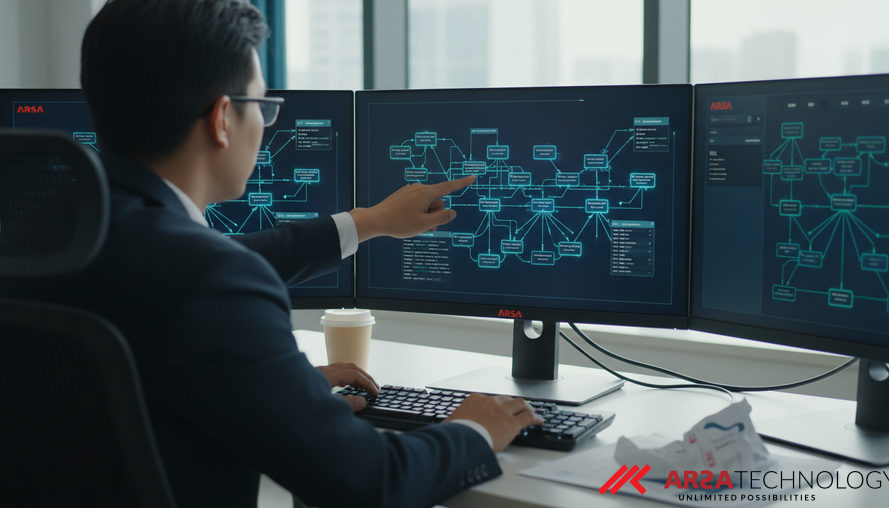
The Dawn of Collaborative AI: Multi-Agent Systems in the LLM Era
The landscape of artificial intelligence is rapidly evolving, moving beyond monolithic, single-purpose AI programs to sophisticated networks of collaborative intelligent agents. This concept, known as multi-agent systems (MAS), isn't new; it first emerged in the late 1970s with early research into distributed problem-solving. However, the recent convergence of powerful technologies like transformer architectures, Large Language Models (LLMs), and abundant computational resources has brought MAS from theory to practical, impactful application. These advancements have enabled AI agents to not only understand and generate human-like language with unprecedented fluency but also to reason, create, and even pass complex professional exams.
Since 2023, the sheer volume of LLM releases and the significant capital investment by leading multinational corporations underscore an unprecedented acceleration in AI innovation. This surge highlights the urgent need for scalable and systematic design paradigms to deploy these powerful models sustainably. By leveraging modern LLMs as their core reasoning engine, individual specialist AI agents can be developed. When these agents are equipped with well-designed prompts, access to up-to-date domain data, and the necessary tools, they become highly specialized for targeted tasks. This specialization dramatically improves their effectiveness while simultaneously reducing execution time and computational costs, paving the way for truly transformative business solutions.
Understanding LLM-Enabled Multi-Agent Systems
At its core, an LLM-enabled multi-agent system (MAS) functions much like a well-coordinated team of human experts. Instead of a single AI trying to solve an entire complex problem, MAS distributes the workload across multiple specialized AI programs, each powered by an advanced LLM. These agents work together in a network, handing off tasks and information seamlessly, leading to more efficient and comprehensive problem-solving.
To achieve this collaborative synergy, MAS relies on several key architectural components. Agent orchestration defines how these individual agents are managed and coordinated within the system, ensuring they work in harmony towards a common goal. Communication mechanisms dictate how agents share information, queries, and results with each other, similar to how team members communicate. Finally, control-flow strategies determine the sequence and logic of their interactions, ensuring tasks are processed in the most effective order. These components collectively enable the rapid development of modular, domain-adaptive solutions that can be quickly tailored to specific industry needs, offering a significant advantage over conventional, rigid AI approaches. Businesses looking to implement specialized AI functions at the edge, directly where data is collected, can explore solutions like the ARSA AI Box Series, which leverages local processing power for instant insights and enhanced privacy.
Driving Intelligence: Key AI Techniques in MAS
The effectiveness of modern multi-agent systems is significantly boosted by advanced AI techniques that enhance the reasoning capabilities and knowledge access of individual LLM agents. One such technique is Chain-of-Thought (CoT) prompting. This method guides an LLM to break down a complex problem into a series of intermediate reasoning steps before arriving at a final answer. This not only improves the accuracy of solutions but also provides an interpretable view of the model’s thought process, akin to showing your work in a math problem. An extension, Tree-of-Thought (ToT), further enhances this by allowing agents to explore multiple reasoning paths, much like brainstorming various solutions to a problem, leading to better results for highly complex tasks.
Beyond structured reasoning, tool integration is critical for specializing general-purpose LLMs. A standout example is Retrieval-Augmented Generation (RAG), which empowers LLMs to access and reason over external datasets not included in their original training. By indexing dynamic, domain-specific, or proprietary information sources, RAG enables LLMs to generate outputs that are not only informed but also contextually grounded and up-to-date. This makes RAG an industry standard for knowledge-intensive applications. As pioneering researchers highlight, the LLM itself often constitutes only about 20% of the entire system; the surrounding engineering, including robust tool integration and data management, is paramount for a complete, effective solution. For businesses seeking to integrate advanced AI functionalities and custom tools into their existing platforms, ARSA offers flexible ARSA AI API suites, designed for seamless integration.
Transforming Industries: Real-World Applications
The practical utility of LLM-enabled multi-agent systems has been empirically validated across diverse real-world scenarios. Through controlled pilot programs, prototypes were delivered within a mere two weeks, with pilot-ready solutions achievable within one month. This swift development cycle demonstrates a significantly reduced overhead compared to traditional AI development, leading to faster time-to-market and improved user accessibility. These systems prove highly effective across various industries, offering tangible benefits:
- Telecommunications Security: In the telecommunications sector, MAS can be deployed for sophisticated threat detection and proactive security measures. Agents can monitor network traffic, identify anomalies, and collaborate to flag potential cyber threats or fraudulent activities much faster than human operators, enhancing overall network resilience and data integrity.
- National Heritage Asset Management: For managing valuable national heritage assets, MAS offers automated solutions for cataloging, monitoring preservation conditions, and detecting potential damage or environmental risks. Agents can process vast amounts of historical data, analyze sensor inputs, and even help in engaging with the public by providing rich, context-aware information.
- Utilities Customer Service Automation: In utilities, MAS can revolutionize customer service. Specialized agents can handle a wide array of inquiries, from billing questions to outage reporting, providing instant, accurate responses. This reduces the burden on human agents, shortens waiting times, and significantly improves customer satisfaction. The system can also proactively identify common issues and provide solutions before customers even need to call.
Navigating the Complexities of AI Multi-Agent Deployment
While LLM-enabled multi-agent systems offer immense potential, their transition from prototype to full-scale production maturity presents inherent challenges. A primary concern is the variability in LLM behavior. Despite their impressive capabilities, LLMs can sometimes exhibit unpredictable responses, making it difficult to guarantee consistent performance in critical, real-world applications. This variability necessitates robust validation processes and continuous monitoring to ensure reliability and maintain high standards of operation.
Furthermore, the deployment of MAS requires careful consideration of scalability and governance. As solutions expand from pilot projects to enterprise-wide adoption, the system must be capable of handling increased data volumes and agent interactions without compromising performance. Establishing clear governance frameworks is also crucial to manage agent interactions, data privacy, and ethical considerations, particularly in sensitive domains. Addressing these limitations is essential for widespread enterprise adoption, requiring specialized expertise in integrating and maturing complex AI deployments. ARSA Technology, with its expertise in high-accuracy solutions such as AI Video Analytics, is well-versed in navigating these deployment complexities, ensuring solutions are reliable and scalable for production environments.
The Strategic Outlook: Maturing MAS Design Paradigms
The journey towards fully reliable, scalable, and governed LLM-enabled multi-agent systems is ongoing, but the trajectory is clear: they represent the future of complex problem-solving in AI. The empirical evidence strongly suggests that MAS can significantly reduce development overhead and enhance user accessibility, opening doors for innovation across countless industries. However, continuous research and development are critical to mitigate the inherent challenges posed by LLM variability and to solidify MAS design patterns.
ARSA Technology is at the forefront of this digital transformation, leveraging our deep expertise in AI and IoT solutions to help enterprises harness the power of these advanced systems. With a strong track record and experienced since 2018, we focus on delivering measurable ROI, enhanced security, and new revenue streams through carefully designed and meticulously implemented AI solutions. As industries continue to evolve, the ability to rapidly deploy adaptable, intelligent systems will be a key differentiator, and LLM-enabled MAS stand ready to deliver on that promise.
Ready to explore how LLM-enabled multi-agent systems can transform your business operations? Discover ARSA’s cutting-edge AI and IoT solutions and contact ARSA for a free consultation tailored to your specific needs.