Revolutionizing E-commerce Search: AI-Powered Relevance for Global Markets
Discover how AI-powered solutions, combining Chain-of-Thought prompting and LoRA, enhance e-commerce search relevance, user experience, and operational efficiency for businesses.

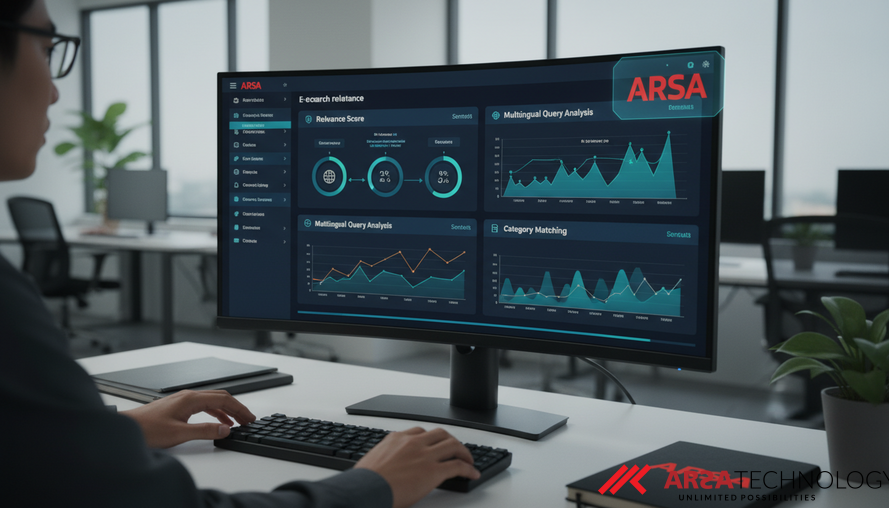
Revolutionizing E-commerce Search with Intelligent AI
In today’s globalized digital marketplace, e-commerce platforms are battling for every user click and conversion. At the heart of a successful online shopping experience lies the ability to deliver highly relevant search results, especially when users interact in diverse languages. The challenge of accurately matching a user's query with the perfect product category across different languages and cultural contexts is immense. Traditional AI systems, while effective, often rely on complex, resource-intensive architectures that can be slow, costly to maintain, and lack transparency in their decision-making process. This complexity often hinders rapid deployment and adaptation in fast-paced business environments.
However, recent advancements in artificial intelligence are paving the way for a new paradigm. A groundbreaking solution, which secured second place in the prestigious CIKM 2025 AnalytiCup Competition, demonstrates how a streamlined yet powerful framework can overcome these limitations. This innovative approach leverages advanced AI techniques like Chain-of-Thought (CoT) prompting and Low-Rank Adaptation (LoRA) to guide Large Language Models (LLMs) towards explicit, interpretable reasoning. By simplifying the underlying architecture and focusing on intelligent guidance, businesses can now achieve superior search relevance with significantly reduced computational overhead, enhancing both accuracy and efficiency.
The Challenge of Multilingual E-commerce Relevance
The dynamic world of e-commerce demands precision. Every search query is an opportunity to connect a customer with a product. Yet, accurately determining the semantic relevance between a user's query and a product category is a complex task, particularly in environments that support multiple languages and cater to various domains. A user searching for "waterproof jacket" in English might have the same intent as someone searching for "jaket anti air" in Indonesian, but the underlying product categories and attributes can vary significantly across different markets. Discrepancies in translation, product descriptions, or category hierarchies can lead to irrelevant results, frustrating users and impacting sales.
Existing solutions often grapple with these nuances by employing "ensemble systems" – essentially, multiple AI models working in concert to make a decision. While these systems can improve accuracy by combining strengths, they introduce substantial computational costs for training and inference, alongside a heavy maintenance burden. More critically, they often operate as "black boxes," offering little insight into why a particular search result was deemed relevant, making error diagnosis and generalization difficult. Large Language Models (LLMs) offer immense potential for understanding complex text, but without proper guidance, their multilingual outputs can sometimes be inconsistent or unstable, further complicating the relevance judgment process.
Unlocking AI Reasoning with Chain-of-Thought (CoT)
To address the opacity and complexity of traditional systems, the CIKM 2025 solution introduced a simplified framework that utilizes Chain-of-Thought (CoT) prompt engineering. Imagine breaking down a complex problem into smaller, logical steps, just as a human expert would. CoT prompting applies this principle to AI. Instead of expecting an LLM to arrive at a relevance judgment in one go, the task is decomposed into four sequential, interpretable subtasks:
- Translation: Accurately translating the user query into a common language for processing.
- Intent Understanding: Deciphering the user's true intent behind the query (e.g., "running shoes" implies a need for athletic footwear for exercise).
- Category Matching: Identifying the most semantically relevant product categories based on the understood intent.
- Relevance Judgment: Making a final decision on how relevant the product category is to the original query.
This structured approach transforms the AI’s decision-making from an opaque process into a transparent, multi-step inference path. By guiding the LLM through these explicit intermediate steps, the system enhances interpretability, allowing developers and businesses to understand the reasoning behind a relevance score. This is crucial for diagnosing issues, improving models, and building trust in AI-driven systems. For businesses aiming to implement advanced AI analytics, understanding the "why" behind results is as important as the results themselves. ARSA AI Video Analytics provides similar transparency for various operational insights, converting raw data into actionable intelligence.
Optimizing AI Deployment with Low-Rank Adaptation (LoRA)
Beyond intellectual interpretability, practical deployment hinges on computational efficiency. Large Language Models are, by nature, massive. Fine-tuning these models for specific tasks usually requires immense computing power and storage, making them prohibitive for many businesses. This is where Low-Rank Adaptation (LoRA) plays a transformative role. LoRA is an innovative technique that enables efficient adaptation of large pre-trained models without altering all their parameters.
Instead of retraining the entire model, LoRA introduces small, trainable "low-rank matrices" into selected layers of the LLM. This significantly reduces the number of parameters that need to be updated during fine-tuning, drastically cutting down on training costs, memory footprint, and computational resources. This CIKM 2025 solution successfully applied LoRA to a substantial base model (Qwen2.5-14B), achieving high accuracy and rapid inference speeds even under hardware constraints. The result is a powerful AI system that can process 20 samples per second on a single A100 GPU, offering a highly scalable and cost-effective solution for real-world e-commerce applications. Businesses looking to integrate sophisticated AI into their operations without a complete overhaul of their infrastructure can explore plug-and-play solutions. The ARSA AI Box Series, for instance, transforms existing CCTV systems into intelligent monitoring tools with minimal setup, demonstrating similar edge computing efficiency.
Achieving Tangible Business Impact: Faster, Smarter, More Interpretable AI
The findings from this competition underscore a vital shift in industrial AI. By combining structured prompting with lightweight fine-tuning, a single, simplified AI model can outperform complex ensemble systems while offering greater interpretability and efficiency. For e-commerce businesses, this translates into tangible benefits:
- Improved Search Quality and User Experience: More accurate relevance judgments lead to better search results, reduced customer frustration, and higher conversion rates.
- Enhanced Recommendation Precision: With a deeper understanding of query-category relevance, recommendation engines can offer more personalized and effective suggestions.
- Operational Efficiency and Cost Reduction: A simplified, efficient AI framework reduces the need for extensive computational resources and streamlines maintenance, leading to significant cost savings.
- Scalability for Global Markets: The ability to handle multilingual queries efficiently allows businesses to expand their reach and maintain consistent service quality across diverse linguistic regions.
- Actionable Insights: Interpretable AI decisions provide valuable data for optimizing product taxonomies, understanding customer behavior, and refining overall business strategies.
For retailers, insights into customer behavior are paramount. Solutions like the ARSA AI Box - Smart Retail Counter offer real-time analytics on footfall, queue lengths, and popular store areas, enabling data-driven optimization of physical retail spaces. Similarly, measuring the impact of outdoor advertising requires precise data, which the ARSA AI Box - DOOH Audience Meter provides by tracking audience demographics and engagement for digital billboards. These examples highlight ARSA's commitment to leveraging AI and IoT to deliver measurable business outcomes across various industries.
This competition success demonstrates that the future of industrial AI lies not necessarily in ever-more complex architectures, but in smarter, more interpretable, and resource-efficient approaches that deliver real impact. Businesses can now harness powerful AI to navigate the complexities of multilingual e-commerce with greater agility and confidence.
Ready to explore how AI-powered solutions can transform your e-commerce operations, enhance customer experience, and drive measurable growth? Discover ARSA's innovative AI and IoT solutions and contact ARSA for a free consultation.