Revolutionizing Elderly Care: Multi-Modal AI for Real-Time Fall Detection with Wearable Sensors
Discover how a novel multi-modal AI framework uses wearable sensors, deep learning, and attention mechanisms to achieve 98.7% accuracy in real-time elderly fall detection, enhancing safety and care.

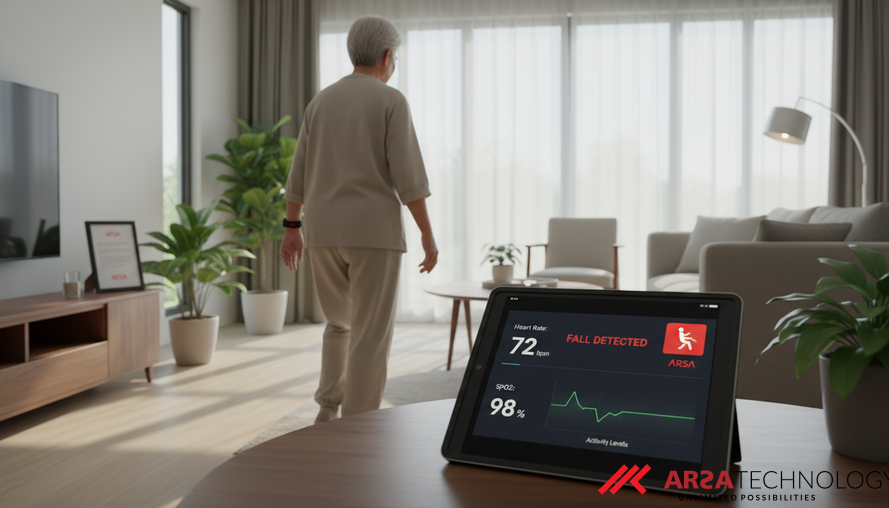
The global population is aging at an unprecedented rate, bringing with it a critical need for advanced healthcare and safety solutions. Among the most pressing concerns for older adults are falls, which represent a leading cause of injury-related deaths worldwide for individuals aged 65 and above. With over 37 million fall incidents annually requiring medical attention, the physiological and psychological consequences of delayed intervention—from severe fractures to prolonged immobility—underscore the urgent demand for accurate, real-time fall detection systems. Such systems are vital for enabling immediate response, thereby mitigating severe outcomes and significantly improving quality of life.
Traditional fall detection methods have historically relied on various technologies, ranging from environment-based sensors like cameras and pressure mats to wearable devices equipped with inertial measurement units (IMUs) such as accelerometers and gyroscopes. While wearable sensors offer the advantages of portability and enhanced privacy, many existing systems often fall short. They frequently depend on single-modality data, primarily acceleration signals, which can lead to high false alarm rates. Everyday motions like sitting down quickly or jumping can be misinterpreted as falls, diminishing trust and practical utility. Furthermore, conventional machine learning techniques, including Support Vector Machines (SVMs) and Random Forests, necessitate extensive, time-consuming "hand-crafted feature engineering," a process that limits their adaptability and generalization across diverse user populations and activity contexts.
Advancing Fall Detection with Multi-Modal Deep Learning
To overcome these limitations, a novel multi-modal deep learning framework, named MultiModalFallDetector, has been proposed, specifically designed for real-time elderly fall detection using wearable sensors (Source: Lijie ZHOU et al., 2026). This innovative approach integrates several advanced AI techniques within a unified architecture to enhance both accuracy and reliability. The framework moves beyond basic motion data by fusing information from multiple sources, offering a more comprehensive understanding of a user's state.
A key innovation is the use of a multi-scale Convolutional Neural Network (CNN) as a feature extractor. This allows the system to analyze motion dynamics at varying temporal resolutions, capturing both the rapid, transient impact of a fall and the sustained movement trends leading up to or following it. Unlike conventional methods that process data in isolation, this framework also integrates tri-axial accelerometer data (measuring linear motion), tri-axial gyroscope data (measuring angular velocity), and crucially, four-channel physiological signals. These physiological inputs include heart rate, blood oxygen saturation (SpO2), skin temperature, and galvanic skin response, providing complementary cues that can indicate stress or physiological disruption during a fall event, thereby significantly reducing false alarms. Providers like ARSA Technology leverage similar multi-modal data fusion techniques in their AI Video Analytics solutions, combining visual and other sensor data for robust insights across various industries.
Intelligent Processing: Attention Mechanisms and Targeted Loss Functions
The MultiModalFallDetector further enhances its intelligence through sophisticated deep learning components. It incorporates a multi-head self-attention mechanism, a cutting-edge technique that enables the model to dynamically weight informative time steps within the sensor data. This means the AI can "pay attention" to the most critical moments, such as the initial loss of balance or the precise instant of impact, which are vital for accurate detection. This dynamic focus helps the system discern actual falls from similar, harmless movements more effectively.
To address the inherent challenge of class imbalance—where fall events are rare compared to common daily activities—the framework adopts Focal Loss. Standard binary cross-entropy loss can struggle when one class is vastly underrepresented, leading the model to prioritize learning the abundant "non-fall" examples. Focal Loss, however, reweights these examples, ensuring that the model dedicates more learning capacity to the rarer, critical "fall" instances. Additionally, an auxiliary activity classification task is introduced. By simultaneously training the model to recognize various daily activities like walking, running, sitting, and lying, alongside fall detection, the system develops a richer, more generalizable understanding of human motion, which in turn improves its overall robustness for fall detection.
Real-World Performance and Edge Deployment
The effectiveness of this multi-modal deep learning framework was rigorously tested on the SisFall dataset, which is particularly relevant as it includes real-world simulated fall trials conducted by elderly participants aged 60 to 85. The results were highly impressive: the framework achieved an F1-score of 98.7%, a Recall of 98.9%, and an AUC-ROC of 99.4%. These metrics demonstrate significant outperformance compared to traditional machine learning and standard deep learning baseline methods, validating its potential for clinical relevance in geriatric care settings.
Crucially, the model boasts a sub-50ms inference latency on edge devices. This means that the AI processing occurs extremely quickly and locally, often directly on the wearable sensor itself or a small, nearby computing unit, rather than relying on distant cloud servers. This "edge computing" capability ensures real-time alerts, minimal delays, and significantly enhanced data privacy, as sensitive health data does not need to be continuously transmitted off-device. Such on-device processing capabilities are a hallmark of robust solutions for critical environments, similar to ARSA Technology's AI Box Series, which enables real-time intelligence at the source. The study also integrated a transfer learning strategy, pre-training the model on the UCI Human Activity Recognition (HAR) dataset before fine-tuning it on the SisFall dataset, further enhancing its ability to adapt and perform effectively in specialized elderly care scenarios.
Transforming Safety in Geriatric Care
The development of advanced AI frameworks like the MultiModalFallDetector represents a significant leap forward in elderly care technology. By combining multi-modal sensor fusion, sophisticated deep learning architectures, and efficient edge computing, these systems offer a practical and powerful solution to a global health challenge. The ability to detect falls with high accuracy and in real-time can lead to immediate emergency response, drastically reducing the severity of injuries and improving recovery outcomes. Beyond emergency detection, such insights can contribute to a broader understanding of an individual's health and activity patterns, fostering proactive care.
The implications for healthcare providers, families, and elderly individuals themselves are profound, offering enhanced safety, greater peace of mind, and the potential for more independent living. Furthermore, the focus on privacy-by-design through edge processing ensures that sensitive health data is protected, adhering to stringent compliance standards. Solutions like ARSA Technology's Self-Check Health Kiosk demonstrate a commitment to leveraging AI and IoT for proactive health monitoring and improved care delivery, aligning with the vision of integrated, intelligent health systems. This ongoing innovation in AI and IoT promises a future where technology empowers safer, healthier lives for our aging population.
To explore how advanced AI and IoT solutions can enhance safety and operational intelligence in your organization, contact ARSA for a free consultation.