Revolutionizing Fluid Dynamics: How ViT-K Enables Stable, Few-Shot AI Simulation
Explore ViT-K, a breakthrough AI model combining Vision Transformers and Koopman Operators for stable, real-time simulation of complex fluid-porous media flows with minimal data, transforming industrial and scientific forecasting.

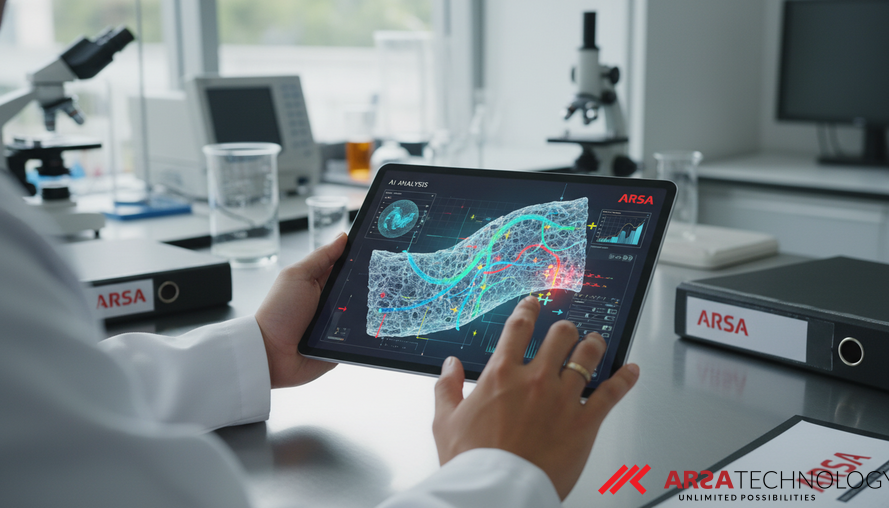
The intricate dance between free-flowing fluids and porous materials is a phenomenon critical to countless natural and industrial processes. From groundwater seeping through geological formations to blood flow within biological tissues, understanding these coupled fluid-porous media systems is paramount. However, simulating these interactions accurately and efficiently has long presented a formidable challenge, often demanding immense computational resources and struggling with the reliability of long-term predictions. A groundbreaking approach, ViT-K, now emerges as a transformative solution, leveraging cutting-edge AI to overcome these hurdles, as detailed in the paper "ViT-K: A Few-Shot Learning Model for Coupled Fluid-Porous Media Flows with Interface Conditions" (Source: https://arxiv.org/abs/2605.13912).
The Complexity of Fluid-Porous Media Interactions
Fluid-porous media systems, governed by equations like the coupled Stokes/Navier–Stokes–Darcy flows, describe how fluids behave when moving through open spaces and then into or out of a material full of tiny pores. Think of water flowing in a river that then permeates the surrounding soil, or oil being extracted from a subterranean reservoir. These systems are inherently complex due to their non-linear nature and the often-heterogeneous interfaces where the free fluid meets the porous medium. Traditional numerical methods, such as finite element analysis, provide rigorous solutions but are computationally intensive, requiring high-fidelity mesh generation that becomes a significant bottleneck for dynamic or long-duration simulations.
The rise of scientific machine learning has introduced promising data-driven alternatives. Physics-informed neural networks (PINNs) and neural operators have shown potential for solving fluid dynamics problems. However, these models frequently encounter difficulties, including training failures in highly non-linear regimes, the exponential accumulation of prediction errors over time, and prohibitive computational costs, especially in large-scale and multi-scale domains. These limitations hinder their practical deployment for mission-critical engineering and scientific forecasting.
Introducing ViT-K: A Synergistic AI Framework
ViT-K is a novel data-driven framework designed to learn the spatiotemporal evolution of coupled flows from sparse datasets, a process known as few-shot learning. This model ingeniously integrates two powerful concepts: Vision Transformers (ViT) and the Koopman operator. By combining these, ViT-K can effectively reconstruct global flow physics and provide stability, ensuring that prediction errors grow linearly rather than exponentially over time. This architectural design makes it particularly adept at handling complex, multi-physics regimes.
On the spatial front, Vision Transformers, initially renowned for their prowess in image recognition, are utilized to capture global dependencies within high-dimensional flow fields. Unlike traditional convolutional neural networks, ViT’s self-attention mechanism excels at discerning subtle, heterogeneous features across the fluid-porous interface, which is a critical aspect of these coupled systems. This allows ViT-K to build a rich, low-dimensional representation of the complex fluid behavior. For enterprises looking to deploy sophisticated AI models that can 'see' and interpret complex physical environments, ARSA Technology offers AI Video Analytics solutions that leverage similar advanced computer vision techniques.
The Koopman Operator: Unlocking Temporal Stability
The true innovation of ViT-K extends to its temporal modeling, where the Koopman operator plays a pivotal role. The Koopman operator is a mathematical tool that transforms non-linear dynamical systems into simpler, globally linear systems in a higher-dimensional "observable space." Imagine trying to predict the path of a leaf in a turbulent river – a highly non-linear and unpredictable problem. The Koopman operator finds a way to describe this complex movement using simple linear equations, even if it means observing it from a much broader, more abstract perspective.
By lifting non-linear dynamics into this globally linear observable space, the ViT-K model achieves "stability by design." This theoretical property is crucial because it guarantees that prediction errors accumulate linearly over time, not exponentially. In practical terms, this means the model can perform reliable long-term extrapolation, delivering accurate forecasts far beyond the time steps seen during training, even when working with very small datasets. This capability is a game-changer for scenarios where data collection is expensive or difficult, a common challenge in many industrial and scientific applications.
ViT-K's Core Advantages: Stability, Speed, and Robustness
The dual power of ViT-K translates into several significant advantages for practical applications:
- Exceptional Stability: The Koopman operator's linearization property fundamentally mitigates the problem of error propagation that plagues many other deep learning models. This ensures consistent and trustworthy long-term predictions, which is vital for critical infrastructure monitoring, environmental management, or medical diagnostics where future behavior needs to be reliably forecast.
- Accelerated Inference Speed: ViT-K significantly outperforms traditional numerical solvers in prediction speed. By learning the underlying physics and then making linear projections in the Koopman space, the model can generate real-time forecasts, enabling immediate decision-making in dynamic environments. This efficiency makes it suitable for real-time monitoring and control systems.
- Robustness to Noise: The framework inherently acts as an implicit spectral filter, effectively attenuating stochastic perturbations and maintaining high predictive stability even when input data is corrupted by measurement noise. This is particularly valuable in real-world deployments where sensor data can be imperfect or intermittent. For such demanding edge computing applications where data integrity and low latency are critical, ARSA Technology’s AI Box Series can provide robust, on-premise AI processing capabilities.
Transforming Industries with Advanced AI Simulation
The implications of ViT-K are far-reaching across numerous sectors that rely on understanding fluid-porous media flows.
- Environmental Science and Water Management: Accurately predicting groundwater flow, contaminant transport in soil, and reservoir behavior becomes faster and more reliable. This can lead to better resource management and environmental protection strategies.
- Energy Sector: In oil and gas, ViT-K could optimize reservoir simulations for enhanced oil recovery, predicting fluid movement through porous rock formations with greater precision and speed, even with limited historical data.
- Manufacturing and Industrial Processes: Industries dealing with filtration, chemical reactors, or material processing involving fluid-solid interactions can benefit from real-time operational insights, leading to improved efficiency, quality control, and predictive maintenance.
- Healthcare and Biofluid Dynamics: While the paper's primary examples are geological, the principles apply to biofluid transport. Understanding fluid flow through biological tissues for drug delivery models or disease progression can be simulated with unprecedented stability and efficiency.
For enterprises aiming to integrate such complex simulations into their operational intelligence platforms, leveraging the deep expertise of an AI & IoT solutions provider is key. ARSA Technology, with experience since 2018 in developing and deploying practical AI solutions across various industries, can design custom AI solutions tailored to specific challenges, from data acquisition to model deployment and integration.
The Future of Data-Driven Fluid Dynamics
ViT-K represents a significant leap forward in the field of scientific machine learning for multi-physics systems. By cleverly combining the spatial analysis power of Vision Transformers with the temporal linearization provided by the Koopman operator, it delivers a model that is stable, efficient, accurate, and capable of learning from minimal data. This framework moves AI simulations for coupled fluid-porous media flows from experimental curiosities to practical, deployable tools for real-time forecasting and operational intelligence. Its ability to maintain physical consistency while dramatically speeding up inference makes it an invaluable asset for engineers, scientists, and decision-makers tackling some of the world's most complex physical challenges.
To explore how advanced AI and IoT solutions can transform your operational challenges, do not hesitate to contact ARSA for a free consultation.