Revolutionizing Logistics: How Voice AI Is Redefining Screenless Warehouse and Manufacturing Operations
Explore how advanced Voice AI is transforming warehouses and manufacturing plants by replacing traditional screens, enhancing efficiency, safety, and operational intelligence in logistics and supply chain management.

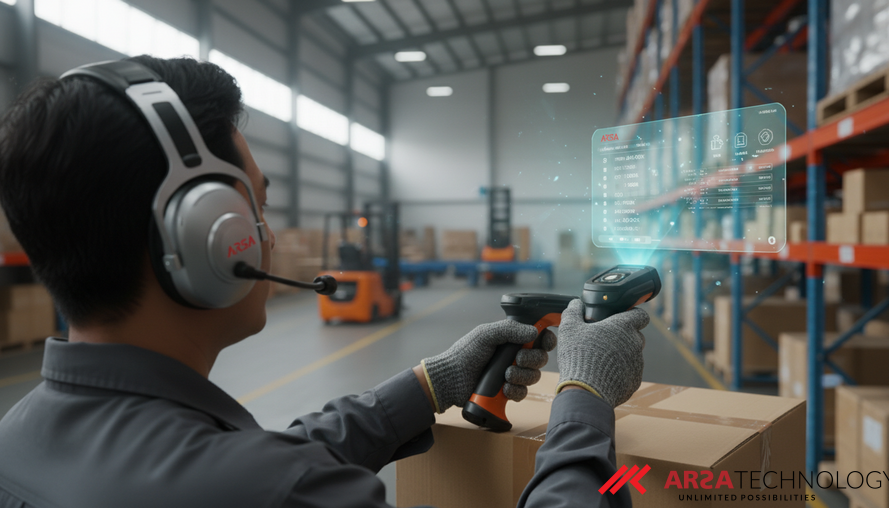
The modern industrial landscape, spanning warehouses, factories, and complex manufacturing facilities, has long relied on screens for data input, instruction display, and operational oversight. From forklift terminals to quality control stations, visual interfaces have been the primary mode of interaction. However, a significant paradigm shift is underway, driven by advancements in Voice AI. This technology is increasingly enabling screenless operations, promising to revolutionize efficiency, safety, and productivity across the supply chain. This move away from traditional visual interfaces towards intuitive auditory commands and feedback marks a crucial evolution in how human workers interact with complex systems, turning passive data into actionable, real-time intelligence.
The Paradigm Shift: From Visual to Auditory Interfaces
Historically, human-computer interaction in industrial settings has been predominantly visual. Workers navigate complex software interfaces, input data via keyboards, or confirm tasks on touchscreens. While functional, this approach often demands workers divert their attention from their primary physical tasks, potentially leading to errors, slower workflows, and increased safety risks. The emergence of sophisticated Voice AI, leveraging natural language processing (NLP), speech-to-text (STT), and text-to-speech (TTS) capabilities, offers a compelling alternative. This technology allows workers to interact with systems using spoken language, receiving instructions and providing updates hands-free. A notable example of this trend, as highlighted by Samir Saci in his article “How ElevenLabs Voice AI Is Replacing Screens in Warehouse and Manufacturing Operations” on towardsdatascience.com, demonstrates the growing viability and impact of such solutions.
This transition isn't merely about convenience; it's about fundamentally rethinking human-machine collaboration. By enabling workers to keep their eyes and hands focused on their immediate environment and tasks, Voice AI minimizes cognitive load and enhances situational awareness. This becomes particularly critical in environments where precision, speed, and safety are paramount, transforming operational data into a continuous, conversational flow rather than disparate visual cues.
Key Advantages of Voice AI in Industrial Settings
The benefits of integrating Voice AI into warehouse and manufacturing operations are multifaceted, directly impacting the bottom line and operational efficacy. Firstly, it dramatically boosts efficiency by streamlining workflows. In a typical pick-and-pack scenario, a worker receiving audio instructions for item location and quantity can execute tasks much faster than one constantly checking a screen. This hands-free approach reduces the time spent switching between physical tasks and digital interfaces. Secondly, Voice AI significantly reduces errors. Verbal confirmations and guided prompts minimize mispicks, incorrect assemblies, or faulty data entries, leading to fewer rework cycles and less material waste.
Furthermore, enhanced safety is a critical advantage. Workers no longer need to look away from heavy machinery, moving vehicles, or hazardous materials to interact with a screen. Voice commands allow them to maintain full visual and physical engagement with their surroundings, reducing the risk of accidents. Voice AI also offers improved accessibility, benefiting workers with diverse needs or those operating in dimly lit or tight spaces where screens might be impractical. Finally, faster employee onboarding and training are achievable as new hires can receive step-by-step vocal guidance, reducing the learning curve and accelerating their productivity.
Real-World Applications Across the Supply Chain
Voice AI is finding diverse applications across various stages of the logistics and manufacturing pipeline. In warehousing and order fulfillment, it powers voice-directed picking systems, guiding workers through optimal routes and confirming selections, thus dramatically increasing pick accuracy and speed. For quality control and inspection, Voice AI allows inspectors to log defects verbally while keeping their hands free to manipulate products or tools, ensuring comprehensive and accurate record-keeping. In manufacturing plants, it can provide real-time assembly instructions, trigger machinery operations, or enable verbal reporting on production progress, integrating seamlessly with existing industrial IoT systems.
For complex environments like traffic management or large-scale security, Voice AI can augment existing visual analytics. For instance, a security operator using ARSA AI Video Analytics might receive a real-time verbal alert about an anomaly, allowing them to instantly query the system for more details or command specific camera adjustments without touching a keyboard. Similarly, in an advanced industrial setting, an operator could use voice commands to interact with an AI Box Series device, retrieving critical operational metrics or initiating safety protocols with unparalleled speed.
Overcoming Implementation Challenges with Robust Voice AI
While the benefits are clear, implementing Voice AI in industrial environments presents unique challenges. Noise cancellation is paramount in noisy factory floors, requiring advanced audio processing to accurately capture and interpret commands. Multilingual support is also crucial for global workforces, ensuring the system can understand and respond in various languages. Integration with existing enterprise systems (such as WMS, ERP, MES) is another complex hurdle, demanding flexible APIs and robust backend architecture to ensure seamless data flow.
Moreover, data privacy and security are non-negotiable, particularly when dealing with sensitive operational data or personal identifiers. Solutions must offer on-premise deployment options or highly secure cloud integrations to meet stringent compliance requirements. Considerations like voice fatigue over long shifts also need to be addressed through intelligent system design that balances auditory interaction with other modalities. Modern Voice AI solutions, especially those leveraging edge computing, can deliver the low latency and processing power needed to overcome these obstacles, ensuring reliable and private operation without constant cloud dependency.
ARSA Technology's Role in Next-Gen Industrial AI
ARSA Technology, with expertise developed since 2018 in AI and IoT solutions, understands the practical realities of deploying advanced technology in demanding industrial environments. We specialize in creating solutions that prioritize performance, security, and scalability for various industries. While the specific Voice AI technology may vary, the integration of conversational interfaces with robust back-end AI and IoT infrastructure is a core strength.
Our approach focuses on transforming complex data into actionable intelligence, whether through advanced AI video analytics or integrated IoT systems. We engineer solutions that can integrate Voice AI capabilities to further empower workforces, ensuring real-time operational insights and enhancing decision-making. By prioritizing on-premise deployment options and hardware-agnostic solutions, we provide enterprises with the full control over data, privacy, and performance essential for mission-critical operations.
The shift towards screenless operations powered by Voice AI is not a distant future but a present reality. As industries seek to maximize efficiency, bolster safety, and enhance productivity, conversational interfaces offer a powerful tool for digital transformation.
To explore how advanced AI and IoT solutions, including the potential integration of Voice AI, can transform your warehouse or manufacturing operations, we invite you to contact ARSA for a free consultation.
Source: Samir Saci, "How ElevenLabs Voice AI Is Replacing Screens in Warehouse and Manufacturing Operations," towardsdatascience.com.