Revolutionizing Mangrove Monitoring: Introducing MANGO, a Global AI Dataset for Conservation
Discover MANGO, a new global dataset of 42,703 image-mask pairs from 124 countries, powering AI for precise, real-time mangrove segmentation and conservation efforts.

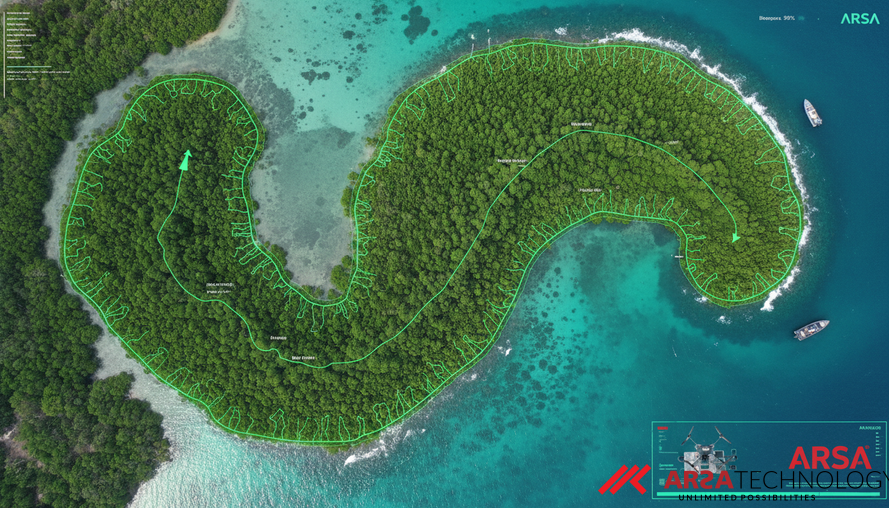
The Vital Role of Mangroves and Persistent Monitoring Challenges
Mangrove forests are indispensable “blue carbon” ecosystems, playing a critical role in mitigating climate change by sequestering vast amounts of carbon in their biomass and soils. Beyond carbon storage, they act as natural buffers, protecting shorelines from erosion and storms while providing crucial habitats for diverse marine life. Despite their outsized impact on global carbon budgets and coastal resilience, these vital ecosystems face ongoing threats, necessitating robust and reliable monitoring for effective conservation strategies.
Historically, large-scale mangrove monitoring has heavily relied on remote sensing techniques, often employing spectral indices like the Normalized Difference Vegetation Index (NDVI) and Mangrove Vegetation Index (MVI). While these methods are straightforward, they suffer from inherent limitations. Decision rules often depend on explicit thresholds that are highly sensitive to varying acquisition conditions, such as atmospheric interference or tidal changes. Furthermore, these thresholds rarely transfer effectively across diverse coastlines due to spectral confounders like sediment levels and mixed pixels (areas containing multiple land cover types). This instability makes consistent, accurate global monitoring a significant challenge, as demonstrated by inconsistent MVI responses for visually similar sites captured on different dates, as highlighted in the academic paper “MANGO: A GLOBAL SINGLE-DATE PAIRED DATASET FOR MANGROVE SEGMENTATION” (Source: arxiv.org/abs/2601.17039).
Bridging the "Temporal Pairing Gap" with the MANGO Dataset
Recent advancements in deep learning have shown immense promise for mangrove segmentation, consistently outperforming traditional spectral index approaches in accuracy. However, the full potential of these sophisticated AI models has been significantly hampered by critical data-related bottlenecks. Existing mangrove datasets are often geographically limited to specific regions, preventing models trained on them from generalizing globally. Many global products, such as Global Mangrove Watch (GMW) and High-resolution Global Mangrove Forests (HGMF), offer extensive annual maps but crucially lack curated, single-date image-mask pairs. These pairs are fundamental for training deep learning models that require a precise, real-time "snapshot" of the environment matched with its corresponding label.
This absence of meticulously curated single-date image-label pairs constitutes what researchers term the "temporal pairing gap"—a major barrier preventing robust global benchmarking and scalable deployment of AI for environmental monitoring. To address this, the MANGO dataset introduces a large-scale, global collection of 42,703 labeled image-mask pairs spanning 124 countries. By providing high-quality, single-date Sentinel-2 imagery precisely matched with GMW labels, MANGO offers an unprecedented resource to accelerate the development and deployment of advanced deep learning models for accurate, global mangrove segmentation.
How MANGO Ensures Data Quality: An Adaptive Selection Approach
The creation of MANGO involved a meticulous, multi-stage pipeline designed to ensure optimal alignment between satellite imagery and mangrove labels. The initial phase involved extensive data collection using Google Earth Engine (GEE), a powerful platform for planetary-scale geospatial analysis. Researchers retrieved all available Sentinel-2 imagery for mangrove regions within the year 2020. This process generated an average of 32 candidate images for each geographic site, which then entered a rigorous selection stage.
The true innovation of MANGO lies in its adaptive selection process. Instead of simply picking any available image, the dataset employs a "target detection-driven approach" to identify the single-date observation that best matches the annual mangrove mask for each site. This involves extracting "mangrove reference pixels" from the annual mask to create a "target spectrum." Then, a specialized "background-whitened target detector" is used to compute a "detection map" for each candidate image. The quality of each candidate image is then scored using the Fisher discriminant ratio, a statistical measure that quantifies the separability between mangrove and non-mangrove regions. The image with the highest Fisher discriminant ratio is selected as the most representative single-date acquisition, ensuring that the paired image-mask accurately reflects the mangrove presence on that specific date. This sophisticated approach guarantees that the dataset provides highly representative and reliable image-mask pairings, making it an invaluable resource for training robust AI models.
Establishing a Global Benchmark for Scalable Mangrove Monitoring
Beyond merely providing a large dataset, MANGO establishes a standardized benchmark for evaluating semantic segmentation architectures, a type of deep learning model used for pixel-level classification. A critical aspect of this benchmark is the use of a "country-disjoint split protocol." This means that the data used for training AI models comes from different countries than the data used for testing, ensuring that the models developed are not merely memorizing patterns from specific regions but are truly capable of generalizing across diverse geographic and ecological contexts worldwide. This rigorous testing approach is vital for developing AI solutions that are reliable and scalable for global applications.
By providing such a comprehensive and carefully curated dataset, MANGO paves the way for the development of next-generation AI models that can achieve unprecedented accuracy and consistency in mangrove segmentation. The benchmark evaluates various advanced architectures, including both CNN-based (Convolutional Neural Network) and Transformer-based models, providing a clear foundation for future research and development. The availability of MANGO publicly, along with its associated code, democratizes access to high-quality data, fostering collaborative innovation in the field of environmental remote sensing. Companies like ARSA Technology, with expertise in AI Video Analytics, can leverage such datasets to build and deploy tailored solutions for critical environmental monitoring tasks.
The Broader Impact: Towards More Effective Conservation with AI
The MANGO dataset represents a significant leap forward in our ability to accurately monitor and protect mangrove ecosystems globally. By addressing the critical "temporal pairing gap," it empowers deep learning models to overcome previous data limitations, leading to more precise and consistent mangrove segmentation. This enhanced accuracy has profound practical implications for environmental conservation and policy-making.
More reliable mapping of mangroves can inform targeted conservation efforts, facilitate accurate carbon accounting for climate change initiatives, and support sustainable coastal management strategies. For enterprises involved in environmental impact assessments, land-use planning, or sustainable resource management, access to AI-powered monitoring, built on foundational datasets like MANGO, can translate into more informed decisions, reduced environmental risks, and improved compliance. Solutions such as ARSA's AI Box Series could hypothetically integrate similar sophisticated AI models for edge-based, real-time processing of satellite data in remote locations, providing instant insights for conservationists and decision-makers on the ground. ARSA Technology has been experienced since 2018 in developing and deploying practical AI and IoT solutions across various industries, demonstrating the capability to implement cutting-edge technology for such critical applications.
The availability of MANGO encourages further research and development in environmental AI, ensuring that technology plays an ever more effective role in safeguarding our planet's most vulnerable ecosystems.
To explore how ARSA Technology can provide tailored AI and IoT solutions for your monitoring and operational needs, we invite you to contact ARSA today.