Revolutionizing Materials Discovery: The Power of AI-Native Platforms for Industry 4.0
Explore how AI-native platforms like DataScribe accelerate materials discovery, integrating data, optimization, and AI to transform industrial R&D, reduce costs, and enhance innovation for enterprises.

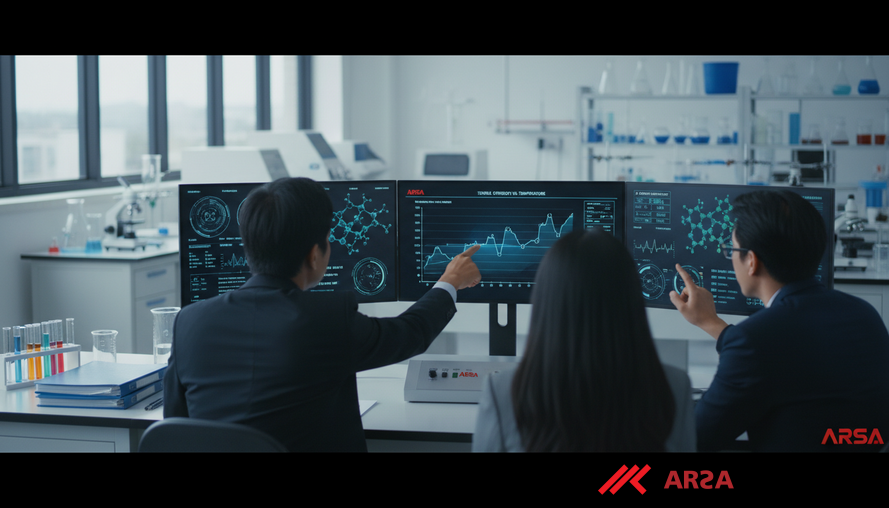
Accelerating Innovation: The Imperative for AI in Materials Science
In today’s rapidly evolving industrial landscape, the demand for groundbreaking materials—from advanced semiconductors and aerospace components to sustainable energy solutions and robust infrastructure—is more critical than ever. However, the traditional materials development cycle is notoriously slow, often taking more than a decade from initial concept to market deployment. This delay stems not only from the inherent scientific complexity but also from systemic inefficiencies within current research workflows, such as fragmented datasets, incompatible data formats, and a disconnect between experimental and computational activities.
To overcome these hurdles, a paradigm shift is necessary: the adoption of digital platforms that transcend simple data storage. These platforms must embed advanced learning, optimization, and automated decision-making directly into the research and development process. Such integration promises to significantly reduce costs, enhance security protocols, and unlock new revenue opportunities for businesses reliant on materials innovation. ARSA Technology recognizes this critical need and champions the integration of AI and IoT to drive forward industrial transformation.
DataScribe: A Blueprint for AI-Native Materials Discovery
Emerging platforms, such as the conceptualized DataScribe, represent the forefront of this digital transformation. Imagined as an AI-native, cloud-based materials discovery platform, its core function is to unify vast amounts of heterogeneous experimental and computational data. It achieves this through 'ontology-backed ingestion,' which means all data is systematically categorized and tagged according to a standardized framework, making it easily understandable and usable by AI. This creates 'machine-actionable knowledge graphs'—interconnected networks of data that AI can navigate and interpret to inform decision-making.
The platform integrates several crucial components for modern scientific research. It ensures 'FAIR-compliant metadata capture,' meaning data is Findable, Accessible, Interoperable, and Reusable, a cornerstone for transparent and collaborative science. It also handles 'schema and unit harmonization,' standardizing how data is represented and measured, eliminating inconsistencies that often plague multi-source datasets. Furthermore, DataScribe incorporates 'uncertainty-aware surrogate modeling,' allowing AI to make predictions even with incomplete information while intelligently assessing its confidence levels. At its heart lies 'multi-objective multi-fidelity Bayesian optimization,' an advanced AI strategy designed to identify optimal solutions for multiple competing goals (e.g., maximizing strength while minimizing cost) by intelligently selecting the most informative experiments to run, potentially starting with cheaper, less accurate simulations. This capability enables 'closed-loop propose–measure–learn workflows' that automate the entire scientific discovery process, minimizing human intervention and accelerating insights.
The A-Z Framework for Self-Driving Laboratories
To truly accelerate materials innovation, the concept of a "Self-Driving Laboratory" (SDL) is paramount. An SDL is an automated research environment where AI autonomously designs, executes, and learns from experiments, continuously refining its understanding and improving outcomes. The A–Z framework, a comprehensive blueprint for building and operating an SDL, outlines 26 foundational tasks essential for integrating automation, data infrastructure, and active learning across workflows.
This framework covers everything from Architecture Definition (A), which sets scientific goals and constraints, to Zero-Error Learning (Z), which aims for continuous calibration and self-improvement with minimal human oversight. Key steps include Data Infrastructure (D) for FAIR-compliant storage and metadata, Experiment Design (E) for initial data sampling, and Feedback Loop (Active Learning) (F) where real-time data informs Bayesian or reinforcement learning models for adaptive experimentation. Crucially, the Optimization Engine (O) implements advanced algorithms to guide the search for new materials, and Process Modeling (P) couples physical models or digital twins to ensure AI searches within feasible parameters. ARSA's expertise in AI Video Analytics and Industrial IoT solutions can support various aspects of this framework, providing crucial data collection, real-time monitoring, and analytical capabilities for such advanced environments.
Beyond Data Repositories: Intelligent Application Layer
DataScribe differentiates itself by functioning as an "application-layer intelligence stack." This means it doesn't merely collect data but actively integrates data governance, optimization, and explainability from the outset, rather than treating them as afterthoughts. This integrated approach is vital for ensuring that the AI-driven decisions are transparent, trustworthy, and aligned with organizational policies and ethical considerations.
The platform has been validated through real-world case studies in areas such as electrochemical materials and high-entropy alloys. These demonstrations showcased its ability to achieve end-to-end data fusion, perform real-time optimization, and facilitate reproducible exploration of complex multi-objective trade-offs. By embedding powerful optimization engines, machine learning algorithms, and unified access to both public and private scientific data directly within its infrastructure, DataScribe offers a general-purpose backbone for research laboratories of any scale. This includes supporting advanced setups like self-driving laboratories and geographically distributed materials acceleration platforms.
Business Impact and Strategic Advantages
For enterprises, the implications of such AI-native platforms are profound. They promise a strategic shift from reactive problem-solving to proactive innovation. By drastically reducing the materials development cycle, businesses can bring new products to market faster, gain a competitive edge, and respond more agilely to market demands. The ability to explore vast 'trade spaces'—the complex interplay of material properties and performance—with precision and speed means companies can discover materials that are not only high-performing but also cost-effective, sustainable, and optimized for specific supply chain objectives.
Furthermore, these platforms support objectives critical for modern businesses: enhanced performance, sustainability, and supply-chain resilience. By using AI to guide the design process, companies can discover materials that require fewer rare earth elements, have lower environmental impact, or are more readily sourced, contributing to a more robust and ethical supply chain. The automation of workflows also reduces the risk of human error, enhances safety compliance—for instance, by detecting potential issues in material handling or production—and ultimately lowers operational costs by optimizing resource allocation and reducing waste. ARSA Technology, having been experienced since 2018 in developing AI and IoT solutions, brings practical expertise in implementing technologies that support these industrial advancements. Our VR-Based Training for Industry, for example, can enhance worker competence in handling advanced materials or operating complex machinery safely and efficiently, further driving operational excellence.
The Future of Industrial R&D with AI and IoT
The convergence of AI and IoT is poised to redefine research and development in materials science and beyond. Platforms that can unify diverse data, leverage advanced AI for learning and optimization, and operate within a robust, policy-aligned framework are essential for building the "Smart Factories" and "Industry 4.0" ecosystems of the future. They enable enterprises to move beyond fragmented, manual processes to adopt a cohesive, data-driven approach to innovation.
ARSA Technology is committed to being a partner in this digital transformation journey. Our suite of AI and IoT solutions—from predictive analytics and computer vision to industrial automation and smart systems—is designed to help businesses harness the power of AI to reduce costs, increase security, and create new revenue streams. By providing tools for real-time monitoring, data-driven decision-making, and automated processes, ARSA empowers industries to accelerate innovation and achieve tangible business outcomes.
Ready to explore how AI and IoT can transform your industrial R&D and operational efficiency? We invite you to explore ARSA's comprehensive solutions and contact ARSA for a free consultation.