**Revolutionizing Physics Simulation: How Modular AI Overcomes Diverse Engineering Challenges**
Explore LAM-PINN, a breakthrough in AI-powered physics simulation. This modular meta-learning framework enhances accuracy and efficiency for complex engineering problems by adapting to task heterogeneity in Physics-Informed Neural Networks.

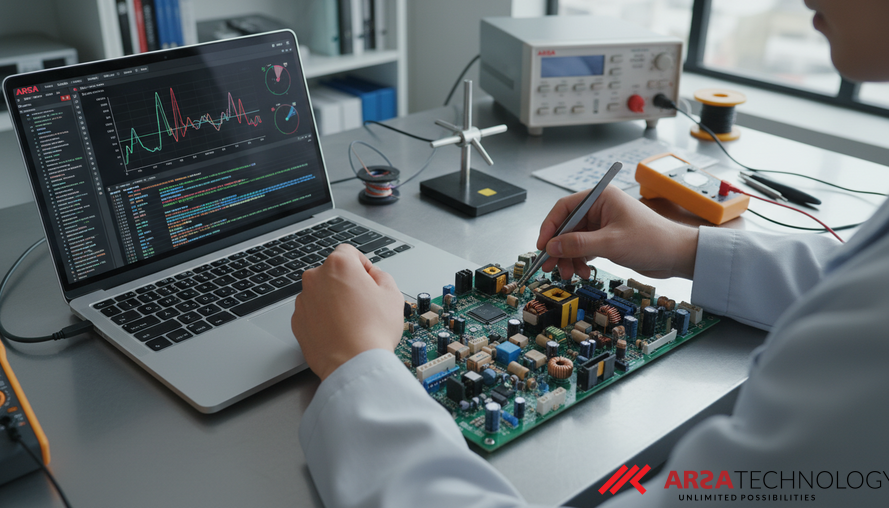
The Future of Engineering: AI and Physical Laws Converge
The realm of engineering and scientific discovery often relies on accurately modeling complex physical systems. Partial Differential Equations (PDEs) are the mathematical backbone for these models, describing phenomena from fluid dynamics and heat transfer to structural analysis and electromagnetism. Traditionally, solving these equations has been computationally intensive, often requiring complex numerical methods that demand significant computing power and time. This is where Physics-Informed Neural Networks (PINNs) emerge as a transformative technology. PINNs are a novel class of AI models that embed fundamental physical laws directly into their training process, allowing them to approximate PDE solutions efficiently and even from sparse data, without needing a mesh. Their ability to deliver mesh-free solutions has made them invaluable across various engineering challenges, from analyzing intricate fluid flows to understanding structural integrity and even enhancing image processing tasks.
However, a significant hurdle arises when these physical systems involve parameterized PDEs. In practical engineering scenarios, small variations in coefficients, material properties, or boundary and initial conditions define distinct tasks within the same PDE family. For instance, optimizing the design of an analog circuit might involve slight adjustments to component values, each presenting a slightly different physics problem. Training a new PINN from scratch for every single variation quickly becomes computationally prohibitive, hindering rapid design exploration and optimization. Current meta-learning techniques, while designed to "learn to learn" and reduce retraining costs, often struggle with this "task heterogeneity" – where diverse problems demand distinct learning approaches. They typically rely on a single global starting point for all tasks, which can lead to "negative transfer," meaning knowledge from one task actually harms the learning process for another, especially when inputs are sparse or training data is limited. This challenge is particularly acute in PINNs, where inputs often consist only of coordinates (e.g., position, time), offering little inherent information to distinguish between different underlying physical problems, as highlighted in a recent academic paper (Source: Compositional Meta-Learning for Mitigating Task Heterogeneity in Physics-Informed Neural Networks).
Overcoming Heterogeneity: The Need for Adaptive AI
The inability of traditional meta-learning to handle diverse tasks effectively within PINNs presents a critical bottleneck for many advanced applications. Imagine designing a new generation of microprocessors or optimizing a complex chemical process; each design iteration or slight parameter change would ideally benefit from rapid, accurate simulation. Yet, if the AI model struggles to adapt to these minor changes, or worse, performs poorly due to negative transfer, the entire design cycle slows down dramatically. The core issue is that while the underlying PDE form might be the same, changes in specific parameters create vastly different "learning landscapes" for the neural network. Without robust mechanisms to recognize and adapt to these task-specific dynamics, even state-of-the-art AI can falter.
The paper points out that existing approaches often provide insufficient "task-discriminative information," especially when the AI only receives coordinate-only inputs. This means the system can't easily tell whether two problems with slightly different parameters are fundamentally similar enough to reuse knowledge directly, or if they require a specialized approach. The goal is to enable PINNs to efficiently generalize to new, unseen configurations within a defined design space, overcoming limitations in training data and the inherent diversity of real-world engineering problems. This necessitates an intelligent framework that can discern task identity and adapt its learning strategy accordingly, ensuring efficient and accurate generalization, even in resource-constrained environments.
Introducing LAM-PINN: A Modular Solution for Dynamic Physics
To tackle these challenges, researchers have introduced the Learning-Affinity Adaptive Modular Physics-Informed Neural Network (LAM-PINN). This innovative compositional meta-learning framework is engineered to explicitly account for task heterogeneity in PINNs, particularly under the constraints of coordinate-only inputs and limited training data. LAM-PINN's design is revolutionary because it moves beyond a single, universal starting point for learning, instead adapting its internal structure based on the specific characteristics of each task.
The ingenuity of LAM-PINN lies in its ability to dynamically understand and respond to the unique learning dynamics of different physics problems. It achieves this by representing each task not just by its explicit PDE parameters (like coefficients or boundary conditions), but also by "learning-affinity metrics." These metrics are essentially insights gathered from brief, initial training sessions, capturing how a task behaves during its early learning phase. This innovative task representation allows LAM-PINN to accurately cluster tasks, even when the input data is as feature-scarce as simple coordinates. The system then decomposes the neural network into "cluster-specialized subnetworks" – essentially expert modules tailored for specific groups of similar tasks – and a "shared meta network" that handles general learning aspects. During adaptation to a new task, LAM-PINN employs learnable routing weights to selectively combine these modules, effectively creating a custom-tailored initialization for optimal performance. This approach strategically shifts the AI's starting point in the high-dimensional parameter space, ensuring a more direct and efficient path to convergence for the target task.
How LAM-PINN Transforms Engineering Workflows
The practical implications of LAM-PINN's modular and adaptive approach are substantial for various industries. By learning to discern and adapt to task heterogeneity, LAM-PINN significantly improves the generalization capabilities of PINNs. This means that once trained on a diverse set of parameterized PDE problems, the system can rapidly and accurately solve new variations without extensive retraining. For sectors like analog circuit design, this translates into significantly faster design iterations, allowing engineers to explore a broader design space more quickly and cost-effectively. Similarly, in fields such as materials science or fluid dynamics, optimizing new material compositions or flow configurations becomes far more efficient.
The effectiveness of LAM-PINN has been rigorously demonstrated across three distinct PDE benchmarks. The results show an impressive average 19.7-fold reduction in Mean Squared Error (MSE) on previously unseen tasks, indicating a dramatic increase in prediction accuracy. Furthermore, LAM-PINN achieved these results using only 10% of the training iterations typically required by conventional PINNs. This acceleration in training time is critical for resource-constrained engineering environments, where computational power and time are often limited. It implies that complex simulations can be run faster, design cycles can be compressed, and new innovations can be brought to market with unprecedented speed.
ARSA Technology: Powering Practical AI and IoT Solutions
The principles behind LAM-PINN—efficiency, adaptability, and the ability to extract actionable insights from complex data in resource-constrained settings—are central to ARSA Technology's philosophy. As an AI & IoT solutions provider, ARSA focuses on deploying practical, proven, and profitable AI systems for governments and enterprises across various industries. Our expertise in areas like Vision AI Analytics and Industrial IoT is built on developing solutions that perform robustly in real-world environments, where diverse conditions and data variations are the norm.
For instance, ARSA's AI Video Analytics leverages advanced AI to convert raw CCTV streams into real-time operational intelligence. This requires an adaptable AI system that can handle different lighting conditions, crowd densities, object types, and behavioral patterns without constant retraining. Similarly, our AI Box Series provides pre-configured edge AI systems, bringing processing power directly to the source of data. This on-premise processing aligns perfectly with the need for low-latency, privacy-preserving, and computationally efficient solutions, mirroring LAM-PINN's focus on resource-constrained deployment. By delivering robust AI solutions that can adapt to changing operational realities and provide precise insights, ARSA ensures that enterprises can achieve significant ROI, reduce risks, and enhance productivity in mission-critical applications, much like how LAM-PINN is advancing the efficiency of physics simulations.
Conclusion
The development of the Learning-Affinity Adaptive Modular Physics-Informed Neural Network (LAM-PINN) marks a significant leap forward in AI-powered scientific computing. By intelligently addressing the inherent heterogeneity of parameterized PDE tasks through a modular, adaptive meta-learning framework, LAM-PINN not only achieves superior accuracy but also drastically reduces the computational resources and time required for training. This innovation promises to accelerate design exploration, optimize complex engineering systems, and drive new discoveries in science and technology. For businesses and researchers aiming to leverage AI for advanced simulations and real-time operational intelligence, LAM-PINN offers a powerful blueprint for building more efficient, adaptable, and robust AI solutions.
To explore how advanced AI and IoT solutions can transform your operations and to discuss your specific technology needs, we invite you to contact ARSA for a free consultation.