Revolutionizing Viticulture: AI-Powered Berry Detection and Cluster Closure Analysis with ViViD-5K
Discover ViViD-5K, a groundbreaking dataset enabling AI for automated grape berry detection and cluster closure estimation. Learn how computer vision transforms vineyard management for better yields.

The Critical Challenge of Grape Cluster Management
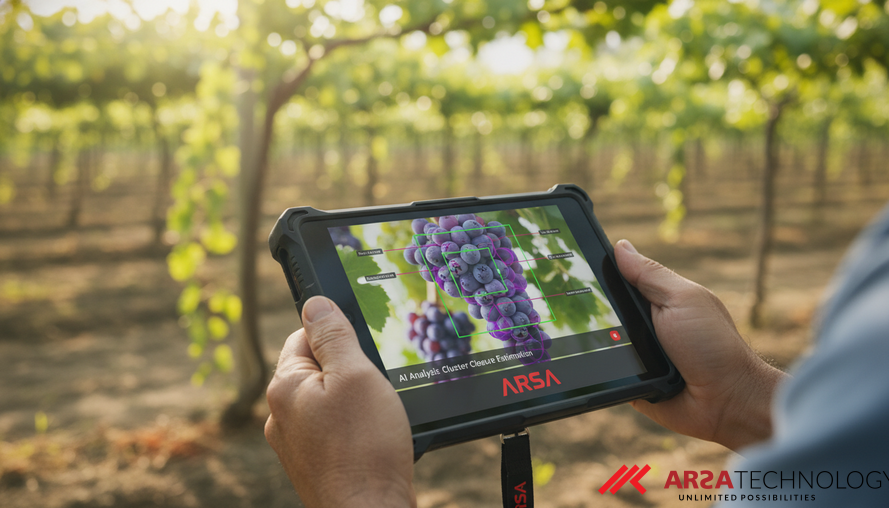
Grape cluster closure (CC) is a vital phenological stage in viticulture, referring to the progressive filling of gaps between berries within a grape bunch as they mature. This process significantly influences vineyard management, directly impacting factors like disease risk, spray penetration, and ultimately, grape and wine quality. As berries grow, closed clusters create a unique microclimate that can foster fungal infections and other issues, while also making it difficult for protective sprays to reach individual berries. Monitoring this stage accurately is paramount for timely interventions and optimal vineyard health.
Historically, assessing cluster closure and its related trait, cluster compactness, has relied on manual visual scoring. Organizations like the International Organization of Vine and Wine (OIV) use descriptive codes to classify clusters from "very loose" to "very compact" based on morphological cues. While widely adopted, these traditional methods are inherently labor-intensive, prone to human subjectivity, and lack the fine-grained temporal resolution needed to track the dynamic changes throughout the growing season. This subjectivity and effort limit the ability of vineyard managers to make data-driven decisions that could mitigate risks and enhance yield quality.
Bridging the Data Gap with ViViD-5K
The advancement of deep learning models offers a powerful solution to automate and objectify grape cluster analysis. However, robust AI development demands extensive, well-annotated datasets, a resource that has been notably scarce in viticulture research. Existing datasets often provide only raw images or minimal annotations, hindering the training and validation of sophisticated deep learning models capable of operating in complex field environments. This gap has limited the widespread adoption of AI for fine-grained, berry-level analysis.
Addressing this critical need, researchers have introduced ViViD-5k: the Vineyard Vision Dataset 5K (Tong et al., 2026). This significant contribution is a large-scale, in-field vineyard dataset comprising 5,000 high-resolution images. Crucially, it features dense annotations, including over 648,000 berry centroids and detailed cluster segmentation masks, covering 13 diverse grape varieties. This wealth of meticulously labeled data provides an unprecedented foundation for developing and evaluating deep learning models for accurate grape cluster analysis, moving beyond the limitations of smaller, less comprehensive datasets. The full paper can be accessed at arXiv:2605.24353.
GrapeSAM: An AI Pipeline for Automated Vineyard Insights
Building upon the robust foundation of ViViD-5k, the paper introduces GrapeSAM, an innovative two-stage visual pipeline designed for automated, in-field estimation of cluster closure with minimal supervision. This pipeline represents a significant leap forward in applying computer vision to viticulture.
The first stage of GrapeSAM leverages point-based berry localization, accurately identifying individual berries within the cluster. This is followed by a sophisticated prompt-based segmentation approach using Segment Anything, a powerful model capable of segmenting objects from various inputs. The second stage then employs transformer-based cluster segmentation to define the boundaries of entire grape clusters. This combined methodology allows for highly accurate detection and segmentation, transforming raw image data into actionable operational intelligence. Solutions like ARSA AI Video Analytics could be adapted to leverage such models for real-time monitoring and insights in agricultural settings, providing dashboards and alerts for vineyard managers.
From Passive Monitoring to Active Intelligence
Traditional CCTV systems in vineyards, if present, typically offer only passive recording for later forensic review. The integration of advanced AI models like GrapeSAM with edge computing transforms these systems into active intelligence platforms. By performing AI inference directly at the edge, within the vineyard environment, cameras evolve into smart sensors capable of detecting conditions, measuring performance, and triggering actions instantly.
This edge processing capability ensures low latency and preserves data privacy, as raw video streams are analyzed on-device without necessarily leaving the network. For vineyards, this means real-time detection of issues such as inconsistent cluster closure, enabling rapid decision-making. Pre-configured edge AI systems, such as the ARSA AI Box Series, exemplify how such technology can be deployed for rapid, plug-and-play integration with existing infrastructure, offering on-premise processing for data control and operational reliability.
Transforming Viticulture: Practical Implications and ROI
The innovations presented by ViViD-5k and GrapeSAM have profound practical implications for the viticulture industry. Automated cluster closure estimation provides an objective, scalable alternative to subjective manual scoring, drastically reducing labor costs and improving the consistency of data. This objective data empowers vineyard managers to:
- Optimize Disease Management: By accurately monitoring cluster closure, growers can predict periods of high disease risk and tailor spray applications more effectively, ensuring better penetration and reducing pesticide use.
- Enhance Grape Quality: Precise insights into berry development allow for more informed decisions regarding canopy management, irrigation, and harvest timing, contributing to superior grape quality and higher market value.
- Boost Operational Efficiency: High-throughput phenotyping allows for rapid analysis across vast vineyard areas, saving significant time and resources compared to manual inspection. This efficiency translates directly into a higher return on investment (ROI).
- Facilitate Research and Breeding: The availability of a rich dataset like ViViD-5k accelerates the development of new grape varieties with desirable traits, supporting long-term agricultural innovation.
The quantitative results cited in the research confirm strong segmentation and counting accuracy, validating the robustness of GrapeSAM across diverse vineyard conditions. This shift towards AI-driven insights allows vineyards to embrace precision agriculture, leading to more sustainable, efficient, and profitable operations.
The Future of Smart Vineyards
The introduction of ViViD-5k and the GrapeSAM pipeline signifies a pivotal moment in the application of AI to viticulture. It moves vineyard management from traditional, subjective methods to data-driven, objective insights. As an AI & IoT solutions provider experienced since 2018, ARSA Technology recognizes the transformative power of such advancements, enabling enterprises across various industries, including agriculture, to optimize operations and unlock new value. The ability to automatically monitor and quantify complex biological processes offers not just efficiency gains, but also a pathway to enhanced quality and reduced environmental impact.
To explore how advanced AI and IoT solutions can transform your operations and to discuss custom AI applications tailored to your specific needs, we invite you to contact ARSA for a free consultation.
Source:
Tong, X., Zhang, C., Flaherty, M., Garcia, A. M., Gorman, D., Jaramillo, J., Vanden Heuvel, J. E., & Jiang, Y. (2026). ViViD-5K: Vineyard vision dataset for field-based berry detection and segmentation and grape cluster closure estimation. arXiv preprint arXiv:2605.24353. Available at: https://arxiv.org/abs/2605.24353