Rivian Recalibrates EV Factory Expansion Amidst Reduced Federal Loan Agreement
Rivian downsizes its Georgia EV factory capacity to 300,000 units after a Department of Energy loan reduction from $6.6 billion to $4.5 billion. Learn how funding shifts impact large-scale manufacturing and the role of agile operational strategies.

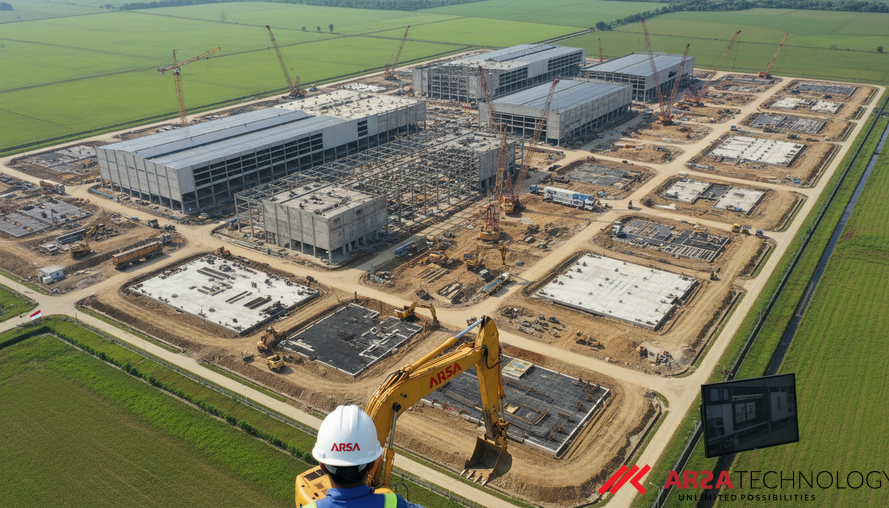
Strategic Shifts in Rivian’s Georgia EV Factory Plans
Electric vehicle (EV) manufacturer Rivian has announced significant revisions to its ambitious factory project in Georgia, a move directly influenced by a scaled-down loan agreement from the U.S. Department of Energy (DOE). Initially envisioned to achieve an annual production capacity of 400,000 vehicles across two phases, the company now plans for a 300,000-unit capacity, though it aims to reach this revised target sooner than originally projected. This adjustment, as reported by Andrew J. Hawkins in The Verge on April 30, 2026, highlights the intricate dance between corporate growth strategies and evolving government support, particularly in capital-intensive sectors like automotive manufacturing.
The reduction in anticipated funding underscores the dynamic and often unpredictable nature of large-scale industrial investments. For companies like Rivian, which broke ground on the facility late last year, securing substantial financing is paramount to executing their long-term vision and meeting global demand for electric vehicles. The decision to downsize reflects a pragmatic response to financial realities, balancing ambitious expansion with available capital and market conditions.
The Impact of Federal Loan Revisions
The core of Rivian’s revised strategy stems from a significant change in its loan agreement with the Department of Energy. The initial arrangement, reportedly announced during the final days of the Biden administration, pledged $6.6 billion in federal support. However, subsequent negotiations, which occurred under the new Trump administration — known for its differing stance on EV subsidies and environmental policies — resulted in a reduced loan amount of $4.5 billion. This $2.1 billion cut necessitated a fundamental reassessment of the factory’s scope and timeline.
Such shifts in government policy and funding can have profound ripple effects across industries. For manufacturers planning massive infrastructure projects, consistent and reliable financial backing is crucial. When external factors alter these agreements, companies must quickly adapt, often by optimizing existing resources, streamlining operations, or re-prioritizing their product pipelines. In Rivian’s case, the company had previously paused its Georgia factory plans in 2024 due to funding gaps, demonstrating a pattern of financial challenges and strategic pauses before securing the revised DOE loan.
Operational Agility and Accelerated Production
Despite the reduction in factory capacity, Rivian is demonstrating operational agility by aiming to achieve the 300,000-unit annual production target earlier than initially planned. This highlights a crucial aspect of modern manufacturing: the ability to adjust quickly to unforeseen circumstances while maintaining competitive momentum. The company also used the earlier factory pause as an opportunity to accelerate the launch of its mid-sized R2 vehicle, with production already underway at its Normal, Illinois factory this month.
This strategic pivot illustrates a company prioritizing immediate market opportunities and leveraging existing assets. By accelerating R2 production, Rivian can potentially generate revenue sooner and build market presence while its larger Georgia facility undergoes phased development. Vertical construction for the Georgia plant is set to commence this year, with initial draws on the federal loan expected by early 2027 and vehicle production projected for late 2028. This phased approach allows Rivian to manage capital expenditure more effectively and align its growth with available funding.
Optimizing Manufacturing with Advanced Technologies
In environments where capital is constrained or project scopes are adjusted, optimizing existing and new manufacturing facilities becomes critical. This is where advanced technologies, particularly Artificial Intelligence and the Internet of Things (IoT), offer significant advantages. AI-powered solutions can transform conventional manufacturing lines into highly efficient, intelligent operations, ensuring every square foot and every machine contributes to peak productivity and safety. For instance, AI Video Analytics can be deployed to monitor production processes, detect anomalies, ensure quality control, and track asset utilization in real-time, helping manufacturers maximize output with fewer resources.
Furthermore, integrating IoT sensors and edge AI systems can provide granular data on machinery performance, predict maintenance needs, and optimize energy consumption. Solutions such as the ARSA AI Box Series enable localized processing of data, delivering instant insights without reliance on cloud infrastructure. This not only enhances operational efficiency but also offers greater control over data privacy and reduces latency, crucial factors for large-scale industrial deployments. By leveraging these technologies, manufacturers can build resilience, reduce operational costs, and adapt their strategies to financial shifts, ensuring long-term profitability even with revised investment plans. ARSA Technology has been experienced since 2018 in delivering such production-ready systems for various industries, making operations more secure and intelligent.
Future Outlook and Long-Term Vision
Despite the factory downsizing, Rivian maintains that its Georgia site has ample space for future expansion, signaling a long-term vision that extends beyond the current funding adjustments. The flexibility to scale operations up or down based on market demand and capital availability is a hallmark of resilient enterprises. This strategic adaptability is crucial in the volatile automotive industry, especially for EV manufacturers navigating rapid technological advancements and evolving consumer preferences.
The company's reported rising revenue in its first-quarter earnings indicates a positive trajectory, suggesting that demand for its vehicles remains strong. This financial performance, combined with the strategic acceleration of models like the R2 and the modular design of its factory plans, positions Rivian to continue its growth path. The ability to adapt to external pressures, like changes in government loan agreements, while maintaining a clear vision for the future, will be key to its sustained success.
The source for this article is The Verge.
For enterprises looking to build resilient, efficient, and intelligent operations, particularly in manufacturing and industrial sectors, advanced AI and IoT solutions are indispensable. Explore ARSA Technology’s comprehensive range of AI and IoT offerings and discover how they can empower your organization to achieve operational excellence and navigate complex market dynamics. To discuss your specific needs and opportunities for technological transformation, we invite you to contact ARSA today for a free consultation.