Safeguarding Autonomous Skies: Robust AI for Drone Separation Under GPS Threats
Explore how Multi-Agent Reinforcement Learning (MARL) and adversarial modeling enhance drone safety, ensuring robust separation assurance for sUAS even under GPS degradation and spoofing attacks.

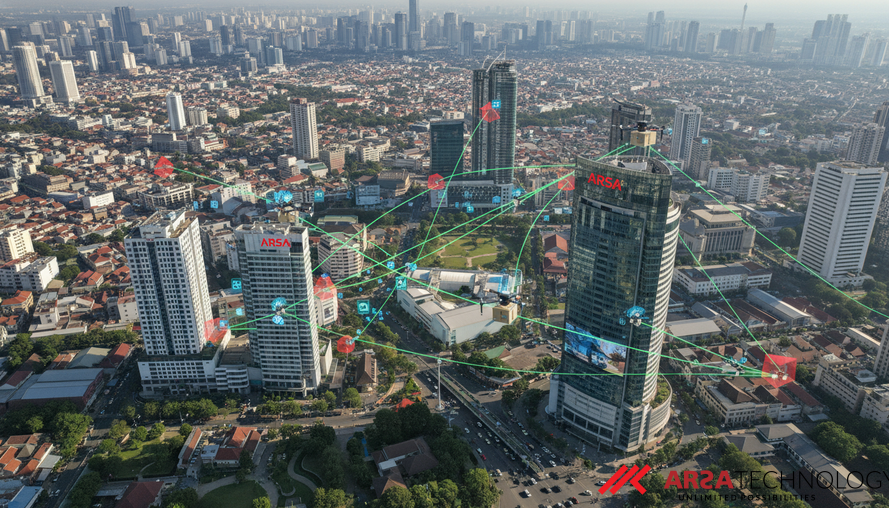
The Autonomous Sky and Its Challenges
The rapid expansion of small Unmanned Aircraft Systems (sUAS), commonly known as drones, is revolutionizing sectors from logistics and package delivery to emergency response. As these autonomous fleets become ubiquitous in urban airspaces, ensuring their safe and efficient operation is paramount. A critical component of this expansion is autonomous separation assurance—the ability of drones to avoid collisions and maintain safe distances from each other without direct human intervention. This reliance on onboard intelligence and cooperative information exchange is transforming how we envision urban air mobility.
However, this sophisticated autonomy is built upon a surprisingly fragile foundation. Most sUAS depend heavily on Global Positioning System (GPS) for accurate position and velocity estimation. Unfortunately, GPS signals are notoriously susceptible to environmental interference, such as "urban canyons" in dense cityscapes, which can cause positional errors of tens of meters. Even more concerning are malicious GPS spoofing attacks, which can deceive drones with false location data, boasting field-demonstrated success rates ranging from 5% to 40%. These vulnerabilities pose significant risks to the future of autonomous drone operations, demanding robust solutions to ensure safety and reliability.
The Fragile Foundation of Autonomous Flight
Unlike traditional commercial aviation, which employs radar-verified surveillance systems, sUAS traffic management frequently relies on cooperative position sharing through technologies like Remote Identification (Remote ID). In this system, each drone broadcasts its GPS-derived position to others. The challenge arises when a drone’s GPS signal is corrupted: not only is its own perceived position erroneous, but the corrupted broadcasts from other nearby drones further compromise its understanding of the entire air traffic state. This means a single shared corruption source, like a localized spoofing attack, can simultaneously and correlatedly perturb the observed state for multiple drones, leading to a cascade of potentially dangerous miscalculations.
This vulnerability transforms a seemingly straightforward navigation problem into a complex challenge of trust and resilience. When multiple agents (drones) depend on shared, potentially compromised information, robust decision-making becomes exceedingly difficult. Traditional safety mechanisms often assume perfect state observation, an assumption that simply does not hold in real-world urban environments where GPS degradation and sophisticated spoofing attacks are increasing threats. Addressing this requires a paradigm shift in how autonomous systems perceive and react to their environment, especially when core data sources are unreliable.
Multi-Agent Reinforcement Learning: A Path to Robustness
To counter these challenges, researchers are increasingly turning to Multi-Agent Reinforcement Learning (MARL). MARL offers a compelling framework for enabling autonomous systems to learn complex behaviors and make decentralized decisions, even in dynamic, multi-drone environments. Existing MARL approaches have shown remarkable success in conflict resolution and traffic management, but most have historically assumed that all state observations are perfect and trustworthy. This critical assumption breaks down under GPS degradation or spoofing, highlighting a significant gap in current autonomous separation assurance systems.
The core innovation lies in treating GPS observation corruption as a "zero-sum game" between the autonomous agents and an intelligent adversary. In this model, the adversary actively seeks to perturb the observed state in a way that maximally degrades each drone's safety performance, while the MARL agents learn a counter-policy to maintain safety. This adversarial perspective allows for the development of policies that are not just effective under ideal conditions, but robust even when facing significant data corruption. By mathematically modeling this interaction, the system can anticipate and respond to worst-case scenarios, ensuring a higher level of safety and reliability.
Innovating Robust AI for Edge Environments
A breakthrough in this area involves deriving a closed-form mathematical expression for the worst-case adversarial perturbation. This elegant solution bypasses the computationally intensive process of "adversarial training," where a separate adversarial AI must be trained alongside the agents. Instead, this direct expression allows for linear-time evaluation in the state dimension, significantly speeding up the process of understanding and mitigating threats. It effectively approximates the true worst-case adversarial perturbation with second-order accuracy, providing a strong theoretical foundation for its practical application.
Furthermore, the research bounds the safety performance gap between clean and corrupted observations, demonstrating that performance degrades at most linearly with the corruption probability under Kullback-Leibler (KL) regularization. This provides a principled method to balance the trade-off between robustness (resistance to corruption) and overall performance (efficiency and speed). By integrating this closed-form adversarial policy into a MARL policy gradient algorithm, a robust counter-policy is developed for the sUAS agents. This approach aligns perfectly with the capabilities of edge AI solutions, which are essential for real-time processing and decision-making on autonomous platforms. For instance, technologies like the ARSA AI Box Series are designed for such on-device processing, ensuring low latency and privacy-preserving analytics crucial for robust drone operations, or leveraging AI Video Analytics to transform raw camera feeds into actionable insights.
Real-World Impact and Future Skies
The practical implications of this research are profound. In high-density sUAS simulations, the robust policy achieved near-zero collision rates even under significant GPS corruption levels, up to 35%. This significantly outperformed baseline policies that were trained without accounting for adversarial perturbations, highlighting the critical advantage of proactive robustness design. Such results are not just theoretical; they translate directly into safer, more reliable operations for commercial drone services, urban air mobility, and critical infrastructure monitoring.
For enterprises and governments seeking to deploy autonomous drone fleets for applications like package delivery, infrastructure inspection, or public safety, these robust AI solutions offer a new layer of assurance. The ability to maintain operational integrity despite GPS vulnerabilities dramatically reduces risks, ensures compliance with safety regulations, and paves the way for scalable, economically viable drone operations. As a technology provider experienced since 2018, ARSA Technology understands the importance of designing AI systems that work reliably under real-world constraints, emphasizing privacy-by-design and flexible deployment models tailored to mission-critical environments.
Conclusion: Securing the Autonomous Future
The future of autonomous urban airspaces depends on the ability of sUAS to navigate complex environments safely and reliably, even when faced with unforeseen challenges like GPS degradation and spoofing. By developing robust Multi-Agent Reinforcement Learning strategies that explicitly model and counter adversarial perturbations, we can build more resilient autonomous systems. This innovation moves beyond simple error detection, enabling drones to make intelligent, safe decisions based on a deeper understanding of corrupted sensor data. As the autonomous landscape evolves, integrating such robust AI capabilities will be non-negotiable for ensuring operational success and public trust.
Ready to explore how robust AI and IoT solutions can transform your operations and secure your autonomous future? Discover ARSA Technology’s cutting-edge platforms and contact ARSA today for a free consultation.
Source: Zongo, A., Fotiadis, F., Topcu, U., & Wei, P. (2026). Robust Multi-Agent Reinforcement Learning for Small UAS Separation Assurance under GPS Degradation and Spoofing. arXiv preprint arXiv:2603.28900.