Safeguarding Childhood: Designing Responsible XR Experiences for Early Education with AI & IoT
Explore the Augmented Human Development (AHD) framework for XR in early childhood education. Learn how AI and IoT can mitigate cognitive load, sensory conflicts, and critical privacy risks, ensuring child-centric digital learning.

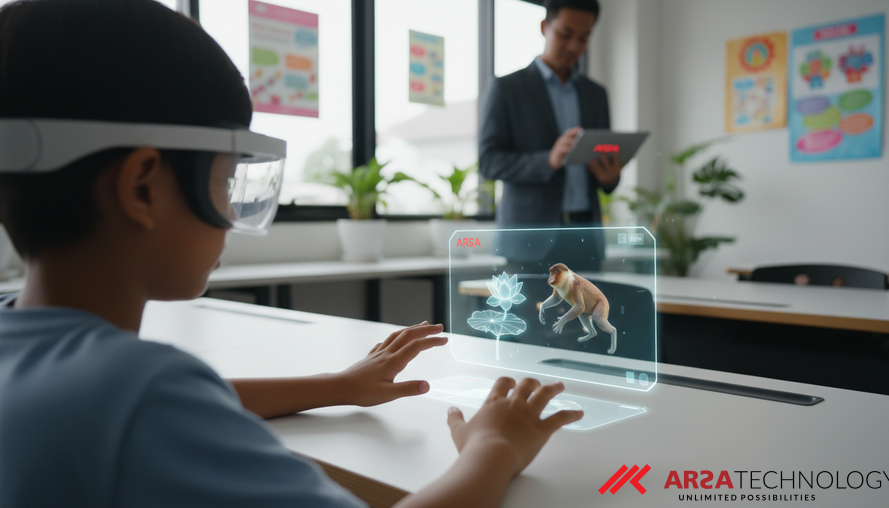
Extended Reality (XR), encompassing Augmented Reality (AR), Virtual Reality (VR), and Mixed Reality (MR), holds immense potential to revolutionize early childhood education (ECE). By creating immersive and interactive learning environments, XR can significantly boost engagement in subjects like STEM and literacy. However, the unique developmental stage of young children, characterized by rapid cognitive, emotional, social, and motor skill acquisition, introduces significant complexities and risks. Systems designed for adults often fail to account for these delicate developmental parameters, leading to issues like excessive cognitive load, sensory conflict, or even physical discomfort.
A recent academic paper, "XR Design Framework for Early Childhood Education," delves into these challenges, highlighting a critical gap in structured frameworks that link XR pipeline properties to a child's developmental limits. This research introduces the Augmented Human Development (AHD) framework, a vital tool for designing safer, more effective XR experiences for children aged 3 to 8.
Understanding the Augmented Human Development (AHD) Framework
The AHD framework provides a structured lens to analyze the dynamic interplay between children and XR systems. It posits that a child's interaction with an XR system at any given moment, AHD(t), is a function of four key parameters:
- Cognitive Load (C(t)): This refers to the demands placed on a child's attention, memory, and executive functions. Overload occurs when children struggle more with the interface mechanics than with the actual learning objectives. For instance, complex navigation or too many simultaneous virtual objects can detract from educational content.
- Sensory Stimulation (S(t)): This dimension captures how motion cues, visual complexity, and audio affect a child. Unstable or overly intense augmentations can cause disorientation or discomfort, hindering a smooth and positive experience.
- Environmental Context (E(t)): This parameter considers external factors like the presence and mediation of a teacher, opportunities for social collaboration, and ambient noise levels. It includes the readiness of instructional staff and the overall social ecology of the classroom.
- Developmental Profile (D(t)): Crucially, this accounts for the child's age, motor abilities, and sensory thresholds, setting strict boundaries for what constitutes an acceptable and beneficial workload or stimulation level.
The AHD framework emphasizes that challenges observed in XR for ECE – such as cognitive overload, novelty-driven distraction, VR-induced fatigue, or unequal access – are not isolated issues. Instead, they are interconnected effects stemming from a misalignment among these four parameters. Solutions that address one factor in isolation may overlook the coupled nature of these interactions.
Systemic Frictions: When Technology Meets Development
The research, grounded in a Systematization of Knowledge (SoK) of 111 peer-reviewed studies conducted by researchers at Coventry University and George Mason University, uncovered various systemic frictions. A significant portion of these deployments (73% AR, 20% VR) relied on mobile and tablet-based systems (63%), which are often less sophisticated than dedicated XR hardware.
A prime example is handheld AR, where studies frequently reported target-tracking failures. This occurs because the monocular camera sensing in these devices demands a level of stability (S(t)) that exceeds the fine motor control capabilities of young children (D(t)). The result is visual jitter, frequent tracking loss, and broken interactions that frustrate rather than educate. Similarly, immersive VR systems often fail due to hardware and anthropometric incompatibilities. Standard adult-sized head-mounted displays (HMDs) do not account for early childhood cranial dimensions (D(t)), leading to optical misalignment, discomfort, and even musculoskeletal strain. Such systems can also induce "cybersickness" by creating neuro-vestibular conflict when visual motion cues (S(t)) diverge from a child's physical vestibular signals (D(t)).
Beyond technical snags, pedagogical integration faces its own set of barriers. While 107 of the 111 reviewed studies reported positive learning outcomes, many of these effects were short-term, driven by novelty rather than sustained conceptual understanding. Elevated sensory stimulation (S(t)) often overwhelms a child's cognitive resources (C(t)), leading to "cognitive tunneling"—where children focus on interacting with the device rather than the learning content. Text-based instructions further exclude pre-literate users (D(t)), necessitating constant adult intervention (E(t)), highlighting the critical role of the environmental context.
The Critical "Risk vs. Attention Gap"
Perhaps the most significant finding from the study is the "risk vs. attention gap." The researchers mapped scholarly attention against independently derived real-world risk scores, revealing glaring blind spots in current research.
- Data Security and Privacy: These areas receive alarmingly low scholarly attention (0.14 and 1.04 respectively on a 0-2 scale) despite carrying the maximum real-world risk score (9 on a 0-9 scale). This imbalance points to insufficient environmental governance (E(t)) in safeguarding children's developmental profiles (D(t)) against irreversible biometric data exposure. Current approaches often treat privacy as a mere procedural issue (parental consent) rather than addressing fundamental technical safeguards like data minimization and on-device processing. This is where advanced solutions, such as ARSA AI Box Series, come into play by prioritizing edge computing for privacy-compliant, on-premise data processing, ensuring sensitive data never leaves the local environment.
- Disability Access: This critical area also suffers from neglect (Attention: 0.52). Many systems are optimized for neurotypical users, failing to accommodate the significant developmental variability (D(t)) within early childhood populations.
- Medical/Health Concerns: Issues like cybersickness and ergonomics, though carrying a moderate risk score (4), remain significantly underrepresented in research (Attention: 0.81). This suggests a prioritization of cognitive engagement over the physiological constraints and sensory thresholds of the developing child.
- Pedagogy and Technical Challenges: These areas receive the most research focus (Attention: 1.56 and 0.96), emphasizing alignment between cognitive demands (C(t)) and system stability (S(t)). While this focus improves usability, the corresponding risk levels are comparatively lower (4 and 2), as effects like novelty-driven distraction are often transient.
This gap underscores a crucial oversight: while educators and developers are working to make XR engaging and technically sound, the fundamental safety, privacy, and accessibility considerations for children are often overlooked.
Implications for Responsible AI and IoT Deployment
The findings of this research highlight the imperative for a child-centered XR by design approach. Developers, educators, and technology providers must prioritize ethical considerations, privacy-by-design, and deep understanding of child development when creating immersive learning tools. Integrating robust AI and IoT solutions, such as those that underpin ARSA's AI Video Analytics, can enable tailored content delivery, real-time monitoring of a child's comfort and engagement, and proactive adjustments to XR environments.
For enterprises looking to deploy AI and IoT solutions in sensitive environments, including education, the lessons from this framework are clear. The need for privacy-first approaches, especially concerning biometric and behavioral data, cannot be overstated. ARSA Technology, experienced since 2018, emphasizes privacy-compliant solutions that process sensitive data at the edge, mitigating risks associated with cloud dependency. This includes ensuring solutions are highly customizable to align with specific developmental profiles and environmental contexts, rather than offering generic, one-size-fits-all products.
By adopting frameworks like AHD, we can move beyond simply making technology available to children and instead focus on designing truly beneficial, safe, and developmentally appropriate digital experiences. This calls for a collaborative effort between child development specialists, educators, and AI/IoT solution providers to build the future of learning responsibly.
For businesses and organizations navigating the complexities of AI and IoT integration in sensitive sectors like early childhood education, understanding these nuanced challenges is paramount. To explore how ARSA Technology's custom AI and IoT solutions can meet your specific needs with a focus on privacy, security, and real-world impact, we invite you to contact ARSA for a free consultation.