Scaling Enterprise AI: The Strategic Shift to Composable and Sovereign Architectures
Learn why enterprises are moving beyond fragile AI pilots to adopt composable and sovereign AI architectures for lower costs, data ownership, and scalable deployment. Discover ARSA Technology's approach to robust AI solutions.

The Enterprise AI Paradox: Why Pilots Fail to Scale
The landscape of enterprise Artificial Intelligence (AI) adoption is at a crucial juncture. Despite substantial investments in generative AI and other advanced technologies, many organizations struggle to translate pilot projects into measurable business value. Reports indicate that only 5% of integrated AI pilots deliver tangible results, and nearly half of all AI initiatives are abandoned before reaching full production. This striking disparity isn't due to the AI models themselves, which often perform well in controlled environments. Instead, the primary bottleneck lies in the surrounding infrastructure: issues such as limited data accessibility, rigid integration processes, and fragile deployment pathways are preventing AI initiatives from scaling effectively beyond initial experiments.
This challenge highlights a critical need for a fundamental shift in how enterprises approach AI architecture. The limitations of traditional approaches stifle innovation and waste resources, pushing businesses towards more resilient and adaptable frameworks. The underlying problem is often a structural mis-design from the outset, where pilot projects, while successful in demonstrating feasibility, are not built to withstand the complexities of real-world enterprise deployment.
The Peril of the "Safe Bubble" of AI Proofs of Concept
AI proofs of concept (PoCs) are invaluable for validating technological feasibility, identifying potential use cases, and building internal confidence for larger investments. However, as noted by Cristopher Kuehl, chief data officer at Continent 8 Technologies, these pilots often operate within a "safe bubble." In such an environment, data is meticulously curated, the number of system integrations is kept to a minimum, and the work is typically handled by highly experienced and motivated teams. This idealized setting, while conducive to initial success, rarely mirrors the intricate realities of a production environment.
Gerry Murray, research director at IDC, aptly describes this phenomenon as structural mis-design, where many AI initiatives are "set up for failure from the start." The conditions that allow PoCs to thrive—simplicity, controlled variables, and dedicated resources—are seldom sustainable or replicable at an enterprise scale. The result is a cycle where promising pilots fail to translate into widespread operational impact, leading to frustration and wasted investment.
Embracing Composable and Sovereign AI for Future Resilience
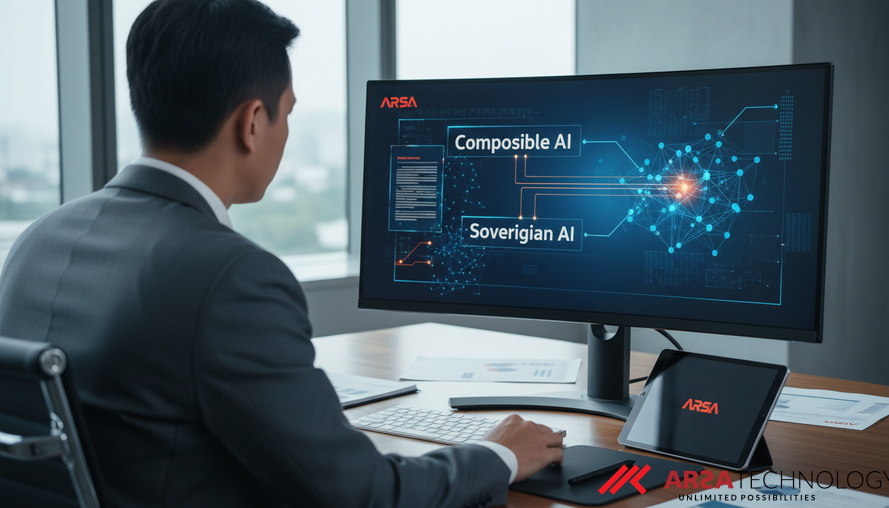
In response to these pervasive challenges, enterprises are increasingly adopting composable and sovereign AI architectures. This paradigm shift is anticipated to be significant, with IDC projecting that 75% of global businesses will make this transition by 2027. Composable AI refers to building AI systems from independent, interchangeable modules that can be easily assembled, reconfigured, and updated. This modularity fosters agility, allowing businesses to adapt rapidly to evolving AI technologies and changing business requirements without overhauling entire systems. It enables faster iteration and more cost-effective development, moving away from monolithic, rigid deployments.
Sovereign AI, on the other hand, emphasizes complete data ownership and control. It ensures that sensitive data remains within an organization's premises or jurisdiction, addressing critical concerns around data privacy, regulatory compliance, and intellectual property. This approach minimizes reliance on external cloud providers for data processing, reducing potential security risks and infrastructure costs associated with data egress. Together, composable and sovereign AI architectures offer lower operational costs, enhanced data security, and the flexibility needed to navigate the unpredictable evolution of AI technology.
Designing for Production: Moving Beyond Limited Experiments
The key to successful AI adoption lies in designing solutions that are robust enough for production from day one. This means moving beyond early Large Language Model (LLM) and Retrieval-Augmented Generation (RAG) experiments that thrive in isolated conditions. Instead, organizations must focus on building a foundational infrastructure that supports scalable data pipelines, flexible integration capabilities, and reliable deployment pathways. This proactive approach minimizes the chances of initiatives failing when confronted with real-world operational demands.
Consider scenarios where a single AI model needs to integrate with various legacy systems or process diverse, unstructured data streams. A composable architecture allows for the seamless addition of new data connectors or processing modules without disrupting the entire system. Similarly, sovereign AI ensures that all sensitive data, whether it's customer information or proprietary operational insights, remains securely under the organization's control, even as AI models process and learn from it. This focus on architectural resilience ensures that AI investments yield sustainable, long-term value.
ARSA Technology's Vision for Scalable AI Deployment
At ARSA Technology, we recognize the critical importance of building AI solutions that are not just innovative but also practical, scalable, and secure for enterprise environments. Our approach combines deep technical expertise with a focus on real-world deployment challenges, helping businesses overcome the hurdles that typically stall AI initiatives. We champion solutions that are privacy-by-design and engineered for seamless integration into existing operational frameworks.
For example, our ARSA AI Box Series provides an edge computing platform that transforms existing CCTV cameras into intelligent monitoring systems, offering real-time analytics with local processing to ensure data privacy and reduce cloud dependency. This exemplifies how edge AI solutions support sovereign data principles. Furthermore, our ARSA's AI Video Analytics capabilities, including modules like PPE detection or crowd analysis, are designed as modular components that can be composed and integrated into various enterprise systems, ensuring flexibility and rapid deployment. Having been experienced since 2018 in developing robust AI and IoT solutions, ARSA Technology understands the nuances of moving from pilot to enterprise-wide implementation, ensuring that AI delivers tangible benefits such as increased security, optimized operations, and new revenue streams.
Businesses in Indonesia and globally can harness our AI-powered solutions to drive digital transformation. Whether it’s enhancing safety compliance, optimizing traffic flow, or gaining deeper customer insights, our integrated approach ensures that AI becomes a truly impactful asset, not just a fleeting experiment.
Ready to build a resilient and impactful AI strategy for your enterprise? Explore ARSA Technology's solutions and leverage our expertise to ensure your AI initiatives scale successfully.