SelfieAvatar: Revolutionizing High-Fidelity Head Avatars from a Single Video
Discover SelfieAvatar, an AI breakthrough that creates realistic, animatable 3D head avatars from just one selfie video. Explore its impact on gaming, VR, human-machine interaction, and digital identity.

The Evolving Landscape of Digital Avatars and Reenactment
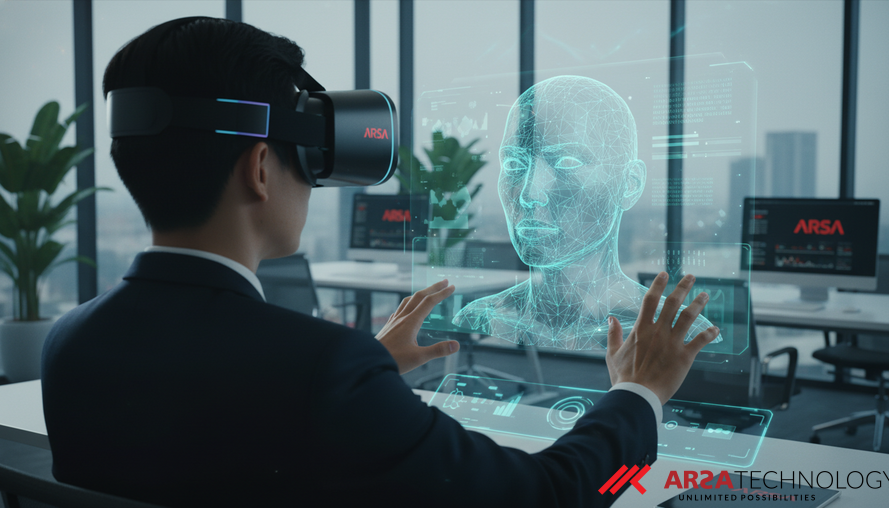
In an increasingly digital world, the demand for realistic and expressive digital representations of ourselves—known as avatars—is soaring. From immersive virtual reality (VR) environments and augmented reality (AR) applications to sophisticated gaming experiences and seamless human-machine interactions, personal avatars are becoming a foundational element of our online and digital lives. Head avatar reenactment, a cutting-edge field in computer vision, focuses on creating animatable 3D models of a person's head that can be controlled to mimic movements, expressions, and even emotions from a source video.
However, the journey to truly high-fidelity, real-time head avatars has been fraught with challenges. Achieving photorealistic detail, capturing the nuances of human expression, and doing so efficiently without extensive data has remained a significant hurdle for researchers and developers alike.
The Hurdles to Achieving Realistic Head Avatars
Creating digital avatars that are indistinguishable from real-life counterparts requires overcoming several complex technical barriers. Current methodologies, while advanced, often fall short in critical areas:
- Limited Scope of Reconstruction: Many existing methods, particularly those based on 3D Morphable Models (3DMMs), excel at reconstructing facial geometry and texture. However, they frequently struggle to capture the entire head—including non-facial regions like hair, neck, and shoulders, as well as contextual background details—in real-time. This omission can significantly detract from the overall realism and immersive quality of the avatar.
- Sacrificing Detail for Generation: Approaches leveraging powerful generative adversarial networks (GANs) have demonstrated remarkable ability in generating high-quality reenactments. Yet, these methods often encounter limitations in reproducing the fine-grained intricacies of human appearance, such as subtle wrinkles, skin textures, or individual hair strands. The output can appear unnaturally smooth or lacking in lifelike fidelity.
- Excessive Data Dependency: A common constraint across many state-of-the-art avatar generation techniques is their reliance on vast amounts of training data. This requirement can make the process resource-intensive, time-consuming, and less accessible for individuals or smaller enterprises looking to create personalized avatars. It also presents challenges for real-time personalization, as acquiring and processing large datasets for each user is impractical. AI Video Analytics, like those developed by ARSA, continually push the boundaries of real-time monitoring and analysis, addressing similar demands for detailed object recognition and behavioral insights.
SelfieAvatar: A Breakthrough in Personal Avatar Generation
A groundbreaking research, "SelfieAvatar: Real-time Head Avatar reenactment from a Selfie Video" by Wei Liang et al., introduces a novel approach that addresses these challenges head-on. This method distinguishes itself by its ability to create highly detailed, animatable head avatars using an astonishingly minimal input: just one short selfie video for training. This significantly democratizes the creation of sophisticated digital identities, lowering the entry barrier for a wide array of applications. The paper, originally published on arXiv, outlines a system designed for both precision and efficiency.
SelfieAvatar’s core innovation lies in its sophisticated fusion of traditional 3DMMs with a cutting-edge StyleGAN-based generator. This combination allows the system to not only accurately estimate the 3D shape and expression of a face but also to generate highly realistic textures for the entire head, including the often-overlooked non-facial regions and elements of the background. The result is a high-fidelity avatar that maintains identity, supports controllable pose and expression, and boasts rich, intricate textures.
How SelfieAvatar Achieves Unprecedented Detail
The power of SelfieAvatar stems from its carefully designed technical architecture, which focuses on recovering both the broad structure and the subtle nuances of human appearance:
- Dual Generation Process: The system employs a unique strategy where two StyleGAN-based networks work in parallel. One generator is dedicated to the precise reconstruction of the facial region, capturing minute details, while the other simultaneously focuses on generating realistic non-facial areas and background elements. This parallel processing ensures comprehensive coverage of the entire head and its immediate surroundings.
- Mixed Loss Functions for Fidelity: To train these generative networks, SelfieAvatar introduces a sophisticated set of "mixed loss functions." During adversarial training, where a generator creates images and a discriminator tries to tell them apart from real ones, these loss functions guide the learning process. They don't just enforce overall similarity but specifically emphasize the accurate reconstruction of the head foreground and the realistic generation of the complete avatar image. This targeted approach is crucial for recovering high-frequency details.
- High-Frequency Detail Recovery: A key component for achieving lifelike realism is the ability to capture and reproduce high-frequency information—the fine patterns, textures, and subtle variations that give skin its natural look and hair its individual strands. SelfieAvatar introduces a "facial foreground region details loss" that leverages an Implicit Diversified Markov Random Field (ID-MRD). This advanced technique acts as a meticulous supervisor, ensuring that the generated details, such as wrinkles and hair textures, closely match the ground truth, preventing the overly smooth aesthetic often seen in other GAN-based methods.
Perceptual Realism through Feature Similarity: To further enhance the realism of the generated avatars, the method computes the cosine similarity between multi-scale features extracted from both the generated image and the real image. This metric ensures that the generated avatar not only looks geometrically correct but also perceptually* authentic across different levels of detail, contributing to a more believable and immersive experience.
Practical Applications Across Industries
The ability to create detailed, real-time head avatars from a single selfie video has transformative implications across numerous sectors:
- Gaming and Entertainment: Players could generate hyper-realistic in-game avatars that genuinely resemble them, enhancing personalization and immersion. Developers could also use this for rapid character design and animation.
- Virtual Reality (VR) and Augmented Reality (AR): For virtual meetings, social platforms, or training simulations, participants could be represented by avatars that capture their unique facial expressions and head movements in real-time, fostering more natural and engaging digital interactions.
- Human-Machine Interaction (HMI): Digital assistants or customer service avatars could become more empathetic and personalized, leading to improved user experience and trust.
- Psychological and Cognitive Science Research: Researchers can create highly controlled yet realistic avatars to study human perception, social cues, and emotional responses, offering unprecedented experimental precision. This is an area where ARSA has been experienced since 2018, applying vision AI to various complex scenarios.
- Digital Identity and Telepresence: As remote work and virtual collaboration become more prevalent, realistic avatars could offer a more personal and less fatiguing alternative to video calls, maintaining a strong sense of presence.
- Content Creation: Individuals and small content creators can leverage this technology to produce professional-grade animated content without needing extensive 3D modeling expertise or large datasets.
The development of advanced AI capabilities, like those underpinning SelfieAvatar, aligns with the offerings of solution providers such as ARSA Technology. Our ARSA AI API provides enterprise-grade AI capabilities, including facial recognition and liveness detection, which can be integrated into various applications, enabling similar levels of advanced functionality for identity verification and digital interaction.
The Significance of Real-time, Data-Efficient AI
SelfieAvatar represents a significant leap forward not just in avatar generation but in the broader field of AI deployment. Its key advantages underscore the evolving paradigm of AI development:
- Efficiency and Accessibility: By requiring only a single short selfie video for training, the method drastically reduces the data collection burden, computational resources, and time typically associated with high-fidelity avatar creation. This makes sophisticated AI accessible to a much broader audience and for rapid deployment scenarios.
- Real-time Performance: The emphasis on real-time head avatar reenactment ensures that the technology is practical for interactive applications where latency is critical. This enables fluid and natural digital presence, crucial for enhancing user experience in VR, AR, and HMI.
- Privacy-Conscious Potential: While not explicitly a privacy feature of SelfieAvatar itself, the ability to train on minimal, localized data—rather than vast cloud-dependent datasets—aligns with a privacy-by-design philosophy. This efficiency can reduce the need for extensive personal data collection and storage, which can be further enhanced by edge computing solutions. ARSA’s AI Box Series, for instance, provides plug-and-play edge intelligence that processes data locally, offering maximum privacy and security without cloud dependency.
The innovations embedded in SelfieAvatar point towards a future where digital interactions are more personal, immersive, and accessible than ever before, paving the way for new forms of communication, entertainment, and human-computer engagement.
To explore how advanced AI vision and IoT solutions can transform your enterprise operations, from enhancing security to optimizing customer experiences, do not hesitate to contact ARSA for a free consultation.