Streamlining EdTech: Migrating to ARSA's Speech-to-Text API for Seamless Integration
Simplify EdTech integration with ARSA's Speech-to-Text API. Learn how to overcome complex challenges for automated subtitles, captions, and enhanced learning experiences.

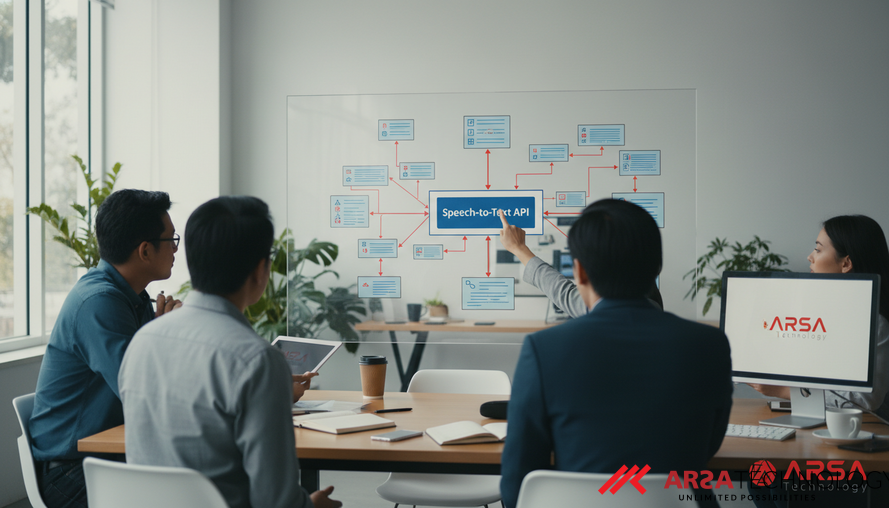
Introduction: Overcoming Complex System Integration Needs in the Education Industry
The digital transformation of the education industry is accelerating, driven by the demand for more accessible, engaging, and personalized learning experiences. At the heart of this transformation lies technology, particularly Artificial Intelligence (AI) solutions that enhance content delivery and student interaction. Among these, automated subtitle and closed caption generation stands out as a critical feature, vital for accessibility, language learning, and content searchability. However, for many educational technology (EdTech) platforms, integrating advanced AI capabilities like a robust speech recognition API can be fraught with challenges, primarily due to complex system integration needs.
Legacy systems, diverse existing technology stacks, stringent data privacy requirements, and the sheer scale of educational content often turn what should be a straightforward enhancement into a daunting development project. Developers and solutions architects in EdTech are constantly seeking ways to embed powerful AI without overhauling their entire infrastructure or incurring prohibitive technical debt. This article outlines a strategic approach to migrating towards ARSA Technology’s Speech-to-Text API, demonstrating how it simplifies integration, delivers measurable value, and empowers educational platforms to achieve their goals with greater efficiency and less complexity.
Understanding the Integration Challenge in Educational Technology
The educational landscape is a mosaic of learning management systems (LMS), content delivery networks (CDN), student information systems (SIS), and various proprietary tools. Each component often operates with its own set of protocols, data formats, and security measures. When introducing a new, powerful AI capability like a speech-to-text engine, the integration points can become a significant bottleneck.
Consider the typical journey of an educational video: it's recorded, uploaded, processed, and then delivered to students across multiple devices and regions. Adding automated transcription means injecting a new processing step that must seamlessly connect with existing storage, content management, and playback systems. Challenges include:
- Data Ingestion and Egress: How will large audio/video files be securely transferred to the transcription service and how will the resulting text be returned and stored?
- Scalability Demands: Educational institutions often experience peak usage times. The integrated solution must scale dynamically to handle thousands of concurrent transcription requests without performance degradation.
- Maintaining Data Integrity and Security: Student data and proprietary educational content are sensitive. Any integration must adhere to strict data governance and privacy standards.
- Developer Resource Allocation: Complex integrations consume valuable developer time, diverting resources from core product innovation.
- Version Control and Maintenance: Over time, APIs evolve. Ensuring that integrations remain compatible and easily maintainable is crucial to long-term operational efficiency.
These complexities can delay feature rollouts, inflate development costs, and ultimately hinder an institution's ability to deliver cutting-edge learning experiences.
ARSA Technology's Speech-to-Text API: Simplifying Integration
ARSA Technology addresses these integration pain points head-on with its high-performance Speech-to-Text API. Designed with developer experience and enterprise needs in mind, our highly accurate transcription API offers a streamlined path to integrating advanced voice-to-text capabilities into any EdTech platform.
The core of ARSA’s approach lies in its modular and well-documented API architecture. This design philosophy means that instead of a monolithic system requiring extensive custom coding, developers interact with a clearly defined interface. This significantly reduces the learning curve and the amount of bespoke code needed for integration.
For instance, consider the process of sending an audio file for transcription. The API is designed to accept various audio formats and handle the heavy lifting of processing, regardless of the file size or complexity. The resulting text is then returned in a structured format that can be easily consumed by your existing content management systems. To see the API in action, demo the Speech-to-Text API. This interactive demo allows developers to quickly understand the input and output structures, accelerating their integration planning.
Furthermore, ARSA Technology prioritizes robust infrastructure, ensuring that the API can handle the fluctuating demands of educational platforms, from small online courses to large university systems. This reliability means less time spent on troubleshooting and more time on enhancing the learning experience.
Transforming Learning with Automated Subtitles and Closed Captions
The immediate and most impactful use case for ARSA's Speech-to-Text API in education is the automated generation of subtitles and closed captions. This capability is not merely a convenience; it's a fundamental requirement for inclusive education and enhanced learning.
- Enhanced Accessibility: Providing accurate captions ensures that students with hearing impairments can fully participate in lectures, webinars, and video lessons. It also benefits students who are non-native speakers, allowing them to follow along with the spoken content while reading the text.
- Improved Comprehension and Retention: Studies show that captions can improve comprehension for all learners, especially when dealing with complex or technical subjects. Students can review specific sections of text, reinforce vocabulary, and better grasp difficult concepts.
- Flexible Learning Environments: Captions enable students to consume content in noisy environments or situations where audio playback is not feasible, such as during commutes or in public spaces.
- Language Acquisition Support: For language learners, captions provide an invaluable tool for associating written words with spoken pronunciation, accelerating their proficiency.
By automating this process, educational institutions can rapidly produce accessible content at scale, eliminating the manual, time-consuming, and error-prone process of human transcription. This translates directly into faster content delivery and a more equitable learning environment.
Beyond Accessibility: Unlocking Deeper Educational Value
While accessibility is paramount, the benefits of high-quality speech-to-text extend far beyond just captions. The transcribed text becomes a rich data asset that can unlock new possibilities for educational platforms:
- Content Indexing and Searchability: Imagine students being able to search through an entire library of video lectures for specific keywords or topics. Transcribed content makes this possible, transforming passive video archives into searchable knowledge bases. This significantly improves student efficiency in finding relevant information for assignments or review.
- Automated Summarization and Note-Taking: With accurate transcripts, EdTech platforms can develop features for automated summarization of lectures or intelligent note-taking tools that highlight key points, helping students digest information more effectively.
- Sentiment Analysis and Engagement Metrics: Analyzing the tone and content of student discussions (with appropriate privacy safeguards) can provide educators with insights into engagement levels and areas where students might be struggling or excelling.
- Personalized Learning Paths: By understanding how students interact with content through transcripts, platforms can recommend personalized learning materials or identify areas for targeted intervention.
- Content Localization: Transcripts serve as the foundation for translating educational content into multiple languages, facilitating global outreach and diverse student populations. This can be further complemented by services that generate natural voice responses with our TTS API, creating fully localized audio experiences.
These advanced applications demonstrate how a robust Speech-to-Text API transforms raw audio into a versatile data stream, driving innovation across the entire educational ecosystem.
Driving Efficiency and Reducing Operational Costs
The migration to an advanced Speech-to-Text API like ARSA's is not just about enhancing features; it's a strategic move to optimize operational efficiency and achieve significant cost savings. Manual transcription is expensive and slow, often requiring external vendors or a dedicated internal team. The costs associated with human labor, quality control, and turnaround times can quickly accumulate, especially for institutions producing large volumes of video content.
Automating this process with ARSA Technology’s Speech-to-Text API dramatically reduces these overheads. The API offers:
- Cost-Effectiveness: AI-powered transcription is significantly more economical than human transcription at scale, providing a clear return on investment (ROI).
- Speed and Agility: Transcripts can be generated in minutes, not days, allowing for rapid content deployment and timely updates to learning materials. This agility is crucial in fast-paced academic environments.
- Resource Reallocation: By automating transcription, educational institutions can reallocate human resources to higher-value tasks, such as curriculum development, student support, or innovative content creation.
- Consistent Quality: While human transcribers can introduce variability, an AI API provides consistent quality and formatting, ensuring uniformity across all educational materials.
For EdTech companies and educational institutions, these efficiencies translate into a more competitive edge, allowing them to invest more in core educational missions rather than administrative overheads.
Ensuring Scalability and Reliability for Educational Institutions
Scalability is a non-negotiable requirement for any technology solution in the education sector. From the start of a new academic year to exam periods, demand for educational content and supporting features can fluctuate dramatically. ARSA Technology's Speech-to-Text API is built on a scalable infrastructure designed to handle these variations seamlessly.
- High Availability: The API is engineered for continuous operation, minimizing downtime and ensuring that transcription services are always available when needed, even during peak loads.
- Elastic Scaling: The underlying infrastructure automatically adjusts to demand, processing small batches of audio or massive volumes without manual intervention, ensuring consistent performance for all users.
- Global Reach: As education increasingly transcends geographical boundaries, the API's ability to support multiple languages and its robust global infrastructure ensure reliable performance for a diverse, international student body.
- Secure and Compliant Processing: Data security and privacy are paramount. ARSA Technology implements industry-standard security protocols to protect sensitive educational content throughout the transcription process, helping institutions maintain compliance with relevant regulations.
This commitment to scalability and reliability provides educational institutions with the confidence that their investment in ARSA’s API will support their growth and evolving needs without compromising service quality.
A Partnership for Innovation: ARSA Technology's Commitment to Education
Migrating to a new API is more than just a technical implementation; it's a strategic partnership. ARSA Technology views its role not just as a provider of AI APIs but as a collaborator in the digital transformation of education. We understand the unique challenges and opportunities within the EdTech sector and are committed to providing solutions that deliver tangible business impact.
Our team offers comprehensive support, from initial consultation and integration planning to ongoing optimization, ensuring that your platform fully leverages the capabilities of our Speech-to-Text API. We believe in building long-term relationships, adapting our solutions to meet the evolving demands of the education industry.
Conclusion: Your Next Step Towards a Solution
The complexities of integrating advanced AI into existing EdTech platforms no longer need to be a barrier to innovation. ARSA Technology's Speech-to-Text API offers a powerful, streamlined solution for automated subtitle and closed caption generation, overcoming common integration challenges with its modular design, robust infrastructure, and developer-centric approach. By leveraging this technology, educational institutions can enhance accessibility, unlock deeper content insights, drive operational efficiencies, and ensure a scalable, reliable learning experience for students worldwide.
Choosing ARSA Technology means partnering with a company dedicated to delivering measurable ROI and fostering digital transformation in the education sector.
Ready to Solve Your Challenges with AI?
Discover how ARSA Technology can help you overcome your toughest business challenges. Get in touch with our team for a personalized demo and a free API trial.