The AI-Powered Revolution: How Smart E-Bikes are Reshaping Personal Mobility
Explore Amflow's latest e-bikes, featuring advanced AI for personalized performance, superior power, and smart connectivity. Discover how intelligent technology is transforming urban and off-road cycling.

The Convergence of Innovation: E-Bikes and Intelligent Technology
The landscape of personal mobility is undergoing a profound transformation, with electric bicycles leading the charge in integrating cutting-edge technology. What were once simple pedal-assist vehicles are rapidly evolving into sophisticated, intelligent machines, blurring the lines between transportation and smart devices. This evolution is particularly evident in the realm of electric mountain bikes (eMTBs), where innovations in power, design, and software are setting new standards. A prime example of this advancement is seen in Amflow's latest offerings, which leverage advanced engineering to deliver unprecedented performance and a highly personalized riding experience. The integration of AI and IoT capabilities into these vehicles signifies a shift towards more intuitive, responsive, and data-driven personal transport, as highlighted in a recent report by The Verge.
Engineered for Peak Performance: Power Meets Precision
At the heart of Amflow’s new eMTB ranges, including the flagship PX and the versatile PR series, are the incredibly dense Avinox M2S and M2 drive systems. These motors represent a significant leap in e-bike propulsion, delivering a formidable 1,500W of peak power and an impressive 150Nm of torque. Such high power output translates into effortless climbing assist, allowing riders to conquer challenging inclines with ease. However, managing this immense power within a lightweight frame requires sophisticated engineering. Intelligent control systems are crucial to modulate power delivery, preventing potential component damage, such as snapped chains or shredded gear teeth, while ensuring rider safety and optimal performance across various terrains. This demonstrates the critical role that precision control and real-time adjustments play in high-performance applications.
Adaptive Design for the Ultimate Ride
Beyond raw power, the physical design of modern e-bikes contributes significantly to the riding experience. Amflow's latest eMTBs feature advanced carbon fiber frames that are engineered not just for lightness, with the PX weighing around 20kg (44lbs) and the PR around 22kg (49lbs), but also for adaptability. These frames offer an impressive 40 potential geometric combinations. This level of customization allows riders to meticulously tune the bike's setup to their exact riding style, body dimensions, and the specific demands of the terrain. Such flexibility underscores a broader trend in Industry 4.0, where products are designed for deep personalization, moving away from one-size-fits-all solutions towards user-centric configurations that enhance performance and comfort.
Advanced Battery Systems: Extending the Journey
For electric vehicles, battery technology is paramount, directly influencing range and convenience. The Amflow PR, for instance, comes equipped with an 800Wh removable battery, providing substantial power for extended rides. The ability to swap out batteries on long excursions enhances the bike’s practicality for adventure cyclists. Furthermore, the rapid charging capability, which allows the battery to go from 0 to 80 percent in approximately 1.5 hours, minimizes downtime. For even greater range, a 600Wh battery option can be mounted onto the bike frame, creating a dual-battery setup. Behind these impressive specifications lies the intricate work of Battery Management Systems (BMS), essential IoT components that monitor cell health, optimize charging cycles, and ensure safety, ultimately extending the battery's lifespan and reliability.
AI-Driven Intelligence: Beyond Just Pedal Assist
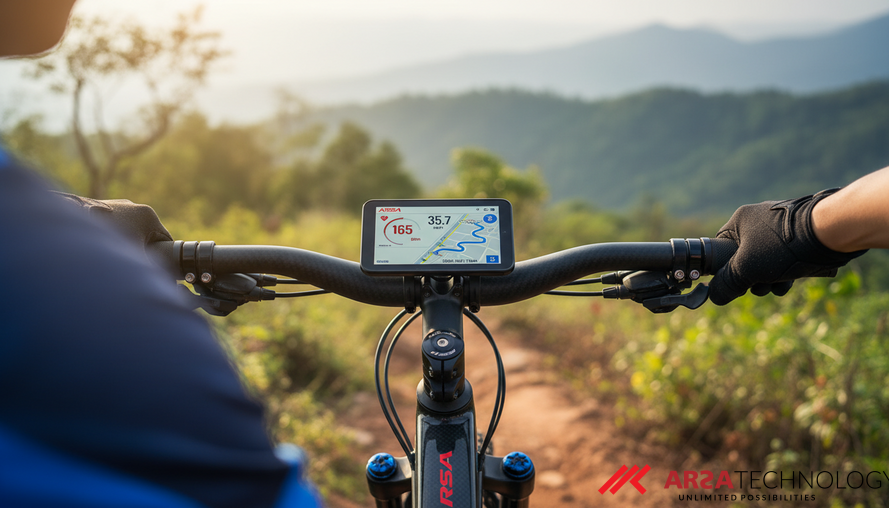
The true "smart" aspect of these e-bikes lies in their integrated software and AI-driven features. Riders benefit from onboard turn-by-turn directions displayed on an integrated 2-inch OLED touchscreen, transforming the cycling experience into a connected journey. For enhanced security and peace of mind, the PR models even include Apple Find My integration, allowing owners to track their valuable assets.
However, the most groundbreaking feature is the inclusion of heart rate control. Riders can pair an external heart rate monitor to the e-bike, enabling the motor to automatically adjust the pedal assist to keep the rider within a specific, pre-defined target heart rate zone. This isn't just automation; it's a sophisticated application of AI and IoT for personalized fitness and performance optimization. By continuously monitoring biometric data and dynamically adjusting the bike's output, the system acts as an intelligent coach, preventing overexertion and ensuring consistent training intensity. This technology showcases how real-time data processing and responsive control systems can deliver highly personalized experiences. ARSA, for example, develops advanced AI Video Analytics and ARSA AI API solutions that perform similar real-time data interpretation and automated decision-making in diverse applications, from security monitoring to industrial automation, adapting to dynamic inputs to achieve specific outcomes. Such systems require robust AI expertise, which ARSA has cultivated, building production-ready solutions since 2018.
The Broader Implications for Smart Mobility
The innovations seen in advanced e-bikes like Amflow’s are not isolated to personal transport; they mirror and contribute to larger trends in smart mobility and IoT ecosystems. The ability to collect and act upon real-time data from vehicles opens doors for integration into smart city infrastructure, offering valuable insights into traffic flow, congestion patterns, and overall urban planning. For instance, similar AI and IoT principles are applied in solutions like ARSA's AI BOX - Traffic Monitor, which analyzes vehicle movement for urban management. The emphasis on personalized, data-driven experiences, combined with considerations for privacy-by-design, sets a precedent for how intelligent systems will interact with users and environments in the future, fostering safer and more efficient journeys across various sectors.
Market Availability and Future Trends
As for market availability, the top-end Amflow PX Carbon is already available for purchase in Europe and Australia, with prices starting at $7,999 for the base model and $10,199 for the Pro version. The Amflow PR Carbon is expected to launch later this year, with a starting price of $4,999. The potential future availability of Avinox drive systems to third-party e-bike manufacturers is a significant development, as it could accelerate the adoption of these advanced capabilities across the industry, fostering an ecosystem of innovation where manufacturers can leverage leading-edge components to build even smarter and more capable e-bikes. This mirrors the flexible deployment models offered by AI solution providers like ARSA, who make their core AI capabilities available via APIs and SDKs to empower broader integration and innovation.
Redefining the Ride with AI
The latest generation of smart e-bikes, exemplified by Amflow’s advancements, signifies a pivotal moment in personal mobility. By integrating powerful drive systems, adaptive designs, and sophisticated AI-driven features like real-time heart rate control, these vehicles are transforming the act of cycling into a highly personalized, efficient, and safer experience. As AI and IoT continue to evolve, we can expect these intelligent companions to become even more integral to our daily lives, offering not just transportation, but also active assistance, security, and health monitoring, all managed with seamless digital intelligence.
To explore how AI and IoT can transform your operations and create intelligent solutions, do not hesitate to contact ARSA for a free consultation.