The Hidden Hand: Why Robotaxi Firms Keep Remote Intervention Data Under Wraps
Senator Ed Markey's investigation reveals a "stunning lack of transparency" from robotaxi companies regarding remote operator interventions, raising critical questions about AI safety and public trust.

The Unseen Oversight: A Call for Transparency in Autonomous Vehicles
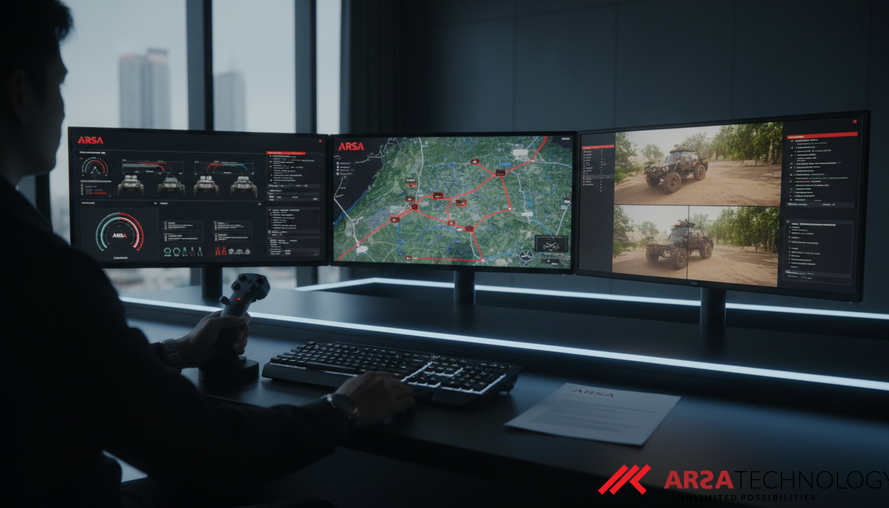
The promise of fully autonomous robotaxis navigating our streets evokes a vision of seamless, driverless transportation. However, a recent investigation initiated by Senator Ed Markey (D-MA) has unveiled a significant gap in transparency from major autonomous vehicle (AV) companies: their reluctance to disclose critical data concerning the frequency and nature of remote operator interventions. This lack of openness raises pertinent questions about the true autonomy of these vehicles, the role of human oversight, and the safety implications for a public increasingly interacting with AI-driven transport systems. The investigation, which targeted seven prominent robotaxi companies—Aurora, May Mobility, Motional, Nuro, Tesla, Waymo, and Amazon’s Zoox—sought to shed light on how often remote assistance operators (RAOs) are called upon to aid self-driving cars, and the conditions under which these interventions occur.
The findings, detailed in a report by Senator Markey's office, emerged from growing concerns over the deployment of driverless technology. A February hearing saw Markey directly questioning representatives from leading AV developers, specifically Waymo and Tesla, about their remote assistance protocols. A particularly striking revelation was Waymo’s admission that some of its remote agents are based overseas, in the Philippines, adding another layer of complexity to operational oversight and regulatory jurisdiction. This growing tension underscores the critical need for a balanced approach to innovation and public safety, ensuring that technological advancements are met with robust transparency and accountability frameworks.
Varying Degrees of Remote Assistance and Control
The investigation brought to light distinct approaches to remote assistance among robotaxi companies, particularly differentiating between Waymo and Tesla. Waymo confirmed that its remote agents are authorized to send prompts for vehicle movement, limited to a speed of 2 miles per hour, but crucially, they do not directly control the vehicle’s steering or acceleration. A notable detail from Waymo's disclosure was that a "substantial share" of its overseas remote workers, while holding driver's licenses issued by their respective countries, do not possess US driver's licenses. This raises discussions around the qualifications and regulatory standards for operators who are, even indirectly, influencing vehicle behavior.
In stark contrast, Tesla stands as the only company to explicitly state it allows remote operators to directly control its vehicles, albeit under specific conditions. Karen Steakley, Tesla's Director of Public Policy and Business Development, explained in her response to Senator Markey that direct remote input is considered a "last resort," limited in scope and duration. This capability enables Tesla to maneuver a vehicle "in a compromising position," thereby avoiding delays associated with waiting for on-site personnel or emergency responders. These interventions are capped at speeds of up to 10 miles per hour. Tesla's limited robotaxi pilot in Austin, while expanding, still largely relies on safety drivers in the front passenger seat, illustrating a hybrid operational model compared to Waymo's fully driverless approach in certain zones. The varying philosophies in remote control highlight the industry's ongoing evolution and the lack of a standardized safety or operational protocol for such critical interventions.
Safety Incidents and the Imperative for Regulation
The concerns raised by Senator Markey are not merely hypothetical. Instances of safety incidents tied to remote assistance have already surfaced. One incident involved a Waymo vehicle in Austin, Texas, where it reportedly drove past a school bus with an extended stop sign, a critical safety violation attributed to "incorrect information from a remote assistant." Such occurrences underscore the very real risks associated with human intervention, even from a distance, and emphasize the fallibility of systems that combine AI autonomy with human oversight. These events are fueling the calls for stringent regulations, as Senator Markey aptly described the robotaxi companies' refusal to disclose intervention data as a "stunning lack of transparency."
The lack of consistent data on remote interventions makes it challenging for regulators and the public to truly assess the safety and reliability of robotaxi services. Without understanding how often humans need to step in, it's difficult to gauge the maturity of the AI technology and the actual level of autonomy. This data is crucial for developing appropriate safety standards, certification processes, and building public trust. For critical applications such as those in smart cities or industrial automation, reliable and accurate AI is paramount. Solutions like ARSA Technology’s AI Video Analytics demonstrate how real-time operational intelligence can be deployed with high accuracy (up to 99.7%), ensuring that automated systems genuinely enhance safety and efficiency without constant manual correction. ARSA, for instance, has been experienced since 2018 in delivering robust, production-ready AI and IoT systems.
The Broader Implications of AI Deployment
The debate over robotaxi remote intervention is a microcosm of a larger discussion surrounding the responsible deployment of Artificial Intelligence in mission-critical environments. As industries increasingly adopt AI and IoT solutions, the questions of transparency, data control, and system reliability become ever more prominent. Enterprises considering AI solutions, whether for enhancing security, optimizing operations, or creating new revenue streams, must critically evaluate not just the capabilities of the AI, but also the underlying operational models, privacy safeguards, and the level of human intervention required. The choice between cloud-based solutions and on-premise edge AI, for example, can significantly impact data sovereignty and latency, which are crucial for real-time safety systems.
For organizations demanding maximum control over their data and operations, solutions like the ARSA AI Box Series offer pre-configured edge AI systems that process video streams locally. This on-premise approach ensures that sensitive data remains within the client’s infrastructure, minimizing cloud dependency and enhancing compliance with privacy regulations. As the autonomous vehicle industry grapples with these transparency issues, it serves as a powerful reminder that AI, while transformative, must be implemented with a clear understanding of its limitations and with robust, verifiable safety measures in place. The ultimate goal is to build trust, not just through technological advancement, but through accountable and transparent deployment practices.
This article draws information from "Robotaxi companies won’t say how often remote operators intervene" by Andrew J. Hawkins, published on The Verge on April 6, 2026.
Ready to explore AI and IoT solutions that prioritize transparency, control, and performance for your enterprise? Discover how ARSA Technology can engineer intelligent systems for your specific needs. Request a free consultation today.