The Minimalist EV Paradox: Is Simplicity the Future of Urban Transportation?
Explore the Slate Truck's ultra-minimalist electric pickup design, its focus on affordability and customization, and whether its stripped-down approach is the future of sustainable urban mobility.

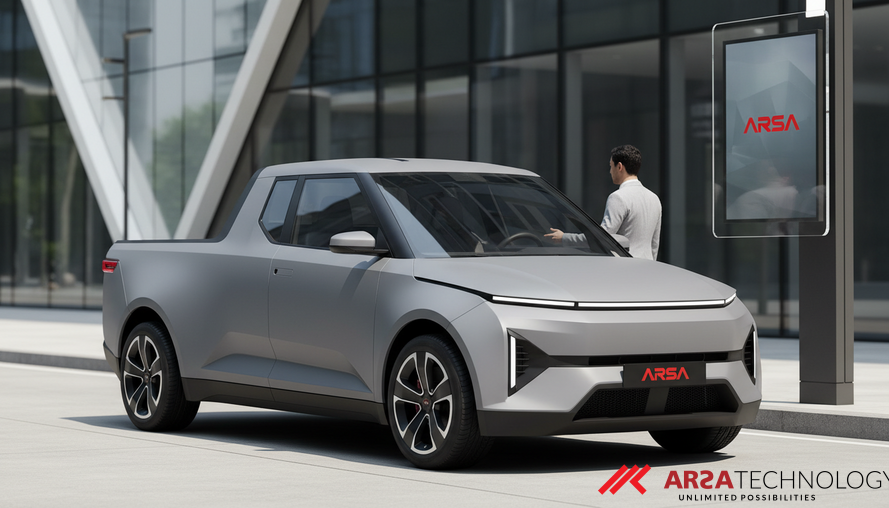
The automotive industry is in a constant state of evolution, driven by technological advancements and shifting consumer demands. Among the most intriguing developments is the rise of the minimalist electric vehicle (EV), challenging the traditional notions of what a personal vehicle should offer. The Slate Truck, a two-seater electric pickup, embodies this philosophy in an extreme way, stripping away many features we've come to expect. This approach raises a fundamental question: In an era of increasing complexity, can extreme simplicity redefine affordability and utility in urban transportation? The answer lies in understanding its core design choices and the market it aims to serve, as reported by Andrew J. Hawkins for The Verge.
Redefining Vehicle Design: The Rise of Minimalism
The concept of minimalism in vehicle design is not entirely new, but the Slate Truck pushes this philosophy to its limits. This electric pickup arrives on the scene notably devoid of many conventional amenities such as paint, a built-in radio, power windows, or even a standard cellular connection. This radical approach is a deliberate attempt to reduce costs and, consequently, make electric vehicle ownership more accessible to a broader audience. While many electric vehicles strive for sleek aesthetics and advanced digital integration, Slate chose a path focused on fundamental utility and affordability.
This stark contrast to the feature-rich vehicles dominating the market compels us to reconsider what truly constitutes value in a personal transport solution. In many industries, embracing simplicity often leads to greater focus on core functionality and enhanced user experience, albeit through different means. The strategic omission of certain features aims to lower the barrier to entry for EV ownership, positioning the Slate Truck as a practical workhorse rather than a luxury item.
Unpacking the Slate Truck's Unique Philosophy
Despite its compact exterior, measuring approximately 174.6 inches long, 70.6 inches wide, and 69.3 inches tall, with a curb weight of about 3,602 pounds (1,634kg), the Slate Truck surprises with its interior spaciousness. Drawing parallels to classic, smaller utility vehicles, it offers ample head and legroom, a deliberate design choice by Tisha Johnson, Slate’s head of design. This emphasis on comfort, even for taller individuals, highlights a focus on core usability and accessibility, overriding the typical compromises of small vehicles.
Johnson, leveraging decades of experience including a tenure at Volvo, championed a design process rooted in heated debates over feature inclusion. The outcome was a utilitarian minimalism that avoids user hostility, prioritizing intuitive functionality and genuine savings for the customer. For instance, while an HVAC system was deemed indispensable due to global climate trends, other "creature comforts" like a stereo were consciously excluded to reduce the final price. This selective minimalism ensures essential functionalities are retained while offering users the freedom to integrate their preferred accessories.
The Practicality of Purpose-Built Design
The absence of features like built-in infotainment systems and painted exteriors is a direct consequence of Slate's commitment to delivering an affordable and highly customizable electric truck. Instead of a pre-packaged experience, the Slate Truck offers a "Blank Slate" – unpainted gray body panels that serve as a foundation for personalized expression. This strategy reflects a broader trend in how products are consumed, moving from prescriptive offerings to modular, user-defined solutions.
For enterprises and even city management, the concept of purpose-built design is paramount. Imagine a fleet of utility vehicles specifically tailored for urban logistics or maintenance. Solutions like ARSA's AI BOX - Traffic Monitor or other smart vehicle solutions can integrate seamlessly with such platforms, providing real-time data for optimized fleet management, traffic flow, and operational efficiency without relying on complex in-vehicle systems. This fosters an environment where the base vehicle handles transport, and intelligent software manages operational insights.
Customization: Empowering the User
Slate's vision extends far beyond a basic vehicle, empowering owners to customize their trucks to an unprecedented degree. The company plans to offer a robust catalog of accessories and aftermarket kits, allowing for wraps, decals, chunky wheels, suspension modifications, and even a kit to convert the two-seater pickup into a five-seater compact SUV. This modularity not only caters to diverse aesthetic preferences but also allows for functional transformations based on evolving needs and budgets.
This approach acknowledges that a vehicle's utility can change over its lifespan. A customer might initially purchase the minimalist truck for current needs and budget, then later upgrade it with an SUV kit or performance enhancements as their requirements or financial situation shifts. This aligns with the principles of circular economy and extended product lifecycle, where the base unit remains while its capabilities and appearance can be continuously adapted. This kind of flexibility is a strong selling point for users seeking a dynamic and long-term investment.
Navigating the Trade-offs of Simplicity
While minimalism brings affordability and customization, it inevitably involves trade-offs. The Slate Truck's upright design, chosen for interior spaciousness, creates more wind resistance. This aerodynamic inefficiency directly impacts range, a critical factor for EVs. Currently, Slate offers two battery configurations: a 53kWh pack providing an EPA-estimated range of 150 miles, and an 84kWh pack extending to 240 miles. These figures, while sufficient for urban driving, are less competitive when compared to other EVs in a similar price bracket, such as the Chevy Bolt, which offers around 260 miles along with standard features like power windows and a built-in radio.
Tisha Johnson clarifies that these compromises stem from a "real clarity" about the Slate Truck's intended primary use: an urban vehicle for daily commutes. It’s not designed to be a "bullet in space" optimized purely for highway aerodynamic efficiency but rather a practical, adaptable solution for city environments. This strategic focus ensures that while some metrics might not break records, the overall package delivers on its promise of accessible and versatile urban mobility.
The Future of Automotive Minimalism
The Slate Truck's entry into the market at the end of 2026 comes at a pivotal moment. The automotive landscape is characterized by fluctuating car prices, rising fuel costs, and increasing environmental consciousness. In this context, a highly configurable, minimalist, and compact electric pickup might be precisely what a segment of the market desires. It challenges the established paradigm that more features always equate to better value, instead proposing that empowering user choice and reducing initial cost could be a stronger differentiator.
The success of the Slate Truck could signal a shift towards more utilitarian, adaptable, and cost-conscious EV designs, particularly for urban and light commercial applications. As an AI & IoT solutions provider, ARSA Technology also understands the value of tailoring solutions to specific needs across various industries, ensuring practical deployment and measurable impact. Such minimalist vehicles could also serve as ideal platforms for integrated smart city or IoT solutions, where the vehicle itself is a mobile data point, and complex analytics are handled externally or at the edge.
If your enterprise is looking to implement practical AI and IoT solutions that deliver measurable impact, ARSA Technology offers custom AI and IoT solutions designed for real-world operations. To discuss how our expertise can transform your industrial challenges into intelligent solutions, we invite you to contact ARSA for a free consultation.
Source: The Verge