The Race for Speed: How Ultrafast 30-Minute Deliveries are Reshaping E-commerce Logistics
Explore Amazon's expansion of 30-minute deliveries to new cities like Atlanta and Dallas-Fort Worth, and how AI & IoT are driving the competitive landscape of rapid e-commerce.

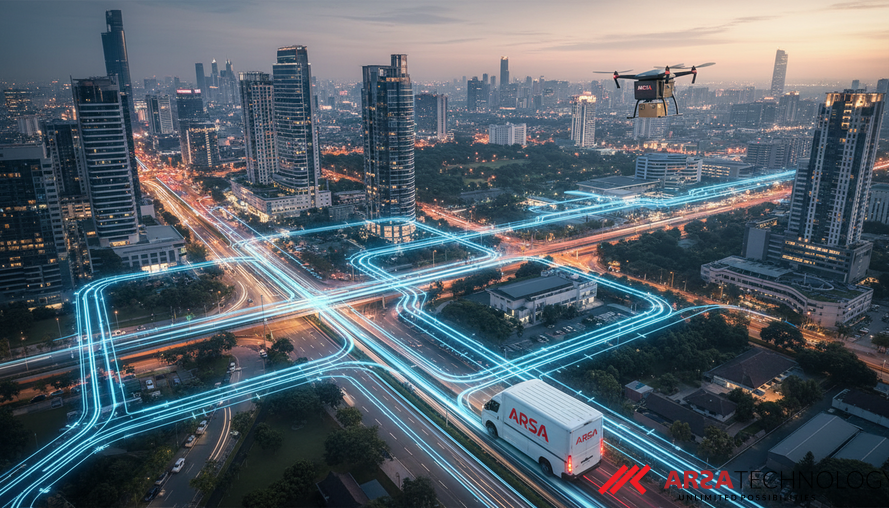
The landscape of e-commerce is continually being redefined by consumer demand for speed and convenience. In this relentless pursuit, ultrafast delivery services are emerging as a critical differentiator, pushing the boundaries of traditional logistics. A recent development highlights this trend, with a major e-commerce player significantly expanding its 30-minute delivery offering across the United States. This move not only underscores the intense competition in the last-mile delivery sector but also showcases the sophisticated technological backbone required to meet such ambitious service levels.
The Evolution of Ultrafast Delivery: Meeting Modern Demands
For years, same-day delivery represented the pinnacle of e-commerce convenience. Major retailers have been experimenting with and refining expedited shipping options since at least 2014, gradually integrating services that promised deliveries within one or two hours. Initially, these services often ran on dedicated platforms or mobile applications, evolving over time to become seamlessly integrated into the main e-commerce experience. This transition reflects a broader shift in consumer expectations, where instant gratification is no longer a luxury but an anticipated standard.
The current expansion builds on a limited test run that commenced in December 2025 within specific areas of Seattle and Philadelphia. This initial phase likely served as a proving ground for the operational intricacies of such rapid fulfillment, allowing for fine-tuning before a broader rollout. The lessons learned from these early deployments are crucial, especially when dealing with the complexities of urban logistics and varying customer demands. This iterative approach to scaling new services is characteristic of how technology-driven solutions are brought to market.
Amazon's Strategic Expansion and Growing Reach
As of May 12, 2026, the 30-minute delivery service, known as Amazon Now, has officially broadened its availability to millions of shoppers nationwide. Beyond the initial test cities of Seattle and Philadelphia, the service is now widely accessible in major metropolitan areas including Atlanta and Dallas-Fort Worth. This strategic geographic expansion targets densely populated regions where the demand for rapid delivery is high and logistical infrastructure can support such operations.
The ambitious rollout doesn't stop there. Further expansion is already slated for numerous other cities, including Austin, Houston, Minneapolis, Orlando, Phoenix, Denver, and Oklahoma City. This indicates a clear strategy to dominate the ultrafast delivery segment, positioning the service as a standard offering rather than a niche experiment. The scope of eligible items is also impressive, encompassing thousands of products vital to daily life, from fresh groceries like milk and produce to over-the-counter medicines, household essentials such as laundry detergent, and even small electronics like AirPods or HDMI cables. Shoppers in eligible areas can easily spot the "30-Minute Delivery" option on the Amazon homepage and mobile app, with eligible items clearly marked in search results. (Source: The Verge)
The Technology Behind the Speed: AI and Logistics Optimization
Achieving 30-minute deliveries is not merely about having enough delivery vehicles; it requires a sophisticated integration of advanced technologies. Artificial Intelligence (AI) and the Internet of Things (IoT) play a pivotal role in optimizing every step of the last-mile delivery process. AI algorithms are crucial for dynamic route optimization, which constantly analyzes traffic conditions, delivery addresses, and driver availability to find the fastest path. This is a far cry from static routing, instead enabling real-time adjustments that shave precious minutes off delivery times.
IoT devices, such as smart sensors in warehouses and delivery vehicles, provide continuous data streams on inventory levels, package locations, and vehicle performance. This real-time visibility allows for proactive management of potential bottlenecks, from ensuring stock is readily available at micro-fulfillment centers to predicting maintenance needs for delivery fleets. For instance, AI Video Analytics can be deployed in fulfillment centers to monitor packing efficiency and ensure items are correctly sorted for rapid dispatch, minimizing human error and accelerating preparation times. Similarly, advanced Smart Parking Systems at dispatch hubs can streamline vehicle ingress and egress, further reducing delays.
Business Implications: Competing in the On-Demand Economy
The expansion of such rapid delivery services highlights the intense competition within the on-demand economy. This move is explicitly aimed at challenging established players like DoorDash and Instacart, which have carved out significant market shares in quick-service deliveries. By offering a direct and integrated ultrafast option, traditional e-commerce giants aim to retain and attract customers who prioritize speed above all else. This aggressive strategy forces competitors to innovate further, potentially leading to a new era of even faster and more efficient delivery options across the industry.
From a business perspective, the pricing strategy for such services is also critical. Amazon's discounted rate of $3.99 per order for Prime members (who pay $14.99/month or $139/year for membership) and $13.99 for non-members, along with additional fees for small orders, demonstrates the complex balance between customer value and operational cost. These pricing tiers are designed to incentivize membership while recouping the significant investments in technology and infrastructure required for ultrafast delivery. For enterprises, understanding and leveraging such dynamics is key to staying competitive, especially those operating in retail and commercial sectors. ARSA Technology, for example, offers solutions like the Smart Retail Counter AI Box, which helps retailers gain insights into customer behavior and optimize operations for faster service. Our team has been experienced since 2018 in developing these cutting-edge solutions.
Looking Ahead: The Future of Last-Mile Delivery
The commitment to 30-minute deliveries signals a clear direction for the future of e-commerce: speed, driven by advanced technology, will continue to be a primary battleground for customer loyalty. The ability to fulfill orders within such tight windows requires not only a robust technological stack but also flexible and agile operational models. This includes everything from the strategic placement of micro-fulfillment centers to the integration of autonomous delivery vehicles and drones in the not-too-distant future.
For businesses looking to thrive in this rapidly evolving market, investing in AI and IoT solutions that optimize logistics, enhance real-time decision-making, and improve operational efficiency is no longer optional. These technologies provide the foundational intelligence needed to navigate the complexities of urban delivery, manage vast inventories, and ultimately, meet the ever-increasing expectations of modern consumers.
Transform your logistical challenges into a competitive advantage with intelligent AI and IoT solutions. Explore ARSA's enterprise-grade AI video analytics and edge AI systems, and contact ARSA for a free consultation to engineer your future-ready operations.