The Robotic Revolution: How Foundation Models are Reshaping AI and Automation
Explore the transformative impact of Foundation Models on robotics, moving from single-task machines to adaptive, multi-functional AI agents. Learn about their capabilities, applications, and challenges.

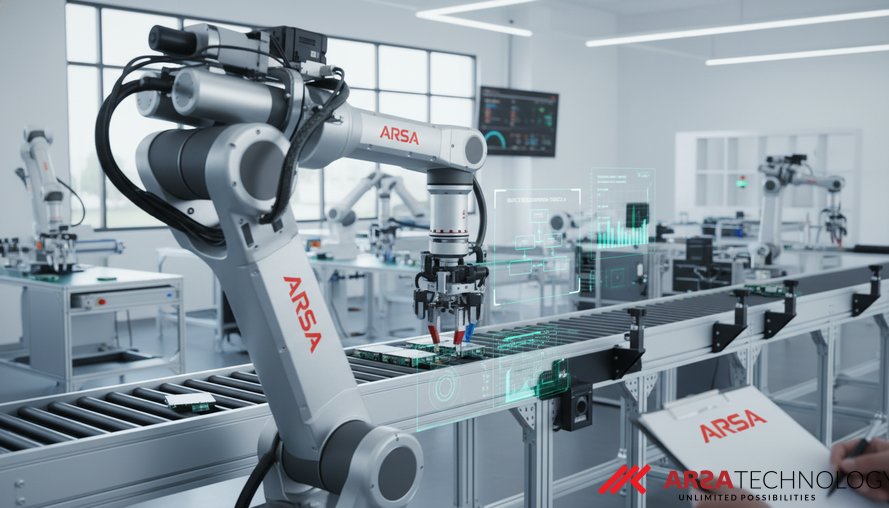
Over recent years, the field of robotics has undergone a profound transformation. What were once fixed, single-task machines designed for specific, predictable environments are rapidly evolving into adaptive, multi-function, general-purpose agents. These advanced robots are now capable of operating effectively in complex, open-world, and dynamic settings. This incredible leap forward is largely powered by the emergence of Foundation Models (FMs), a groundbreaking paradigm in Artificial Intelligence and Machine Learning.
Foundation Models are essentially large-scale neural network architectures. They are trained on vast, diverse datasets, equipping them with unparalleled capabilities in understanding and reasoning across different types of information, planning intricate long-term tasks, and generalizing their knowledge across various robotic platforms. This article provides a comprehensive overview of how FMs are fundamentally reshaping robotics, from their foundational principles to their practical applications and the challenges that lie ahead, drawing insights from recent research such as the comprehensive review by Psiris et al. (2026) Foundation Models in Robotics: A Comprehensive Review....
The Rise of Foundation Models in Robotics
Traditional robotic systems often rely on one of two primary approaches: automatic control or conventional machine learning. Automatic control methods, also known as model-based approaches, require a precise mathematical model of the system to predict its behavior and design a controller for specific tasks. While efficient for structured environments, these methods typically lack adaptability and are complex to reprogram. For example, a robot programmed to weld a specific car part would need extensive reprogramming for a different model or task.
Machine learning (ML) approaches, conversely, enable robots to learn from data and experience, offering greater adaptability for novel or unseen circumstances in complex, unstructured, and dynamic environments. However, these methods often demand significant computational resources and extensive datasets for effective training. FMs combine the strengths of these approaches while mitigating many of their weaknesses. They represent a significant evolution from traditional ML, offering a versatile, reusable AI foundation that can be adapted for a wide array of specialized applications without requiring training from scratch on massive, task-specific datasets.
From Controlled Environments to Open-World Autonomy
The evolution of robotics, particularly with the integration of Foundation Models, can be broadly understood through several phases. Initially, the focus was on incorporating existing AI models from Natural Language Processing (NLP) and Computer Vision (CV) into robotic systems. This allowed robots to understand human commands and perceive their surroundings with greater sophistication. Subsequent phases moved towards native robotic FMs, developing architectures specifically for robotic tasks, and eventually to multi-sensory generalization, enabling robots to integrate information from various sensors like cameras, lidar, and touch. The current frontier involves the robust deployment of these highly capable robots in real-world, dynamic environments.
This progression highlights a shift from robots that perform predefined actions in controlled settings to autonomous agents that can interpret complex situations, make informed decisions, and execute multi-step plans in unpredictable scenarios. For instance, in manufacturing, a traditional robot might repeatedly perform a single assembly step. With FMs, a robot could adapt to variations in parts, detect anomalies, and even learn new assembly sequences from demonstrations or natural language instructions, significantly enhancing production flexibility and efficiency.
Key Types of Foundation Models Driving Robotic Innovation
Foundation Models in robotics are categorized based on their primary modalities and functions:
- Large Language Models (LLMs): These models excel at understanding and generating human language. In robotics, LLMs enable robots to interpret natural language instructions, engage in human-robot dialogue, and decompose high-level commands into actionable sub-tasks. For example, an LLM-powered robot could understand a command like "Prepare the conference room for a meeting" and break it down into "tidy the table," "arrange chairs," and "check projector."
- Vision Foundation Models (VFMs): VFMs specialize in advanced visual perception, allowing robots to understand complex scenes, recognize objects, and detect anomalies with high accuracy. This is crucial for navigation, object manipulation, and safety monitoring in dynamic environments. Solutions like ARSA AI Video Analytics leverage advanced computer vision to provide real-time operational intelligence from existing camera infrastructure.
- Vision-Language Models (VLMs): These models bridge the gap between visual information and language, enabling robots to connect what they see with linguistic descriptions. A VLM allows a robot to identify a "red wrench" from a pile of tools when asked to "pick up the red wrench," rather than just recognizing a wrench shape.
- Vision-Language-Action Models (VLAs): VLAs take VLMs a step further by integrating action capabilities. They allow robots to not only perceive and understand language but also to translate that understanding into physical actions, forming a complete perception-reasoning-action loop crucial for true autonomous behavior.
Unlocking New Capabilities: Advantages of FMs in Robotics
The integration of FMs bestows several advantageous characteristics upon robotic systems, extending far beyond the capabilities of traditional machine learning. These include:
- Improved Transferability and Generalization: FMs allow knowledge learned in one context (e.g., simulation) or on one robotic platform to be transferred and applied to different tasks, environments, or even entirely different robot embodiments. This drastically reduces the need for extensive, task-specific training data.
- Enhanced Semantic Understanding and Open-World Capabilities: Robots can develop a deeper "understanding" of their environment, recognizing objects, people, and situations, and interpreting natural language instructions with greater accuracy. This moves them closer to operating effectively in unpredictable "open-world" settings, much like humans do.
- Multi-modal Integration: FMs can seamlessly integrate and process information from various sensory inputs—visual, auditory, tactile, and textual—allowing for a more holistic perception of the environment and more robust decision-making.
- Long-Horizon Task Planning: Complex tasks that require multiple steps and foresight can be decomposed and planned hierarchically. For example, a robot asked to "load the truck with all packages" can break this down into identifying packages, navigating to them, picking them up, moving to the truck, and placing them inside.
- Support for Sim-to-Real Transfer: FMs facilitate the transfer of learning from simulated environments to the real world, a critical factor in rapidly developing and testing new robotic behaviors without the cost and risk of real-world experimentation.
Navigating the Future: Challenges and Considerations for Real-World Deployment
Despite their immense potential, Foundation Models in robotics present several critical challenges that need to be addressed for widespread real-world deployment. These include:
- Inference Latency and High Computational Cost: FMs are computationally intensive, requiring significant processing power. This can lead to delays in real-time decision-making, which is crucial for safety and efficiency in dynamic environments. Optimizing these models for edge deployment, as seen in solutions like ARSA's AI Box Series, is vital for practical application.
- Lack of Semantic and Physical Grounding: While FMs excel at pattern recognition and language understanding, truly grounding their knowledge in the physical world—understanding cause and effect, material properties, and real-world physics—remains a significant hurdle. Robots need to "understand" why an object falls, not just that it did.
- Data Scarcity and Embodiment Bias: Training FMs requires massive, diverse datasets, which are not always available for specific robotic tasks or unique robot embodiments. Bias in training data can also lead to biased or unsafe robotic behaviors in the real world.
- Safety Risks and Unforeseen Failure Modes: The complexity of FMs can make their behavior difficult to predict in all circumstances, leading to potential safety risks or unexpected failures, especially in mission-critical applications.
Limited Interpretability and Transparency: Understanding why* an FM-powered robot made a particular decision or took a specific action can be challenging. This lack of interpretability poses issues for debugging, auditing, and building trust in autonomous systems.
- Ethical, Alignment, and Regulatory Imperatives: As robots become more autonomous, ethical considerations, ensuring alignment with human values, and developing robust regulatory frameworks become paramount.
Practical Applications Across Industries
The transformative capabilities of Foundation Models in robotics are poised to impact a wide array of industries, driving efficiency, safety, and new service models.
- Manufacturing and Industrial Automation: FMs can power robots for flexible assembly lines, advanced quality control through vision systems, predictive maintenance, and autonomous logistics within factories. Imagine robots that can adapt to changing product designs without extensive re-programming, a significant step towards Industry 4.0.
- Smart Cities and Traffic Management: Robotic systems augmented with FMs can contribute to intelligent urban infrastructure. For instance, drones equipped with FMs could monitor traffic flow, identify anomalies, and assist in emergency response. Ground robots could perform infrastructure inspections and maintenance. ARSA offers specific solutions like the AI BOX - Traffic Monitor to help cities manage congestion and optimize traffic flow.
- Public Safety and Defense: FMs enable more intelligent surveillance, perimeter security, and threat detection. Autonomous drones or ground vehicles can perform reconnaissance, monitor restricted areas, and assist in search and rescue operations, understanding complex instructions and reacting to dynamic environments. ARSA is an experienced since 2018 provider of AI solutions for public safety and defense, including restricted area protection and access control.
- Healthcare and Life Sciences: Robots could assist in hospitals with patient transport, sanitation, and even complex surgical procedures, guided by FM-driven perception and planning. In elderly care, they could provide companionship and assistance with daily tasks, understanding nuanced human needs and responding appropriately.
The Road Ahead: Future Directions
The field of Foundation Models in robotics is still nascent, with significant research and development underway. Future directions will likely focus on improving computational efficiency for real-time deployment, enhancing the physical and semantic grounding of AI models, developing more robust safety protocols, and addressing the ethical implications of increasingly autonomous systems. The goal is to build robots that are not only intelligent but also trustworthy, reliable, and beneficial to society.
As AI and IoT technologies converge, enterprises across various industries are seeking practical, deployable solutions that address real-world challenges. Companies like ARSA Technology are at the forefront, engineering systems that bridge advanced AI research with operational reality, delivering production-ready AI solutions for security, operations, and decision intelligence.
To explore how advanced AI and IoT solutions, including Foundation Models, can transform your operations, please contact ARSA for a free consultation.
**Source:** Psiris, A., Argyriou, V., Markakis, E. K., Sarigiannidis, P., Gavves, E., Bekris, K., Ajoudani, A., & Papadopoulos, G. T. (2026). Foundation Models in Robotics: A Comprehensive Review of Methods, Models, Datasets, Challenges and Future Research Directions. arXiv preprint arXiv:2604.15395. Retrieved from https://arxiv.org/abs/2604.15395