The "Second Mover" Advantage: Nuro's Strategy for Autonomous Robotaxi Deployment
Nuro is leveraging a "second mover" strategy in the robotaxi market, learning from industry pioneers like Waymo to deploy an advanced, reliable autonomous vehicle service with Uber and Lucid.

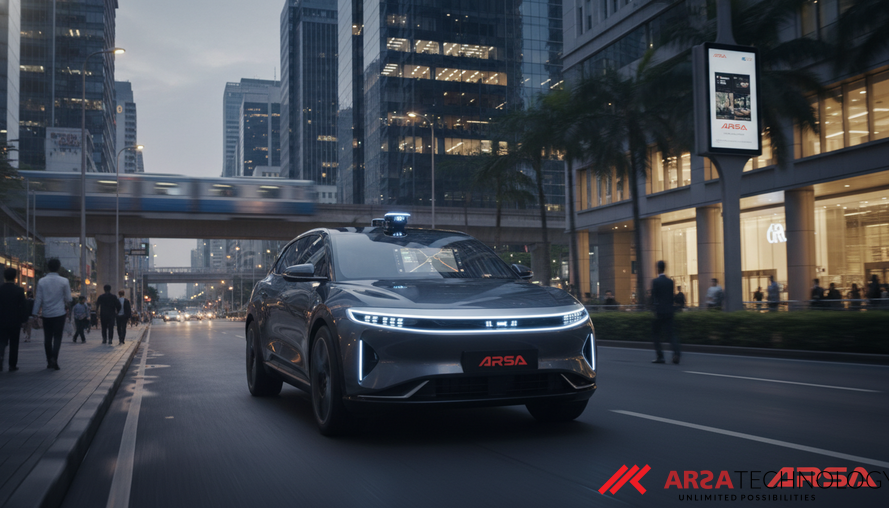
The landscape of autonomous vehicles is rapidly evolving, with several companies vying for market leadership in the robotaxi sector. While some pioneers have been operating driverless fleets for years, a new wave of innovators is emerging with a distinct strategic advantage. Nuro, a company originally known for its delivery robots, has pivoted to robotaxis, believing that observing and learning from the successes and challenges of early entrants like Waymo will position it for more robust and efficient deployment. This "second mover" perspective emphasizes leveraging established experiences to refine technology and operational models, aiming for a more streamlined market entry and broader public acceptance.
The Strategic Edge of the Second Mover
In highly complex and capital-intensive industries like autonomous driving, being the first to market often means shouldering the burden of uncharted technical and regulatory territory. Waymo, for instance, has amassed significant operational experience, deploying thousands of driverless cars across multiple cities in the United States. However, its journey has also involved public scrutiny, operational challenges, and the continuous need to educate regulators and consumers. Nuro, co-founded by Google's self-driving car project veterans Dave Ferguson and Jiajun Zhu, sees this as an opportunity. By critically analyzing the operational data, incidents, and public perception challenges faced by pioneers, Nuro’s engineers can proactively "kick the tires" on their own systems, ensuring their technology and deployment strategies are more resilient from the outset. This iterative learning approach allows Nuro to build upon existing knowledge, addressing potential pitfalls before they impact their own service launch.
Nuro's Pivot and Powerful Partnerships
After shifting its focus from delivery robots to robotaxis in 2024, Nuro quickly forged significant alliances. The company secured a deal with rideshare giant Uber and luxury electric vehicle manufacturer Lucid, aiming to deploy tens of thousands of robotaxis across the US. This collaboration not only brought in substantial investment from Uber but also laid the groundwork for a unique three-party operational model. Nuro’s long-term vision extends beyond operating its own fleet; it intends to license its autonomous driving technology to other automotive companies for advanced driver-assist systems and personally owned autonomous vehicles, although specific deals are yet to be announced. This multi-pronged strategy underscores a confidence in their core AI and machine learning capabilities, developed over years of experienced since 2018 in various autonomous applications.
Designing for Broad Utility and Efficient Deployment
Nuro's approach to its robotaxi launch diverges from an ultra-incremental playbook often seen in the autonomous vehicle industry. While many companies begin with highly constrained operational design domains (ODDs), slowly adding complexity over time, Nuro aims for its service to be broadly useful from day one. This means that while certain advanced features, such as extensive freeway driving, might be introduced later, the initial launch will cover a comprehensive range of scenarios within a defined service area. The goal is to provide a highly functional and valuable service right from the start, enhancing user experience and demonstrating immediate utility. This strategy requires robust and adaptable AI systems, capable of handling diverse urban environments and unexpected situations, much like the AI Video Analytics systems that transform passive CCTV feeds into actionable intelligence across various demanding sectors.
The Tripartite Model: Collaboration at Scale
The partnership among Nuro, Uber, and Lucid represents a distinctive model in the autonomous vehicle space. Nuro is responsible for developing the core sensing and compute stack, closely integrating this Level 4 autonomous technology into the Lucid Gravity SUV directly on Lucid’s production line. This means vehicles will leave the factory fully equipped with advanced self-driving capabilities. Subsequently, these finished vehicles are sold to Uber, which then takes on the role of owner and operator, managing the extensive infrastructure required for running a robotaxi service, including depots and remote assistance. This integrated production and deployment model signifies a commitment to high standards of reliability and efficiency, streamlining the path from manufacturing to active service.
Clarifying Remote Assistance in Autonomous Operations
The concept of remote assistance for autonomous vehicles has often been misunderstood, leading to public concern. Dave Ferguson clarified that remote assistance does not involve offsite personnel actively "driving" the robotaxis like a video game. Instead, remote operators provide crucial guidance and prompts when an autonomous vehicle encounters an ambiguous or confusing situation, helping it to safely resume its journey. This support system is vital for handling "edge cases" – unusual or unexpected scenarios that fall outside typical programmed responses. For enterprises deploying complex AI systems, understanding the nuances of such operational support mechanisms is key to ensuring safety, reliability, and regulatory compliance. ARSA Technology, for example, prioritizes robust, self-hosted deployment options with solutions like the ARSA AI Box Series, which processes data locally to enhance privacy and minimize latency, factors crucial in any mission-critical AI application.
Building Trust and Future Directions for AI Driving
A significant hurdle for widespread robotaxi adoption is public trust, particularly in the wake of incidents involving autonomous vehicles blocking traffic or navigating unexpected situations. Nuro intends to emulate the transparency model adopted by some industry leaders, sharing driving statistics and performance data to build confidence with customers and regulators. Ferguson emphasized that demonstrating the superior safety of Nuro’s autonomous vehicles compared to human-driven ones is paramount. Nuro’s long-term ambition is to create the most capable AI driving system possible, leveraging its experience with both rules-based and modern end-to-end learning models to achieve a naturalistic and safe driving style. This continuous refinement, incorporating "sanity checking" mechanisms to prevent unsafe maneuvers, is critical for real-world reliability.
As the autonomous vehicle industry matures, strategic approaches like Nuro’s "second mover" advantage, combined with robust partnerships and a clear focus on practical, safe, and broadly useful deployment, will be essential for success. The commitment to transparency and ongoing improvement in AI capabilities highlights the dedication required to integrate such advanced technology into daily life safely and effectively.
Source: The Verge
Ready to explore how advanced AI and IoT solutions can transform your operations? Learn more about ARSA Technology’s products and services, or contact ARSA for a free consultation.