The Strategic Edge: Why Being a Robotaxi 'Second Mover' Can Lead to Success
Nuro's strategy for robotaxi success involves leveraging a 'second mover' advantage, learning from pioneers like Waymo, and focusing on practical, privacy-centric AI deployment.

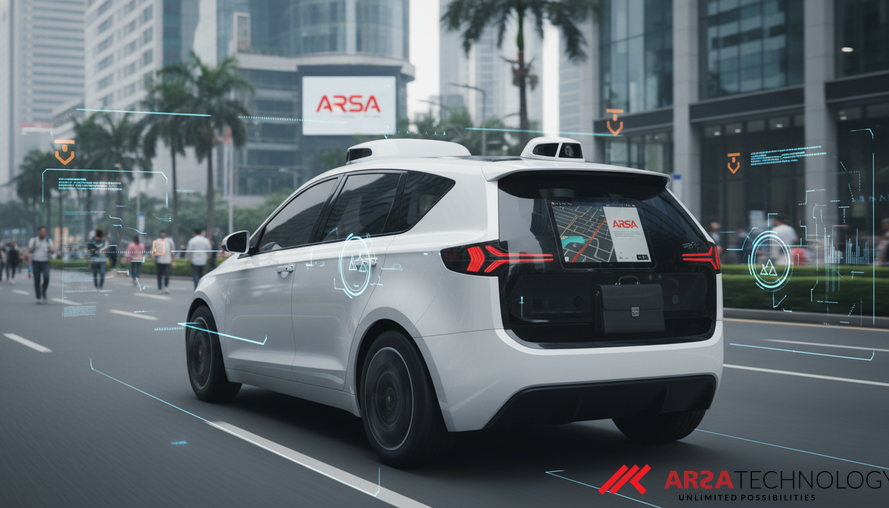
In the fiercely competitive landscape of autonomous vehicles, being first to market is often lauded as the ultimate goal. However, Nuro, a company founded by veterans of Google's self-driving car project, is advocating for a different philosophy: the "second mover" advantage in the robotaxi sector. After an initial focus on robot delivery, Nuro pivoted to robotaxis in 2024, forging significant partnerships with Uber and Lucid Motors. This strategic shift positions Nuro to learn from the experiences, both successes and missteps, of early pioneers like Waymo, ultimately aiming to deliver a more refined and robust service.
The concept of a second mover leveraging the experiences of a market leader is a classic business strategy. While Waymo has undeniably established itself as a frontrunner with a fleet of over 3,000 driverless cars operating in numerous US cities, Nuro’s co-founder and co-CEO, Dave Ferguson, sees Waymo's journey as invaluable data. According to an interview with Andrew J. Hawkins on The Verge, Ferguson articulated that Waymo's progress, including its operational challenges, serves as critical feedback for Nuro’s engineering teams. This allows Nuro to "kick the tires on our system" and proactively refine its technology and operational protocols, striving for a performance that exceeds existing benchmarks in safety and reliability.
Learning from the Leaders: The Second Mover's Strategic Advantage
Nuro's leadership, including Ferguson and co-founder Jiajun Zhu, brings a wealth of experience from their tenure at Google's self-driving car project (which eventually became Waymo). This background provides them with an inherent understanding of the complexities involved in developing autonomous driving systems. By observing Waymo's real-world deployments, Nuro gains insights into intricate operational challenges, public perception issues, and the nuances of integrating autonomous vehicles into urban environments, effectively fast-tracking their own learning curve without incurring the full cost of initial experimentation.
This approach minimizes the risks associated with pioneering a new industry. Instead of discovering every operational hurdle firsthand, Nuro can anticipate potential problems and design solutions from the outset. For instance, lessons learned from public incidents or technical glitches faced by early movers can directly inform Nuro's system architecture, safety protocols, and even its communication strategy with the public. This strategic patience is geared towards building a more resilient and trustworthy service from day one.
Nuro's Unique Partnership and Deployment Model
Nuro’s entry into the robotaxi market is characterized by a distinctive three-way partnership involving Uber, Lucid Motors, and Nuro itself. Under this arrangement, Nuro is responsible for developing the core autonomous driving technology, including the sophisticated sensing and compute stack. This technology is then seamlessly integrated into Lucid Gravity SUVs directly on Lucid's production line, ensuring that vehicles leave the factory equipped with Level 4 autonomy.
Once built, these advanced autonomous vehicles are sold to Uber, which assumes the role of fleet owner and operator. Uber will manage the extensive infrastructure required to run a large-scale robotaxi service, including depots and operational logistics. This division of labor allows each partner to focus on its core competencies, potentially accelerating deployment and optimizing resource allocation. ARSA Technology, for example, specializes in providing robust AI Video Analytics and edge computing solutions that address similar needs for real-time operational intelligence and efficient data processing in various industrial contexts.
Addressing Operational Realities and Building Trust
A critical aspect of autonomous vehicle deployment is effective remote assistance. As Nuro prepares for its launch in San Francisco, it acknowledges the public scrutiny surrounding offsite human oversight of robotaxis. Ferguson clarified that remote assistance isn't about human operators actively "driving" the vehicles like a video game. Instead, it involves providing crucial support by answering questions and issuing prompts when the AI system encounters ambiguous situations, helping the vehicle navigate complex scenarios safely and efficiently. This distinction is vital for fostering public understanding and trust.
Nuro also plans to adopt a pragmatic deployment strategy. While not aiming to cover "the entire South Bay on day one," the company intends for its service to be "very broadly useful" from its initial launch, rather than following an ultra-incremental playbook that slowly adds capabilities. This means providing a comprehensive operational design domain from the outset, aiming for immediate utility for its customers. Such practical deployment strategies, including hardware-agnostic solutions and on-premise processing for data security, are also central to ARSA's offerings, like the ARSA AI Box Series, which facilitates rapid, localized AI deployment across diverse industries.
The Foundation of Advanced AI and Future Vision
Nuro's long-term objective extends beyond just robotaxis; it aims to build the most capable AI driving system possible, applicable across various domains, including its original focus on delivery. This vision is underpinned by Nuro's cumulative experience in developing machine learning systems. Ferguson emphasized the importance of their legacy in more rules-based systems, which provides a crucial "sanity check" for their current end-to-end learning models. This ensures that their AI systems operate safely and predictably, avoiding dangerous proximity to pedestrians or other vehicles and adhering strictly to traffic regulations.
Building public trust remains a significant challenge for the entire autonomous vehicle industry, particularly concerning incidents involving edge cases or traffic disruptions. Nuro intends to follow a transparency model, similar to Waymo, by sharing relevant driving statistics. The goal is to provide demonstrable evidence that Nuro, Uber, and Lucid are offering a service that is "dramatically safer and better for our streets than a human-driven vehicle." This commitment to transparent reporting and continuous improvement is essential for widespread adoption and aligns with a human-centered innovation approach, where ethics, privacy, and usability are paramount, a principle that ARSA has upheld since being experienced since 2018.
Nuro's strategic approach as a second mover in the robotaxi space highlights a nuanced path to innovation. By meticulously learning from industry pioneers, fostering strong partnerships, and prioritizing real-world operational reliability and data control, companies can potentially achieve a competitive advantage. This strategy underscores the critical importance of adaptable and robust AI solutions designed for practical deployment and public trust, a philosophy shared by leading AI and IoT solution providers globally.
To learn more about how enterprise AI can transform your operations with practical, proven, and profitable solutions, explore ARSA Technology's offerings and contact ARSA for a free consultation.
Source: Why Nuro thinks being a robotaxi ‘second mover’ gives it an advantage by Andrew J. Hawkins on The Verge.