The Unseen Surveillance: Unpacking Extensive Monitoring in Modern Entertainment Venues
Explore the shocking extent of surveillance at major venues like Madison Square Garden, the ethical dilemmas of corporate monitoring, and the critical role of secure, privacy-by-design AI solutions.

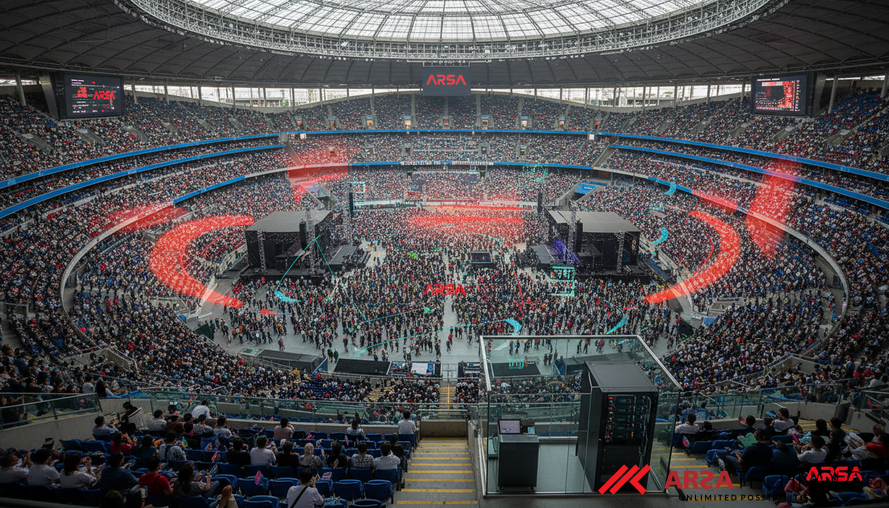
The Unseen Eyes: Pervasive Surveillance in Modern Venues
The experience of attending a major event, whether a concert or a sports game, often comes with an unspoken agreement: a surrender of some personal privacy for the sake of security and entertainment. However, recent revelations concerning prominent venues, such as Madison Square Garden (MSG) in New York City, suggest that this implicit bargain has escalated into an extensive and deeply intrusive surveillance apparatus. Patrons, including individuals like Nina Richards (a pseudonym used for privacy), have reportedly been subjected to minute-by-minute tracking of their movements, from their seating to their concession purchases and even elevator rides, highlighting a level of scrutiny far beyond conventional security measures.
This intensive monitoring strategy is not entirely new; reports have long circulated about venues utilizing advanced technologies, including facial recognition, in ways critics deem increasingly aggressive. The sheer scale and depth of these operations raise significant questions about individual privacy in public and semi-public spaces. It underscores a growing trend where corporations are leveraging sophisticated AI and IoT technologies to not just ensure safety, but also to exert an unprecedented degree of control over visitor behavior and engagement.
Beyond Security: The Scope of Corporate Monitoring
At the heart of many controversies is the application of such surveillance for purposes extending beyond immediate safety. In the case of MSG, owner James Dolan has been accused of maintaining "watch lists" of individuals, including basketball fans who publicly criticized his management. This extends to banning graphic designers for selling satirical merchandise years prior, or even excluding legal professionals associated with firms that have sued the company, regardless of their direct involvement. These incidents reveal how powerful corporate entities can transform security infrastructure into a tool for personal vendettas and control.
The reach of this surveillance reportedly extends beyond the physical boundaries of the venues themselves. According to a 2025 lawsuit filed by a former MSG security team member and additional investigative reporting, the security teams may engage in activities akin to law enforcement, patrolling surrounding neighborhoods and monitoring protesters. This suggests that the "panopticon" effect can encompass public spaces adjacent to corporate properties, raising concerns about the blurring lines between private security and public policing. Sources, including former employees, have also described a workplace environment permeated by paranoia, with staff fearing their communications are compromised and their off-duty activities are observed, as detailed in the source article by WIRED. ("The Shocking Secrets of Madison Square Garden's Surveillance Machine")
Technology at Play: How Advanced AI Powers Surveillance
The capabilities driving such pervasive monitoring stem from the rapid advancements in Artificial Intelligence, particularly in areas like computer vision and biometric analytics. Facial recognition technology, coupled with extensive camera networks, allows for continuous identification and tracking of individuals across vast spaces. Biometric data, including facial scans, can be stored in databases for long-term monitoring, enabling entities to build detailed profiles of visitors. This technology is powerful enough that instances have been reported where a New York City police officer's photo was inadvertently added to a recognition database, and a child triggered an alert at one of the properties, highlighting the broad and often indiscriminate nature of such systems.
These AI-powered solutions convert raw video streams into real-time operational intelligence, enabling automated alerts, dashboards, and analytical insights. For example, systems can detect specific objects, people, vehicles, and behaviors, allowing security teams to respond to incidents or track individuals instantly. Companies developing enterprise-grade solutions, such as ARSA Technology, leverage AI Video Analytics software and Face Recognition & Liveness SDK to provide these capabilities, emphasizing accuracy, reliability, and the flexibility for clients to deploy solutions on-premise for full data control.
The Ethical Minefield: Privacy, Control, and Corporate Power
The cases involving extensive corporate surveillance illuminate a critical ethical minefield at the intersection of technology, business, and individual rights. While ostensibly for security, the ability to collect massive amounts of highly personal data—from facial scans to movement patterns—presents unprecedented opportunities for misuse. When this power is concentrated in the hands of individuals with a history of using it to target critics or enforce personal preferences, it raises alarms about the potential for abuse and the erosion of fundamental freedoms. The development of private "deep states" capable of independent intelligence gathering and enforcement by wealthy moguls represents a disturbing evolution in corporate power.
This trend necessitates a closer examination of data sovereignty, privacy-by-design principles, and the regulatory frameworks governing advanced AI and IoT deployments. The challenge lies in harnessing the beneficial aspects of these technologies for genuine security and operational efficiency while safeguarding against their weaponization for control, discrimination, or personal vendettas. Organizations that prioritize transparency, adhere to strict privacy standards like GDPR and HIPAA (where applicable), and offer robust on-premise deployment options for data control, such as ARSA, provide a contrast to these controversial practices by allowing enterprises to own their data and define their own security protocols. As a company experienced since 2018, ARSA understands the need for secure and compliant solutions.
Deployment Models for Robust Security, with Ethical Considerations
For enterprises seeking to leverage AI and IoT for security and operational intelligence, choosing the right deployment model is paramount. Solutions range from cloud-based APIs to fully self-hosted, on-premise software and turnkey edge AI systems. Each model offers distinct advantages regarding data control, latency, scalability, and compliance. For organizations that prioritize data sovereignty and require their systems to operate without external network dependencies, on-premise software or edge AI systems are often the preferred choice. These models ensure that all video streams, inference results, and metadata remain entirely within the client's infrastructure, providing full control over data flow, storage, and access.
AI solutions, when implemented responsibly, can transform traditional infrastructure into intelligent assets. For instance, edge AI systems, such as the ARSA AI Box Series, process video streams locally, delivering instant insights without cloud dependency and integrating seamlessly with existing CCTV. This approach minimizes bandwidth usage, preserves privacy, and reduces latency, making it ideal for distributed deployments or environments with stringent data security requirements. Such systems empower organizations to enhance security, optimize operations, and gain actionable insights while maintaining ethical boundaries and regulatory compliance.
To explore how advanced AI and IoT solutions can meet your enterprise security and operational needs with a focus on privacy and control, we invite you to contact ARSA for a free consultation.
Source: "The Shocking Secrets of Madison Square Garden's Surveillance Machine" by WIRED (https://www.wired.com/story/madison-square-garden-jim-dolan-surveillance-machine/)