Unlocking Business Efficiency with AI-Powered Predictive Control: Lessons from Algorithmic Optimization
Explore how AI-driven predictive control, inspired by algorithmic music composition, revolutionizes business operations. Learn how deep learning and real-time optimization enhance efficiency, security, and ROI.

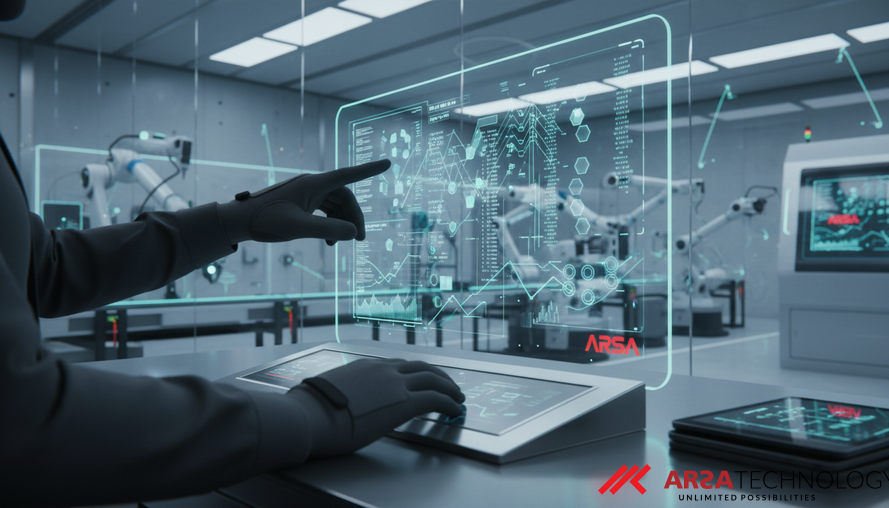
The Symphony of Automation: How Predictive AI Conducts Business Efficiency
In today’s rapidly evolving digital landscape, artificial intelligence (AI) is pushing boundaries not just in traditional business sectors, but also in creative fields like algorithmic music composition. Intriguingly, the same advanced AI techniques used to generate harmonious melodies through a concept called Predictive Controlled Music (PCM) hold immense potential for revolutionizing industrial operations and enterprise decision-making. By leveraging model predictive control (MPC) and deep learning, businesses can achieve unprecedented levels of efficiency, security, and strategic foresight.
The core idea is to move beyond simple prediction to active, feedback-driven control. Just as a musical composer might adjust notes based on a desired aesthetic outcome, businesses can optimize complex processes by continuously predicting future states and dynamically adjusting operational parameters to meet specific performance goals. This paradigm shift, pioneered in academic research, demonstrates how sophisticated AI can be applied to optimize any dynamic system, from the nuanced flow of music to the critical operations of a smart factory.
The Power of Model Predictive Control (MPC) in Industry
Model Predictive Control (MPC) is a robust control strategy that has been a cornerstone in various industrial processes for decades, including chemical plants, power generation, and robotics. Its fundamental strength lies in its ability to predict future system behavior and optimize current actions accordingly. Instead of simply reacting to changes, MPC uses dynamic models to forecast outcomes over a defined "prediction horizon," then calculates the best possible control actions to achieve desired objectives while adhering to operational constraints.
The elegance of MPC lies in its "receding-horizon" approach. It doesn’t just execute a pre-calculated plan; it continuously recalculates and re-optimizes its control strategy at each step based on new data and updated predictions. This creates a flexible, adaptive control loop that mirrors how agile businesses operate—constantly monitoring, learning, and adjusting to dynamic market conditions. For instance, in manufacturing, this could mean optimizing production schedules based on predicted demand and real-time resource availability to prevent bottlenecks and minimize waste.
Deep Learning: The Brain Behind Intelligent Optimization
At the heart of modern predictive control, especially in complex, non-linear systems, lies deep learning (DL). Deep neural networks, a subfield of AI, are exceptional at identifying intricate patterns and relationships within vast datasets. In the context of predictive control, different types of neural networks play distinct roles. Feedforward neural networks, for example, can be trained to assess the "performance" or "quality" of a generated output—be it a musical score's aesthetic value or a production line's efficiency metric.
Meanwhile, recurrent neural networks (RNNs) are particularly adept at capturing dynamic, temporal relationships, making them ideal for modeling systems where variables change over time. In a manufacturing setting, an RNN could learn the complex interplay between machine temperature, raw material feed rate, and product quality. This deep understanding of dynamic interdependencies allows for the precise definition of operational constraints, ensuring that optimization occurs within safe, feasible, and compliant boundaries. ARSA Technology leverages these advanced AI and IoT capabilities to provide AI Video Analytics and Industrial IoT solutions that empower industries to make smarter, data-driven decisions.
From Musical Notes to Optimized Operations
The concept of Predictive Controlled Music (PCM) offers a compelling analogy for industrial optimization. In PCM, musical notes (characterized by pitch, velocity, onset, and duration) are computed by optimizing an assessment function (how "good" the music sounds) while adhering to constraints derived from RNN models that capture musical relationships. This translates directly to how enterprises can optimize their operations.
Consider a logistics hub where the "notes" are vehicle movements, cargo loads, and delivery schedules. The "assessment function" could be maximizing delivery speed while minimizing fuel consumption and operational costs. The "dynamic constraints" would involve real-time traffic conditions, vehicle maintenance schedules, and regulatory compliance. By applying the principles of predictive control, an AI system can continuously generate optimal routing and scheduling plans, adapting instantly to unforeseen events like traffic jams or sudden order changes. This transformative approach to managing complex variables and achieving targeted outcomes is central to ARSA’s offerings, such as the Smart Parking System and traffic monitoring solutions.
Real-time Adaptation and Continuous Improvement
A key takeaway from the predictive controlled music model is the emphasis on real-time feedback and continuous adaptation. The "receding-horizon" nature of predictive control ensures that the system is always learning and adjusting, incorporating new information as it becomes available. This is vital in dynamic business environments where conditions can change rapidly. For example, in an industrial facility, real-time data from IoT sensors can be fed into predictive models, allowing the system to instantly detect deviations from optimal performance and recommend corrective actions.
This continuous feedback loop allows businesses to move from reactive problem-solving to proactive management. Instead of waiting for a machine to break down, predictive maintenance—enabled by these AI techniques—can forecast potential failures, allowing for timely intervention and minimizing costly downtime. This constant optimization drives measurable ROI and operational resilience, mirroring how an AI Box Series solution can continuously monitor and optimize various aspects of operations, from safety compliance to customer analytics.
Tangible Benefits for Global Enterprises
The application of AI-powered predictive control to enterprise operations offers a multitude of benefits that directly impact the bottom line and strategic positioning:
- Enhanced Operational Efficiency: By optimizing resource allocation, scheduling, and workflow management in real-time, companies can significantly reduce waste, energy consumption, and idle time.
- Increased Security and Compliance: AI-driven monitoring and control can enforce safety protocols, detect anomalies, and manage access with higher accuracy and consistency than manual systems, crucial for industries like construction and manufacturing.
- Proactive Decision-Making: Predictive models provide actionable insights, enabling businesses to anticipate challenges and opportunities, leading to more informed and timely strategic decisions.
- New Revenue Streams: By optimizing existing processes and identifying unmet needs through data analysis, companies can unlock new efficiencies that translate into cost savings or even new service offerings.
- Scalability and Adaptability: These AI-driven solutions are inherently scalable, capable of managing increasing complexity and integrating seamlessly with existing infrastructure, as ARSA has experienced since 2018 across various industries.
The innovations in AI, initially explored in diverse fields like algorithmic music, are proving to be powerful tools for enterprise digital transformation. By embracing predictive control and deep learning, businesses can move towards a future where operations are not just automated but intelligently optimized, responsive, and continuously improving.
Ready to leverage AI-powered predictive control to transform your business operations? Explore ARSA Technology's innovative solutions and discover how our expertise can drive your digital transformation. We invite you to contact ARSA for a free consultation.