Unlocking Efficient AI at the Edge: How Neuromorphic Hardware is Transforming Industries
Explore how neuromorphic computing and Spiking Neural Networks (SNNs) revolutionize edge AI, reducing power and latency for industrial applications. Learn about hardware optimizations and their business impact.

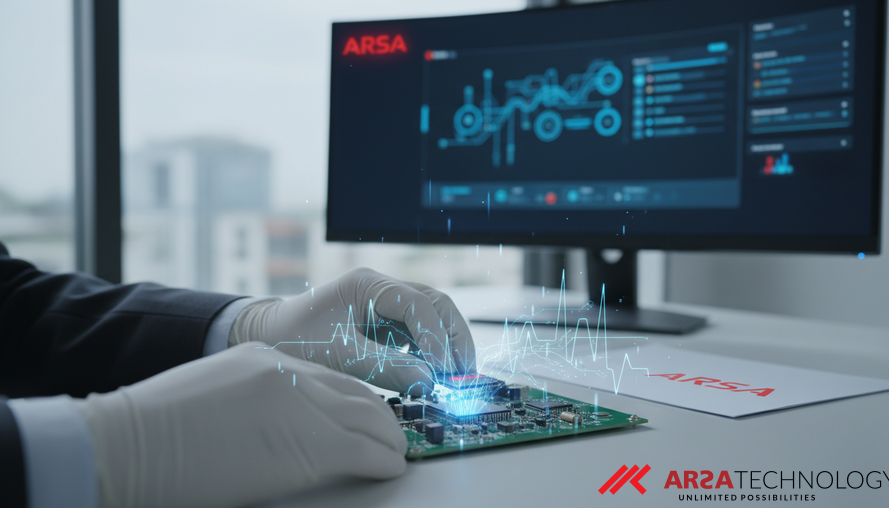
The Revolution of Edge AI: Bridging Biological Intuition with Digital Hardware
The widespread adoption of IoT devices has created an urgent demand for artificial intelligence capabilities directly on edge hardware, a field known as TinyML. Imagine wearable health monitors, smart sensors in factories, or autonomous drones all performing complex AI tasks without constant cloud connection. However, conventional Artificial Neural Networks (ANNs), the backbone of modern AI, are notoriously power-hungry and slow for such constrained environments. They rely on continuous data processing and intensive mathematical operations that demand significant energy and computational resources. This presents a critical bottleneck for innovation.
Inspired by the efficiency of the human brain, neuromorphic computing offers a powerful alternative. Spiking Neural Networks (SNNs) represent a paradigm shift, processing information through discrete, event-driven "spikes" rather than continuous data streams. This allows hardware to remain mostly idle until needed, promising dramatic improvements in energy efficiency. Recent academic research delves into creating hardware-oriented SNNs that can bring this biological efficiency to practical digital implementations.
Overcoming Traditional AI Limitations with Neuromorphic Design
Traditional AI models, particularly ANNs, are computationally expensive because they perform numerous Matrix-Multiply-Accumulate (MAC) operations using high-precision floating-point numbers. While powerful, this approach requires substantial silicon area and energy, making it unsuitable for battery-powered or ultra-low-power edge devices. The goal of neuromorphic design is to replicate the brain's sparsity and event-driven nature, where neurons only "fire" when a certain threshold is met.
To address these hardware limitations, innovative approaches are being developed. One such approach focuses on designing dedicated hardware that can efficiently execute SNNs. This includes simplifying the mathematical operations a neuron performs, moving away from complex floating-point calculations to more basic, power-efficient arithmetic. Businesses looking to implement smart solutions at the edge, such as real-time monitoring, can greatly benefit from these advancements, enabling faster decision-making and reduced operational costs. ARSA Technology is at the forefront of leveraging such efficient processing capabilities, integrating them into solutions like the ARSA AI Box Series, which transforms existing CCTV systems into intelligent monitoring platforms.
Simplified Neuron Models for Digital Efficiency
At the heart of efficient SNN hardware lies the neuron model. A key innovation in recent research is the use of simplified models, such as the Leaky Integrate-and-Fire (LIF) neuron. This model mimics a biological neuron's behavior as a membrane capacitor that charges with incoming "current" (synaptic weights) and "fires" a spike when a voltage threshold is reached, then resets. For digital hardware implementation, this complex biological process is discretized and simplified.
Instead of costly floating-point multiplication for the neuron's "leakage" (passive charge decay), researchers are designing hardware that uses fixed-point arithmetic and basic bit-wise operations like shifts and additions. This dramatically reduces the need for complex, power-hungry multipliers, making the resulting chips smaller, cheaper, and more energy-efficient. Furthermore, static data, like images, needs to be converted into a format SNNs can understand—temporal "spike trains." This is achieved through an on-chip Poisson encoder, which essentially translates pixel intensity into a series of probabilistic spikes, mimicking how our sensory neurons process information over time. For businesses, this means that even basic surveillance systems can be upgraded into intelligent monitoring solutions using specialized, efficient hardware, offering real-time insights with minimal infrastructure overhaul, as seen with solutions like ARSA AI Video Analytics.
Dynamic Power Optimization and Practical Implementations
Beyond simplifying the neuron model, optimizing dynamic power consumption is crucial for practical edge AI. One novel technique is "active pruning," a dynamic mechanism that disables neuron updates once a classification has been made. Think of it like turning off the lights in rooms that are no longer in use; this prevents unnecessary energy expenditure from redundant computations. This "event-driven" processing ensures that hardware only consumes power when actively processing relevant information, leading to significantly reduced energy footprints.
This architectural efficiency has tangible benefits. For instance, in applications like object detection or anomaly identification, this specialized hardware can achieve high accuracy (e.g., around 89% for digit classification as demonstrated in the research) within very few processing steps, known as "timesteps." This rapid convergence combined with a reduced computational footprint makes it ideal for real-time applications where every milliwatt and microsecond counts. Such efficient designs are foundational for scalable, energy-efficient neuromorphic hardware that can be deployed on platforms like FPGAs (Field-Programmable Gate Arrays) and ASICs (Application-Specific Integrated Circuits). Businesses across various industries can harness these advancements for critical tasks, improving their operational efficiency and reducing long-term costs.
The Future Landscape of Edge AI: Business Implications
The insights from this research underscore a significant shift towards more sustainable and powerful AI deployments at the edge. By designing AI hardware that mimics the brain's inherent efficiency, we can unlock new possibilities for diverse industrial applications. Imagine construction sites where PPE compliance is monitored in real-time by low-power cameras, or smart retail environments that analyze customer foot traffic without draining excessive energy.
This blend of biological intuition and digital engineering delivers measurable ROI for enterprises. It translates into devices that operate longer on battery power, respond faster to critical events, and generate actionable insights without incurring heavy cloud processing costs. Companies can benefit from enhanced security, optimized operational workflows, and the ability to integrate sophisticated AI into existing infrastructure with minimal disruption. These hardware innovations lay the groundwork for a new generation of smart devices and systems that are not just intelligent, but also inherently efficient and privacy-conscious. As an experienced technology partner since 2018, ARSA Technology is committed to bringing these advanced AI and IoT solutions to businesses seeking measurable impact and sustainable digital transformation.
To explore how these cutting-edge AI and IoT solutions can transform your operations, reduce costs, and enhance security, we invite you to contact ARSA for a free consultation.