Unlocking Grid Edge Intelligence: On-Meter AI for Solar Power Forecasting
Explore how custom Graph Neural Networks and ONNX enable real-time solar power forecasting directly on smart meters, enhancing grid edge intelligence and energy autonomy.

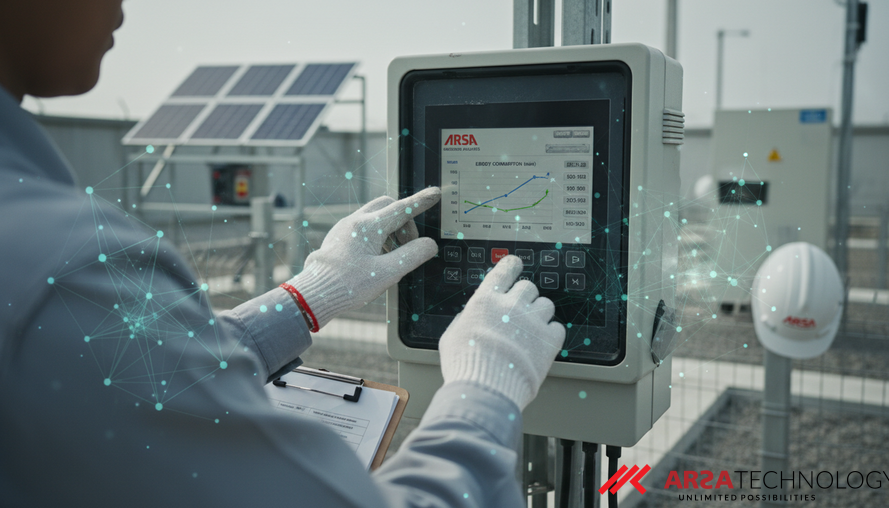
The Dawn of Grid Edge Intelligence: Empowering Local Energy Management
The transformation of global power grids is accelerating, driven by the widespread adoption of smart meters and energy concentrators. These devices, positioned at the "edge" of the network, are becoming crucial enablers of "grid edge intelligence." This paradigm shift moves complex computational tasks away from centralized cloud infrastructure and closer to the data source, fostering local autonomy for distribution networks. The core principle behind this evolution is "on-device inference," where advanced algorithms execute directly on hardware, a trend mirroring advancements across IoT, automotive, and other energy sectors.
For instance, smart meters are already integrating predictive models like support vector machines and gradient-boosting trees to perform voltage regulation tasks. The advent of sophisticated AI models, particularly Graph Neural Networks (GNNs), offers unprecedented potential to process inherently graph-structured grid data, where power stations act as nodes and power lines as edges. This capability is especially vital for forecasting renewable energy generation, such as photovoltaic (PV) power, which is critical for balancing microgrids and ensuring energy stability. Solutions like ARSA's AI Box Series are designed to facilitate this kind of on-site, real-time data processing.
Navigating the Challenges of On-Device AI Deployment
While the promise of GNNs for grid management is significant, deploying these powerful models onto resource-constrained edge devices like smart meters presents unique challenges. Mainstream deep learning frameworks such as PyTorch and TensorFlow, while excellent for model training, often use different internal representations, hindering cross-platform deployment. This is where the Open Neural Network Exchange (ONNX) format steps in, providing a unified, open standard to promote interoperability across frameworks. However, even with ONNX, specific GNN operators (the building blocks of GNNs) can be missing from its standard library. This issue particularly affects models like Graph Convolutional Networks (GCNs).
Furthermore, even for common GNN layers such as GraphSAGE, the ONNX computation graph generated by standard implementations might deviate from the original layer's intended behavior, creating further deployment hurdles. Overcoming these obstacles requires specialized expertise, often involving the modification of existing models and the development of custom ONNX operators. This detailed study (from Source) highlights the successful deployment of GCN and GraphSAGE models on smart meters for PV power forecasting by addressing these very issues, showcasing innovation in edge AI.
Understanding Graph Neural Networks (GNNs) for Grid Data
Graph Neural Networks represent a cutting-edge category of deep learning models specifically engineered to process data structured as graphs. Unlike traditional convolutional neural networks that excel at regularly gridded data like images, GNNs can effectively capture relationships and dependencies within complex, interconnected datasets. In the context of a power grid, this means modeling power stations as individual nodes and the transmission lines connecting them as edges, allowing the AI to understand the network's intricate topology and the attributes of each component.
Two prominent GNN architectures are the Graph Convolutional Network (GCN) and GraphSAGE. GCNs fundamentally operate by aggregating feature information from each node and its immediate neighbors. This is done through a layer-wise propagation rule that iteratively updates a node's feature representation by considering its own features and those of its connected nodes, weighted by the graph's structure. This process essentially "convolves" information across the graph, enabling the model to learn localized patterns and relationships. By simplifying complex spectral graph convolutions into efficient spatial-domain aggregations, GCNs achieve robust computational efficiency and scalability, making them highly suitable for analyzing how power flows and is generated across a grid.
GraphSAGE, another powerful GNN, adopts a slightly different approach, focusing on learning a function that generates a vector representation for a node by sampling and aggregating information from its neighbors. This iterative process, performed over multiple "rounds," allows each node to integrate structural and feature information from increasingly distant neighbors (k-hop neighbors). In each round, the model collects information from a node's neighbors, aggregates it (often using a mean operation), and then concatenates this aggregated information with the node's own representation from the previous round. This combined data then passes through a neural network layer to produce an updated representation. This method is particularly effective for large, dynamic graphs, making it a strong candidate for understanding the evolving states of a microgrid.
Forecasting PV Power in Remote Microgrids
In remote microgrid environments, particularly in villages or isolated communities, relying on-meter PV power forecasting is not merely an enhancement—it's often a necessity. These scenarios frequently suffer from unreliable communication infrastructure, which can severely degrade or eliminate connectivity to centralized cloud computing centers. Without real-time access to external meteorological data like solar irradiance, local energy management systems must operate autonomously, using only historical power measurements from the PV stations themselves as input. This capability is critical for maintaining grid stability and optimizing energy distribution in the absence of robust external support.
The process involves feeding historical power generation data from multiple PV stations into the GNN model. The model then uses its learned understanding of the grid's topology and the historical patterns to predict future power generation for each station. For example, a GNN can process a matrix containing historical power outputs for 'n' stations over 'k' time steps to predict the power output 'h' hours into the future. This on-device inference capacity ensures that crucial forecasting can continue uninterrupted, enabling proactive energy management decisions even in "cloud-less" operational environments.
Key Innovations in Edge GNN Deployment
The successful deployment of GNNs on smart meters hinges on overcoming the aforementioned technical barriers. A pivotal innovation lies in the development of customized ONNX operators. For GCN, where standard ONNX libraries lack direct support for its unique convolutional layers, creating a bespoke ONNX operator is essential. This custom operator translates the GCN's propagation rules into a format that ONNX Runtime can execute efficiently on edge hardware. This ensures that the specialized computations inherent to GCNs can be performed accurately and rapidly on the meter.
Similarly, for GraphSAGE, addressing discrepancies between its official implementation and ONNX's computation graph often requires careful model modification and custom integration. This might involve optimizing the aggregation functions or the concatenation steps to ensure faithful reproduction of the model's behavior within the ONNX framework. By tackling these intricate software engineering challenges, researchers have enabled the deployment of both GCN-based and GraphSAGE-based PV forecasting models onto standard smart meters. This demonstrates a practical pathway for integrating complex graph machine learning into edge devices, moving beyond theoretical models to real-world, high-impact applications. For organizations seeking to implement advanced AI at the edge, understanding these deployment nuances is key, and AI Video Analytics solutions leverage similar principles for on-premise processing.
A Case Study in Real-World Performance
To validate the efficacy of these edge GNN deployments, a comprehensive case study was conducted using real datasets obtained from a village microgrid. This practical application provided invaluable insights into how GCN and GraphSAGE models perform under authentic operational conditions on smart meters. The study meticulously compared the performance of both models not only on a high-powered personal computer (PC) but also, crucially, on the resource-constrained smart meter itself.
The findings from this case study were significant: both GCN and GraphSAGE models were successfully deployed and executed on the smart meter, demonstrating their viability for on-device PV power forecasting. The comparison highlighted their relative strengths and efficiency on edge hardware, proving that sophisticated graph machine learning can indeed function effectively in environments with limited computational resources. This successful deployment paves the way for greater energy autonomy and resilience in microgrids, especially those in remote areas where reliable cloud connectivity cannot be guaranteed.
In essence, this research underscores the potential of edge intelligence to transform energy management. By bringing advanced AI, like GNNs, directly to smart meters, we can achieve more responsive, resilient, and efficient power grids. This capability enhances real-time decision-making, reduces reliance on external infrastructure, and ultimately contributes to the operational stability and sustainability of modern microgrids.
If your organization is exploring advanced AI and IoT solutions for enhanced operational intelligence or seeking to implement robust edge computing capabilities, ARSA Technology offers expertise in designing and deploying custom systems tailored to your specific needs. We invite you to explore our comprehensive range of AI and IoT solutions and to contact ARSA for a free consultation to discuss how we can build your competitive advantage.
Source: Jian Huang, Zixiang Ming, Yongli Zhu, Linna Xu. "On-Meter Graph Machine Learning: A Case Study of PV Power Forecasting for Grid Edge Intelligence." arXiv:2604.19800, 2026.