Unlocking Hidden Insights: How AI Transforms Feedback into Strategic Intelligence
Discover how AI-powered sentiment analysis and generative AI can uncover deeper insights from feedback, transforming raw data into actionable intelligence for businesses and research.

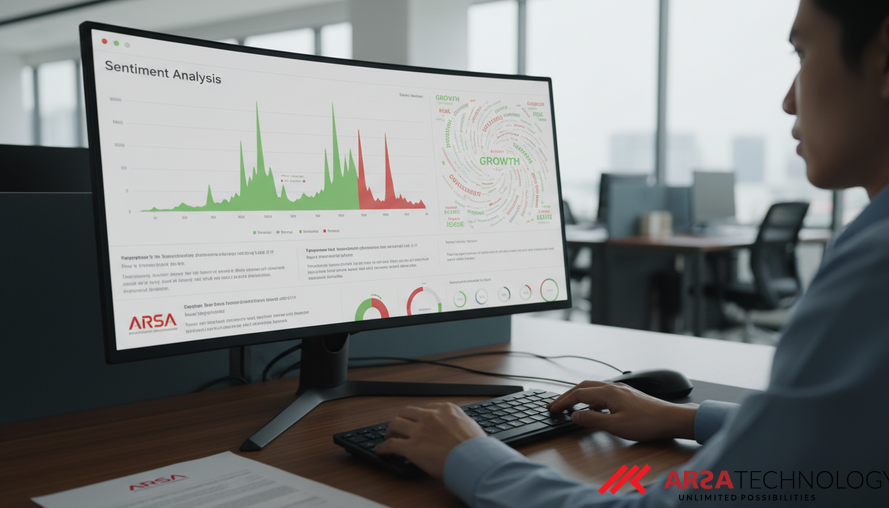
Unlocking Deeper Insights: The Power of AI in Analyzing Feedback
In today’s data-rich environment, understanding public, customer, or market sentiment is crucial for strategic decision-making. While traditional surveys and direct feedback offer valuable perspectives, they often represent a self-reported view. Imagine if you could systematically analyze how others truly perceive a product, service, or even academic research, extracting nuanced strengths and limitations directly from conversations and references. This is where advanced Artificial Intelligence (AI) comes into play, offering a revolutionary approach to feedback analysis.
A groundbreaking research initiative, SECite, has explored this very concept by focusing on scholarly impact. It introduces a novel framework that evaluates the influence of academic papers by analyzing the sentiment and context of how they are cited by other researchers. By moving beyond authors' self-presentations, this method offers an objective, data-driven understanding of contributions and shortcomings. While this study originated in the academic realm, its methodologies hold immense potential for businesses seeking to gain a competitive edge through sophisticated feedback intelligence.
The Limitations of Traditional Feedback Mechanisms
Conventionally, assessing the impact or reception of any work, be it a research paper or a commercial product, often relies on direct feedback or self-published summaries. For academic papers, this means reading the abstract and conclusion written by the authors themselves. For businesses, it translates to customer testimonials or internal product reviews. However, these methods can be inherently limited. They often lack the scale to capture widespread sentiment and can be subjective, reflecting only one perspective.
The challenge intensifies when attempting to discern subtle patterns or aggregated opinions across a vast body of external commentary. Manually sifting through hundreds or thousands of mentions, reviews, or citations is not only time-consuming but also prone to human bias and fatigue. This limitation highlights a critical gap: how to efficiently and objectively synthesize external feedback to gain a comprehensive understanding of strengths and areas for improvement.
SECite: An AI-Driven Framework for Uncovering Scholarly Insights
SECite addresses this challenge through a sophisticated, semi-automated framework that integrates Natural Language Processing (NLP), unsupervised machine learning, and generative AI. At its core, SECite aims to transform how we understand the reception of academic work by providing sentiment-specific summaries. The methodology begins with the extraction of citation statements—the specific sentences or paragraphs where one paper references another—from a diverse set of research publications.
Once these citation contexts are gathered, advanced NLP techniques are employed to process and understand the textual data. This involves leveraging models like BERT (Bidirectional Encoder Representations from Transformers), an AI model known for its ability to grasp the full context of words by analyzing both what comes before and after them. Think of BERT as an exceptionally intelligent reader that understands nuances in language. This deep contextual understanding allows the system to prepare the text for sentiment analysis.
Following the NLP processing, unsupervised machine learning, specifically K-means clustering, classifies these citation statements as either positive or negative. K-means is an algorithm that groups data points into distinct clusters based on their similarity, effectively identifying patterns of positive or negative sentiment without needing pre-labeled examples. This step reveals whether a citation is praising, critiquing, or simply referencing the original work. While t-SNE (t-Distributed Stochastic Neighbor Embedding) is used as a dimensionality reduction technique for visualizing high-dimensional data, its role in SECite is primarily for visualizing the clusters of sentiments, making it easier to see the patterns identified by K-means. For companies looking to build similar robust AI analytics, leveraging solutions like ARSA AI API or deploying localized AI processing with an ARSA AI Box could offer a scalable foundation.
How AI Transforms Raw Data into Actionable Summaries
The final and perhaps most impactful step in the SECite framework is the generation of sentiment-specific summaries. Utilizing generative AI, specifically Large Language Models (LLMs), the system creates concise summaries that distinctly highlight the positive aspects (strengths) and negative aspects (limitations) of the referenced papers. This dual-perspective summarization is crucial because it provides a balanced and comprehensive view, derived directly from how the academic community has discussed the work.
Rather than just classifying sentiment, this approach produces coherent, human-readable summaries that distill complex feedback into easily digestible insights. These summaries are generated both from clustered citation groups, providing granular feedback on specific themes, and from the full body of citations, offering a holistic overview. The integration of advanced NLP for understanding, unsupervised ML for categorizing, and generative AI for summarizing represents a powerful convergence of AI technologies, transforming raw textual data into structured, actionable intelligence. This systematic approach reduces the risk of human error and fatigue associated with manual analysis, ensuring consistent and objective insights.
Broader Business Applications: Beyond Academia
While SECite was developed for scholarly impact assessment, the underlying AI framework has profound implications for a wide array of business challenges. Companies can adapt this sophisticated methodology to gain strategic advantages in various sectors. For instance, in retail, similar AI systems could analyze vast amounts of customer reviews, social media mentions, and product feedback to identify key product strengths and common pain points, allowing for data-driven product development and marketing strategies. ARSA Technology, for example, offers AI BOX - Smart Retail Counter solutions that provide customer analytics, which could be expanded with such sentiment summarization capabilities.
Beyond retail, the framework can be invaluable for competitive intelligence. Imagine automatically analyzing competitor reports, industry forums, or public statements to understand market perception, uncover strategic vulnerabilities, or identify emerging trends. For large enterprises, this could mean transforming complex operational feedback or employee surveys into clear, actionable insights, improving internal processes and overall productivity. The ability to generate clear, sentiment-specific summaries from unstructured data empowers decision-makers to react faster and more strategically to evolving market conditions. Across various industries, leveraging AI for detailed analytics can drive significant ROI.
Partnering for Data-Driven Intelligence
The SECite research demonstrates the immense potential of integrating advanced AI techniques to extract nuanced insights from extensive textual data. By classifying sentiment and generating clear, dual-perspective summaries, it provides a comprehensive framework for evaluating external perceptions. This approach is a testament to how AI, specifically NLP and generative models, can fundamentally enhance our understanding of feedback and its implications.
For businesses looking to implement similar data-driven intelligence solutions, ARSA Technology offers expertise in developing and deploying customized AI and IoT solutions that deliver measurable impact. With a team experienced in Computer Vision, Industrial IoT, and data analysis since 2018, ARSA can help organizations leverage the power of AI to transform their operations. From enhancing security to optimizing customer service and making fact-based strategic decisions, the future of intelligent analysis is here.
Ready to harness the power of AI for your business intelligence needs? Explore ARSA Technology's solutions and request a free consultation with our experts today.