Unlocking Neural Network Grokking: The Spectral Edge Thesis Explained
Explore the Spectral Edge Thesis, a groundbreaking framework revealing how intra-signal phase transitions drive AI learning and grokking. Discover its implications for optimizing neural network training and practical AI deployments.

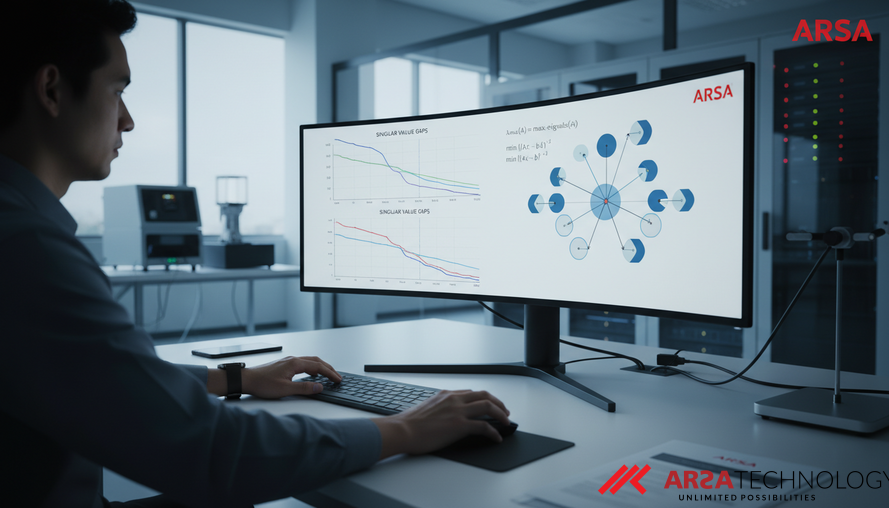
Understanding Grokking: A Deep Learning Mystery
In the world of artificial intelligence, neural networks sometimes exhibit a peculiar phenomenon called "grokking." This occurs when a network, after perfectly memorizing its training data, suddenly generalizes its knowledge to entirely new, unseen data. This leap from rote memorization to true understanding can happen long after the model has achieved zero training error, making it a critical, yet often unpredictable, aspect of advanced AI development. Understanding why and how grokking happens is key to building more efficient and reliable AI systems.
The "Spectral Edge Thesis" offers a profound mathematical framework that demystifies these intra-signal phase transitions in neural network training, including the emergence of grokking. This thesis proposes that the secrets to a neural network’s learning dynamics lie within the "spectral gap structure" of its rolling-window parameter updates. By analyzing the subtle shifts in these mathematical gaps, researchers can predict and potentially control when a network transitions from simply memorizing to genuinely understanding.
The Spectral Edge Thesis: A New Framework for AI Dynamics
At its core, the Spectral Edge Thesis provides a robust mathematical framework to explain how crucial events in neural network training, such as phase transitions, grokking, and the formation of specialized "feature circuits," are governed. The central idea revolves around the "spectral gap structure" of the rolling-window Gram matrix, a mathematical construct that captures the dynamics of how a network's parameters change over time during training. This framework isn't limited to specific neural network architectures; instead, its insights are universally applicable, with architectural details factored in through elements like Neural Tangent Kernel (NTK) eigenvalues and Hessian curvatures.
The significance of this approach becomes particularly evident in scenarios common in modern deep learning, where the number of network parameters (p) vastly outweighs the window size (W) used to analyze parameter updates—a condition referred to as the "extreme aspect ratio regime." In this regime, traditional methods for distinguishing "signal" from "noise" in data become less effective. The Spectral Edge Thesis argues that the critical information lies in the "intra-signal gap" – a distinct separation between dominant and subdominant modes within the signal itself, which directly controls the network's learning behavior.
Key Discoveries and Their Practical Implications
The empirical validation of the Spectral Edge framework is substantial, with 19 out of 20 quantitative predictions confirmed across a diverse range of models, including large language models like TinyStories 51M and GPT-2 124M, as well as models for specific tasks like Dyck-1, SCAN, and modular arithmetic. One striking finding is that the number of simultaneously active modes (k) – essentially, the complexity of the features a network is learning at a given moment – is typically small (k ≤ 3) and highly dependent on the optimization algorithm used. For instance, the Muon optimizer tends to drive k to 1, while AdamW often results in k = 2 for the same model, both achieving comparable performance. This suggests that different optimizers can lead to distinct learning pathways, influencing the underlying feature representations.
Crucially, the dynamics of this spectral edge are observed to precede every grokking event, confirming its causal link to this remarkable generalization capability. The research outlines a "three-phase pattern" in the spectral edge dynamics: an initial rise, followed by a plateau, and finally, a collapse. These phases are directly correlated with the network's learning progression. For enterprises leveraging AI, this framework offers actionable insights into optimizing training processes, predicting model performance, and ensuring that advanced solutions, such as ARSA AI API or custom vision systems, are robust and generalize effectively.
Unpacking the "How": Mathematical Underpinnings
The mathematical rigor of the Spectral Edge Thesis stems from three fundamental axioms, which lead to several critical theoretical results. These include:
The precise identification and characterization of the "gap position" (k) through NTK outliers.
- The description of "Dyson-type gap dynamics," which explains how these gaps evolve, ensuring subspace stability based on mathematical principles like Davis–Kahan.
- A system of coupled ordinary differential equations (ODEs) that governs the strengths of different "signals," pinpointing phase transitions at moments when these gaps collapse.
A key concept is the "adiabatic parameter A," which serves as a crucial control knob for circuit stability. A low value (A ≪ 1) suggests a stable learning phase or plateau, while a value around 1 indicates an impending phase transition. High values (A ≫ 1) signal "forgetting," where previously learned features might be overwritten. This parameter is computable directly from the network's architecture, offering a powerful predictive tool. The framework also reveals that while a spectral edge event might appear as a simple rank-1 change in function space, it translates to a dense reorganization of all network parameters (a concept known as "holographic encoding"). This means that the "feature circuits" — specialized internal components that learn specific tasks — are not isolated but emerge through a complex, distributed process, requiring the protecting spectral gap to remain large for these circuits to endure. This holistic understanding of network changes is vital for ARSA's expertise since 2018 in developing production-ready, highly reliable AI systems.
Real-World Applications and the Future of AI Optimization
The implications of the Spectral Edge Thesis extend far beyond academic theory, offering tangible benefits for enterprises building and deploying AI solutions. By providing a deeper understanding of how neural networks learn and generalize, this framework paves the way for more predictable and efficient AI training. Businesses can leverage these insights to:
Optimize Training Strategies: Fine-tune optimizers and regularization techniques (like weight decay) based on their impact on spectral gaps and `k` to achieve faster grokking and better generalization.
- Enhance Model Reliability: Monitor spectral edge dynamics to preemptively identify potential instabilities or suboptimal learning pathways, ensuring deployed AI models perform consistently in real-world environments.
- Design Robust AI Systems: Develop architectures and training methodologies that actively foster strong intra-signal gaps, leading to more stable feature circuits and reduced risks of "catastrophic forgetting."
- Accelerate Feature Learning: Guide the development of AI to quickly identify and encode essential features, making solutions for AI Box Series deployments or industrial IoT more effective.
For industries ranging from manufacturing to smart cities, where AI performance and reliability are paramount, this framework offers a new lens through which to view and optimize their intelligent systems. Understanding these deep learning dynamics means developers can move beyond trial-and-error, instead designing AI with a clearer path to achieving robust, intelligent generalization, directly contributing to measurable business outcomes.
Source: Xu, Yongzhong. "The Spectral Edge Thesis: A Mathematical Framework for Intra-Signal Phase Transitions in Neural Network Training." arXiv preprint arXiv:2603.28964 (2026). https://arxiv.org/abs/2603.28964
Are you ready to optimize your AI deployments with cutting-edge insights into deep learning dynamics? Explore ARSA Technology's enterprise AI solutions and contact ARSA for a consultation tailored to your specific needs.