Unlocking Precision: How AI's Implicit Neural Representations Revolutionize Retinal OCT Analysis
Explore how Implicit Neural Representations (INRs) overcome resolution challenges in retinal OCT imaging, enabling more accurate 3D analysis and earlier detection of eye diseases.

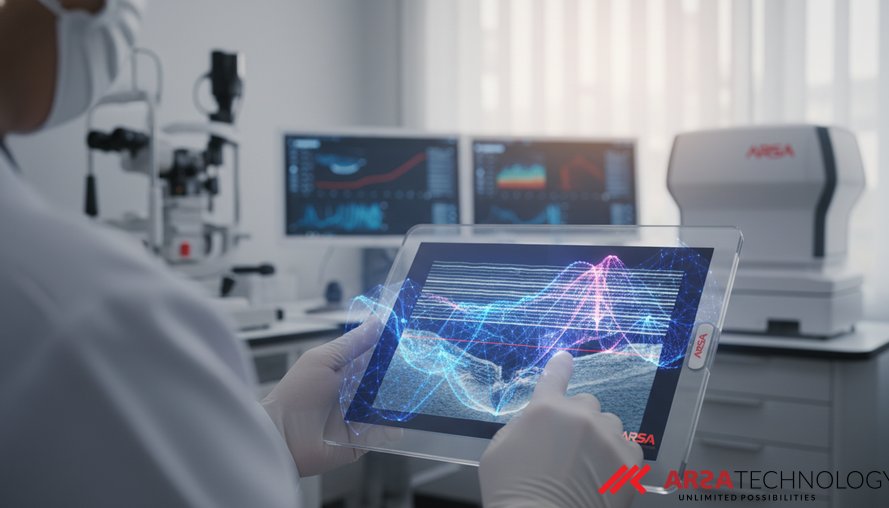
The Critical Role of OCT in Eye Health and Its Hidden Challenges
Optical Coherence Tomography (OCT) stands as a cornerstone in modern ophthalmology. This non-invasive imaging technique provides high-resolution, cross-sectional views of the retina, much like an ultrasound for the eye. It is routinely employed to measure subtle changes in retinal layer thickness, identify fluid accumulation, and detect structural alterations that are vital for diagnosing a wide spectrum of eye diseases. Conditions such as age-related macular degeneration (AMD), central serous chorioretinopathy (CSCR), diabetic retinopathy, and even neurodegenerative conditions like multiple sclerosis, rely on OCT for accurate identification and monitoring.
Despite its diagnostic power, the practical implementation of OCT in clinical settings faces a significant challenge: the trade-off between acquisition speed and imaging resolution. To reduce scanning time, routine OCT procedures often use large intervals between individual B-scans (cross-sectional slices). This results in sparsely sampled, highly anisotropic images – meaning the resolution within a single slice is high, but the spacing between slices is wide. This "gappiness" makes comprehensive three-dimensional (3D) analysis difficult, leading to potential inconsistencies in retinal layer segmentations and the risk of missing small yet critical anatomical or pathological structures.
Introducing Implicit Neural Representations (INRs) for Medical Imaging
Traditionally, AI-driven analysis of OCT images has leaned towards two-dimensional (2D) approaches, primarily using convolutional neural networks (CNNs). While effective for individual slices, these methods inherently struggle with the 3D consistency of retinal structures. They often require extensive post-processing to smooth out irregular surfaces or cannot adapt if the imaging protocol's resolution changes. This limitation means that an AI model trained on one type of OCT scan might perform poorly on another, hindering its widespread clinical applicability.
Enter Implicit Neural Representations (INRs). This groundbreaking AI paradigm offers a novel way to store and represent data. Instead of discrete pixels or voxels, INRs model an object or scene as a continuous mathematical function. By taking coordinates (like X, Y, Z in 3D space) as input, an INR can "reconstruct" the data at any desired resolution, effectively filling in the gaps and inferring missing information with remarkable accuracy. This inherent resolution-agnostic nature makes INRs particularly powerful for medical imaging data, especially highly anisotropic datasets like retinal OCT.
Bridging the Gaps: Revolutionizing 3D Retinal Analysis
The ability of INRs to provide a continuous representation of sparsely sampled data opens two significant avenues for advancing retinal OCT analysis. Firstly, they enable highly accurate inter-B-scan interpolation. By incorporating complementary information from other ocular imaging modalities, such as en-face scanning laser ophthalmoscopy (SLO) or fundus autofluorescence (FAF), INRs can use this additional context to infer and reconstruct relevant structures between the widely spaced B-scans. SLO and FAF offer high-resolution "top-down" views of the retina, providing crucial anatomical landmarks that help guide the INR in creating a dense, consistent 3D model, even from limited initial data. This process, often enhanced by population-based training, allows the AI to learn common retinal shapes and structures, enabling more robust and reliable interpolation for both healthy and diseased eyes.
Secondly, INRs facilitate the creation of a resolution-agnostic retinal atlas. An atlas serves as a standard reference map, allowing clinicians to compare a patient's retina against a normative model to detect deviations indicative of disease. By building an atlas using INRs, this reference becomes inherently adaptable to any OCT imaging protocol or resolution. This means that a single, continuously represented atlas can be used across various clinical devices and settings, standardizing analysis and dramatically simplifying comparisons. This comprehensive approach to data representation, where each retinal instance is approximated as a continuous function, significantly improves the precision of retinal shape analysis, even for previously unseen cases. For healthcare providers seeking to enhance diagnostic precision and streamline workflows, ARSA Technology offers advanced AI Video Analytics solutions that can be customized for complex medical imaging tasks.
The Advantages of Resolution-Agnostic AI in Clinical Practice
The adoption of INR-based frameworks for retinal OCT analysis offers several profound advantages that can directly translate into improved clinical outcomes and operational efficiency. Firstly, the ability to perform dense 3D analyses from sparsely sampled data addresses a long-standing limitation of conventional OCT. This means smaller anatomical changes or early pathological signs, which might have been missed by 2D interpretations or wide slice spacing, can now be identified with greater confidence. This leads to earlier detection of diseases, potentially enabling timelier interventions and better patient prognoses.
Secondly, the resolution-agnostic nature of INRs means that AI models are no longer strictly bound to the specific resolution of their training data. This drastically improves the generalizability of AI tools across different OCT devices and imaging protocols, making them more versatile and cost-effective for healthcare institutions. It reduces the need for extensive re-training or multiple models, simplifying deployment and maintenance. For corporate wellness programs or public health initiatives, a solution like ARSA's Self-Check Health Kiosk demonstrates the power of AI in accessible health screening, hinting at future possibilities for widespread, standardized medical data analysis. Furthermore, the inherent continuity of INR-generated 3D models largely eliminates the need for labor-intensive post-processing steps often required to create smooth, consistent 3D surfaces from disparate 2D segmentations. This reduces diagnostic turnaround times and frees up valuable medical personnel to focus on patient care rather than data manipulation.
Real-World Impact and Future Outlook
The application of implicit neural representations to retinal OCT analysis represents a significant leap forward in medical imaging and AI. It transforms what was once considered a challenging, anisotropic dataset into a continuous, resolution-independent source of rich diagnostic information. This innovation is not merely a theoretical advancement; it paves the way for practical, impactful changes in how eye diseases are detected, monitored, and understood globally.
Imagine a future where a retinal scan from any machine, regardless of its specific protocol, can be analyzed with the same high degree of precision, leading to standardized diagnostics and more equitable access to advanced care. For industries beyond healthcare, ARSA's AI Box Series, such as the AI BOX - Basic Safety Guard, already showcases how advanced vision AI can transform existing camera infrastructure into intelligent monitoring systems, providing real-time insights across various operational challenges. This technology has the potential to enhance diagnostic workflows, support clinical research with more robust data, and ultimately improve the quality of life for millions suffering from vision-threatening conditions.
As ARSA Technology, we are committed to leveraging cutting-edge AI and IoT solutions to drive digital transformation across various industries, including healthcare. We are ready to help businesses harness the power of AI for measurable impact, enhanced security, and operational excellence.
Ready to explore how advanced AI solutions can transform your operations and improve outcomes? Discover ARSA Technology’s innovative offerings and contact ARSA today for a free consultation.