Unlocking Silent Communication: The Rise of Multi-Dimensional Attention in Lipreading AI
Explore MA-LipNet, a groundbreaking AI in lipreading that uses multi-dimensional attention to overcome noise in visual speech data, delivering higher accuracy for security, accessibility, and human-computer interaction.

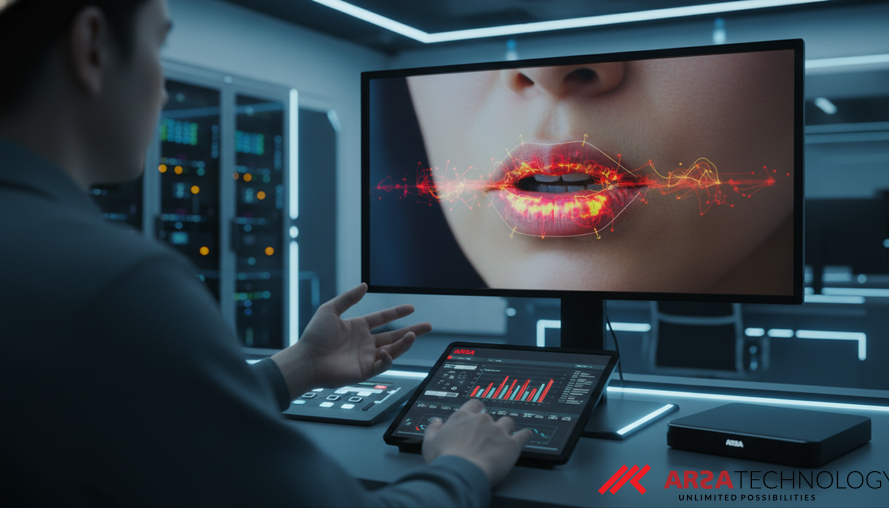
Decoding the Silence: The Power of Lipreading AI
Lipreading, scientifically known as Visual Speech Recognition (VSR), is an advanced artificial intelligence technology that interprets spoken language by analyzing a speaker's lip movements from silent video footage. Imagine a world where crucial information can be understood even when audio is compromised, unavailable, or restricted due to privacy concerns. This capability holds immense potential across various sectors, from enhancing public security and supporting assisted hearing technologies to revolutionizing human-computer interaction. However, despite significant advancements in AI, the subtle and complex nature of human articulatory gestures presents a formidable challenge for existing lipreading systems. These systems often struggle with distinguishing between similar-looking lip movements (known as visemes, the visual equivalent of phonemes) and fail to generalize effectively to diverse real-world scenarios.
The difficulty is particularly pronounced in sentence-level lipreading, where the AI must transcribe a continuous sequence of video frames into a coherent sequence of words. This task is complicated by co-articulation effects, where the pronunciation of one sound influences the movements for adjacent sounds, making clear visual boundaries elusive. While modern deep learning architectures, employing Convolutional Neural Networks (CNNs) for visual processing and Recurrent Neural Networks (RNNs) or Transformers for sequence decoding, have improved performance, a core problem persists: the raw visual data is often cluttered with irrelevant "noise." This noise can significantly degrade the accuracy and reliability of the lipreading output, limiting its practical utility.
The Core Challenge: Noise in Visual Speech Data
The journey from raw video frames to meaningful text is fraught with potential for misinterpretation if the visual features aren't meticulously refined. The "noise" that hampers lipreading performance manifests across three primary dimensions of the video data:
- Spatial Dimension: Even after cropping a video to focus specifically on the lip region, not all pixels within that frame are equally important. Background clutter, shadows, or even other non-lip facial features can introduce distractions that mislead the AI model. For instance, a subtle hand gesture near the face might be mistakenly interpreted as part of the speech.
- Temporal Dimension: In a video sequence, not every frame contributes equally to the spoken content. Moments when a speaker pauses, or the video captures non-speech movements at the beginning or end of an utterance, provide little to no linguistic information. Including these uninformative frames can dilute the signal and confuse the model, slowing down accurate processing.
- Channel Dimension: Within the internal workings of a CNN (which processes visual data), feature maps are organized into "channels." Each channel typically learns to identify different patterns or characteristics. While some channels might become highly attuned to the intricate movements of the lips, others could inadvertently focus on irrelevant textures or lighting changes. This can lead to a less focused and effective representation of the visual speech.
These redundant or irrelevant pieces of information act as significant impediments to building truly robust and generalizable lipreading systems. The need for an advanced mechanism to filter out this noise and amplify the crucial visual cues is paramount for the next generation of VSR technologies.
Introducing MA-LipNet: A Multi-Dimensional Approach to Clarity
To overcome these challenges, researchers have developed MA-LipNet (Multi-Attention Lipreading Network), a novel approach that integrates a series of specialized "attention modules" directly into the visual processing stage of a deep learning model. The concept of "attention" in AI allows a neural network to focus on the most relevant parts of its input data, much like how human attention selectively processes information. While attention mechanisms have been used in lipreading previously—often within the text decoder to align visual features with output words—MA-LipNet innovates by applying multi-dimensional attention specifically within the visual front-end to actively purify features before decoding.
The core of MA-LipNet lies in its sequential application of three distinct attention modules, each designed to address a specific dimension of visual noise:
- Channel Attention (CA) Module: This module acts first, like a sophisticated filter, to assess the importance of different feature channels within the CNN's output. It adaptively recalibrates these channel-wise features, prioritizing channels that carry vital lip-related information and diminishing the influence of those that are less informative or noisy. This ensures the network focuses on the most salient visual characteristics.
- Joint Spatial-Temporal Attention (JSTA) Module: Following the channel refinement, the JSTA module performs a coarse-grained filtering across both spatial (pixels within a frame) and temporal (frames over time) dimensions simultaneously. It computes a unified weight map that highlights the most relevant regions of the lip movements over time, effectively suppressing broader spatio-temporal noise.
Separate Spatial-Temporal Attention (SSTA) Module: Building on the coarse filtering of JSTA, the SSTA module provides a more fine-grained refinement. It meticulously models temporal and spatial attentions separately*. This allows for an even more precise focus, ensuring that only the most critical pixels within the most crucial frames contribute to the final lipreading decision. This two-pronged spatio-temporal approach ensures comprehensive noise reduction.
By combining these three specialized attention mechanisms, MA-LipNet creates a highly refined visual representation of lip movements, significantly improving the discriminability of subtle gestures and the overall generalization capabilities of the lipreading system.
How MA-LipNet Achieves Superior Accuracy
The MA-LipNet framework processes an input video through a conventional 3D-CNN visual front-end, similar to established lipreading architectures like LipNet. This front-end extracts initial visual features, but it's the subsequent multi-attention modules that truly transform these raw features into highly actionable data.
The Channel Attention (CA) Module operates by condensing global spatio-temporal information into a "channel descriptor." It does this by performing both max-pooling (identifying the most prominent feature in each channel across all spatial and temporal dimensions) and average-pooling (calculating the average feature strength). These two aggregated descriptors are then fed into a small neural network, which learns to assign importance weights to each channel. After activation, these weights are used to enhance or suppress the original feature channels. This process is akin to having an expert selectively boost the microphone levels of speakers whose contributions are most relevant to the conversation, while lowering those of distracting background noises.
Next, the Joint Spatial-Temporal Attention (JSTA) Module takes the channel-refined features and focuses on the combined space and time dimensions. It again uses max-pooling and average-pooling, but this time across the channel dimension, effectively summarizing the most salient spatial and temporal information into a unified map. This map then generates a coarse attention mask, which is multiplied with the features to emphasize important spatio-temporal regions and diminish irrelevant ones. This step provides an initial, broad sweep to filter out the most obvious visual "clutter" in both space and time.
Finally, the Separate Spatial-Temporal Attention (SSTA) Module refines this coarse filtering with greater precision. While the JSTA considers space and time together, SSTA disentangles them. It independently calculates attention maps for the temporal dimension (identifying the most critical frames) and the spatial dimension (pinpointing the most crucial pixel regions within those frames). These separate attention maps are then combined to produce a highly detailed, fine-grained mask. This meticulous, step-by-step purification, from channel to coarse spatio-temporal to fine-grained spatio-temporal, is what allows MA-LipNet to achieve exceptional clarity in feature extraction.
Extensive experiments on benchmark datasets like CMLR and GRID have demonstrated the remarkable effectiveness of MA-LipNet. The system has shown significant reductions in both Character Error Rate (CER) and Word Error Rate (WER), outperforming several state-of-the-art lipreading methods. These results highlight that a multi-dimensional approach to feature refinement is not just beneficial, but crucial for developing robust and accurate visual speech recognition capabilities.
Real-World Impact and Applications of Robust Lipreading
The innovations brought by MA-LipNet have profound implications for numerous real-world applications where precise and reliable visual speech recognition is critical.
In public security and surveillance, robust lipreading can provide invaluable intelligence in situations where audio is intentionally muted, unrecorded, or obscured by noise. Imagine identifying critical commands or threats in a high-security environment without relying on sound. This technology can serve as a powerful complementary tool to traditional surveillance, enhancing situational awareness and providing actionable insights in complex scenarios. Companies like ARSA Technology, which offer advanced AI Video Analytics, can leverage such refined visual processing capabilities to build more sophisticated and accurate monitoring systems for secure environments.
For assisted hearing technologies, lipreading AI can transform communication for individuals with hearing impairments. Real-time visual speech translation could provide a discreet and effective means of understanding spoken content in daily interactions, making communication more accessible and seamless. Similarly, in human-computer interaction, imagine controlling devices or dictating messages simply through lip movements, offering new avenues for hands-free and privacy-preserving interfaces. This could be particularly impactful in industrial settings or healthcare where touch interfaces might be impractical or unhygienic.
Beyond these direct applications, the principles of multi-dimensional attention and feature purification are vital across the broader field of computer vision. Whether it's enhancing the precision of an ARSA AI API for specific object detection tasks, improving the accuracy of behavioral analysis, or boosting the efficiency of data processing for real-time monitoring, the ability to focus on salient information while discarding noise is a cornerstone of effective AI. These techniques ensure that AI models are not only accurate but also more efficient, reducing computational overhead and delivering faster, more reliable insights across various industries.
The Future of Visual Speech Recognition
The development of MA-LipNet marks a significant step forward in the field of Visual Speech Recognition. By systematically addressing the challenges of noisy visual data across channel, spatial, and temporal dimensions, this research paves the way for a new generation of lipreading systems that are more accurate, robust, and versatile. The emphasis on multi-dimensional feature refinement underscores a critical pathway for developing AI models that can better perceive and interpret the subtle complexities of human communication from visual cues.
As AI technology continues to evolve, the ability to extract precise information from seemingly ambiguous data will become increasingly important. ARSA Technology, with its deep expertise in AI and IoT solutions, recognizes the importance of such innovations in building future-proof, high-converting systems. By understanding and applying principles of advanced feature extraction and attention, businesses can unlock new levels of operational efficiency, security, and accessibility.
Source: MA-LipNet: Multi-Dimensional Attention Networks for Robust Lipreading
Ready to explore how advanced AI and IoT solutions can transform your operations? Learn more about ARSA Technology's innovative approaches and contact ARSA for a free consultation tailored to your business needs.