Unlocking Wearable EEG Potential: How Intelligent Partitioning Enables Unsupervised Deep Denoising
Discover iPSD, an innovative AI method enabling unsupervised deep learning denoising for wearable EEG. Learn how it tackles noise challenges, improves diagnostic accuracy, and transforms health monitoring, even in low SNR environments.

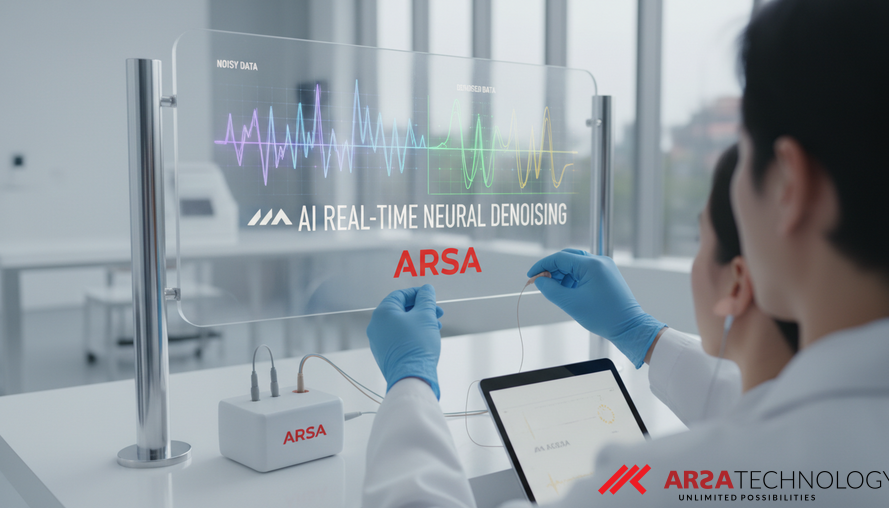
The Unseen Challenge of Wearable EEG Monitoring
Wearable technology is rapidly transforming how we approach continuous health monitoring. While significant strides have been made in devices for electrocardiogram (ECG) and photoplethysmogram (PPG) tracking, the progress in wearable electroencephalogram (EEG) monitoring has faced unique hurdles. EEG, which measures the brain's electrical activity, presents a particularly complex signal to capture reliably outside of clinical settings. Neural activity is inherently subtle, broadband, and non-stationary, making it incredibly challenging to differentiate from noise in real-world wearable recordings. Factors such as poor electrode-skin contact, motion artifacts, and various physiological interferences like muscle contractions (electromyographic or EMG artifacts) consistently contaminate these vital signals.
The pervasive nature of noise in wearable EEG recordings diminishes the clarity of brain signals, limiting their utility for accurate diagnosis and monitoring. This is a critical barrier for advancing accessible health solutions. Imagine trying to listen to a whisper in a bustling crowd – that's the challenge faced by wearable EEG. The ability to accurately capture and interpret brain activity could revolutionize monitoring for conditions ranging from sleep disorders to neurological conditions, provided the signal quality can be made reliable enough for clinical and practical applications.
Limitations of Traditional Denoising Approaches
To combat the pervasive noise, various signal processing methods have been proposed over time, often relying on decomposition and selective reconstruction. Techniques like the discrete wavelet transform attempt to break down the signal into different components and then filter out noise. However, these classical methods often struggle when the noise spectrum significantly overlaps with the genuine EEG signal. For instance, EMG artifacts, which are common in wearable recordings, share similar frequency ranges with brainwaves, making it difficult for fixed or heuristic rules to distinguish and remove them effectively.
Other methods, such as mode decomposition, offer a partial solution by adapting the decomposition process to the data itself. Yet, these approaches often remain sensitive to specific parameter choices and can be easily disrupted by the abrupt, unpredictable perturbations frequently encountered in everyday wearable EEG use. Their inability to adapt to the highly variable and non-stationary nature of real-world noise means that a "one-size-fits-all" traditional approach is often insufficient for robust, continuous monitoring.
Deep Learning's Promise and the "Clean Data" Paradox
Deep learning (DL) has emerged as a powerful alternative for signal denoising, offering a way for highly expressive neural networks to directly map noisy signals to clean estimates without relying on predefined mathematical bases. This decomposition-free approach holds immense promise for tackling the complex, time-varying artifacts in EEG. However, a fundamental challenge known as the "clean data paradox" has historically hampered the application of deep learning in this domain. Supervised training, which is the most common method for training deep learning models, requires pristine, artifact-free reference recordings to learn from.
For EEG, such clean references are inherently unattainable. Neural signals are inextricably mixed with physiological and environmental noise at the very point of acquisition. Unlike images or audio, where clean versions can often be synthetically generated or recorded in controlled environments, a "true" clean EEG signal simply doesn't exist to serve as a ground truth for training. This absence of a clean reference makes traditional supervised deep learning approaches unfeasible for real-world EEG denoising, leaving a significant gap in the development of robust wearable brain monitoring technologies.
Introducing Intelligent Partitioning for Self-Supervised Denoising (iPSD)
Addressing this critical data paradox, researchers have developed Intelligent Partitioning for Self-supervised Denoising (iPSD). This innovative method eliminates the need for artifact-free EEG references by learning to smartly partition a single noisy input EEG segment into two independent noisy sub-signals. The key insight is that while each sub-signal is noisy, they both share the exact same underlying clean brain activity. This clever partitioning enables a self-supervised training paradigm, akin to the Noise2Noise (N2N) method used in image processing, but adapted for the unique characteristics of EEG.
Instead of relying on a predetermined rule, the "intelligent partitioning" in iPSD is optimized dynamically using reinforcement learning (RL). This means the system learns a flexible, signal-specific way to split the data, ensuring that the resulting sub-signals are maximally informative of one another’s underlying clean signal. The denoising network is then trained to map one noisy sub-signal to the other. Because the noise components in these sub-signals are independent, the network is driven to converge on their shared component: the clean EEG signal. Furthermore, iPSD offers a "zero-shot" variant, iPSD-Zero, capable of recovering clean signals from a single noisy segment without any prior training, making it exceptionally versatile for immediate real-world applications.
Revolutionizing Accuracy: iPSD's Proven Performance
iPSD has demonstrated state-of-the-art performance across extensive experiments, rigorously tested against various noise types and challenging conditions. Validation on wearable EEG data from custom-built in-ear sensors, which are notoriously prone to artifacts, highlights its effectiveness. The results show that iPSD significantly outperforms competitive baselines, particularly under extremely low signal-to-noise ratios (down to -10 dB, meaning noise power is ten times greater than signal power) and against difficult artifacts like EMG. The method achieves spectral fidelity orders of magnitude higher than other established techniques, demonstrating its ability to preserve the integrity of the subtle brain signals while effectively suppressing overwhelming noise. This research paper, "Enabling Unsupervised Training of Deep EEG Denoisers With Intelligent Partitioning" from Qiyu Rao et al., published via arXiv, establishes a new benchmark in EEG denoising.
The practical value of iPSD extends beyond just cleaner signals. When applied to a downstream task like sleep-stage classification, wearable EEG data denoised by iPSD achieves accuracy comparable to clinical-grade scalp EEG. This breakthrough means that accessible wearable devices could soon provide the same level of diagnostic insight as more cumbersome, expensive clinical equipment. This innovation addresses critical challenges in healthcare, offering a pathway to more widespread and accurate continuous health monitoring.
The Broader Impact for AI & IoT in Healthcare
The development of iPSD marks a significant leap forward for AI and IoT applications in healthcare. By enabling robust and accurate EEG monitoring through wearable devices, it unlocks new possibilities for preventative care, remote diagnostics, and personalized health management. Enterprises can leverage such advanced denoising capabilities to build more reliable and effective health monitoring products, creating new revenue streams and delivering enhanced value to end-users. This precision in data collection and analysis also reduces the risk of misdiagnosis and improves overall patient outcomes.
For organizations looking to integrate advanced AI Video Analytics and edge AI solutions into their operations, whether in healthcare, smart cities, or industrial environments, the principles behind iPSD underscore the importance of intelligent data processing at the source. Companies like ARSA Technology, who have been experienced since 2018 in delivering practical AI deployed across various industries, understand the necessity of robust, privacy-preserving, and high-fidelity data interpretation. ARSA’s focus on solutions like the Self-Check Health Kiosk demonstrates a commitment to bringing AI and IoT to the forefront of health technology, simplifying complex medical procedures and enhancing data collection for better insights. This type of innovation aligns perfectly with the need for reliable, self-contained health monitoring systems.
Strategic technology transformation requires partners who can bridge advanced research with operational realities. The ability to deploy AI that works effectively under real-world constraints, with full control over data, privacy, and performance, is paramount for mission-critical applications.
To explore how advanced AI and IoT solutions can transform your enterprise operations and enable next-generation health monitoring, we invite you to contact ARSA for a free consultation.