Unveiling AI's Logic: H-Sets for Deeper Feature Interaction in Image Classifiers
Discover H-Sets, a breakthrough framework that uncovers how groups of features interact in AI image classifiers, providing clearer, more trustworthy explanations for complex decisions.

Introduction: Beyond Single Pixels in AI Explanations
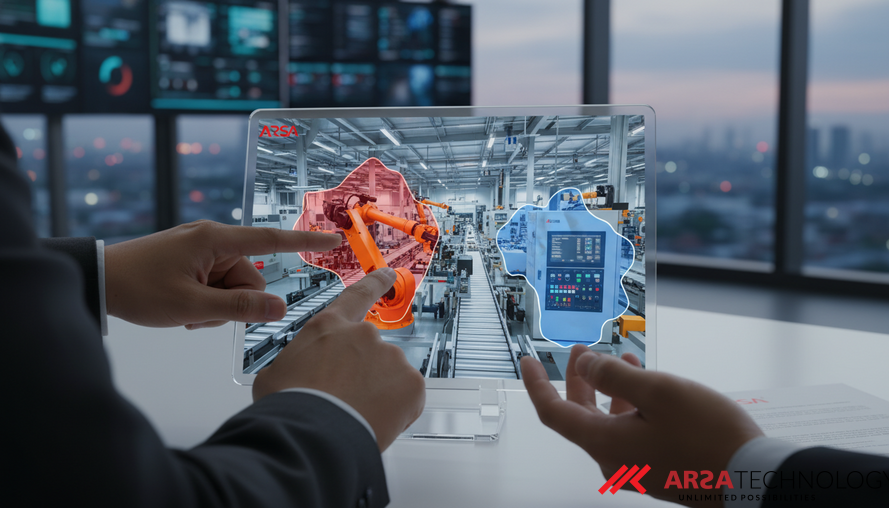
As artificial intelligence systems become integral to critical domains like healthcare, autonomous driving, and industrial automation, understanding how they arrive at decisions is no longer optional. This need has driven the rise of Explainable AI (XAI), particularly feature attribution methods that assign importance scores to individual input features. However, a significant limitation persists: most existing methods focus on marginal effects, evaluating each feature in isolation. This approach often overlooks crucial "feature interactions," where groups of features collaboratively influence the AI's output in ways that go beyond their individual contributions. This is especially true in image classification, where an object's semantic meaning often emerges from complex interdependencies between pixels, not just isolated points.
Addressing this gap, recent research from institutions including Caltech and Rochester Institute of Technology, in collaboration with Toyota InfoTech Labs, has introduced H-Sets. This novel framework is designed to discover and attribute higher-order feature interactions in image classifiers, promising more interpretable and faithful explanations for complex AI decisions. You can read the full academic paper here: H-Sets: Hessian-Guided Discovery of Set-Level Feature Interactions in Image Classifiers.
The Challenge of Understanding Interconnectedness in AI
Imagine an AI identifying a "car" in an image. Traditional explainability might highlight the pixels forming the car's wheel, a headlight, or a part of the body. While useful, this doesn't fully explain how the AI understands the vehicle as a whole. The combination of the wheel, the body shape, and the presence of windows together forms the concept of a car. These are feature interactions. Previous attempts to capture such interactions in images have often faced limitations: they could be computationally expensive, restricted to coarse "superpixels" (large blocks of similar pixels), or fail to meet fundamental interpretability standards. For enterprises seeking to deploy AI solutions with trust and accountability, these shortcomings can be significant hurdles, especially when debugging failures or ensuring compliance.
H-Sets: A Two-Stage Framework for Deeper Insights
H-Sets offers a principled, two-stage framework to overcome these challenges, delivering clearer insights into an AI's decision-making process.
1. Interaction Detection: Uncovering Joint Dependencies with Hessians
The first stage focuses on identifying groups of features that exhibit strong, non-additive interactions. H-Sets utilizes the Hessian matrix, a powerful mathematical tool that measures the curvature of a function. In simpler terms, while a standard gradient tells you how much an AI's output changes if one pixel's value is altered, the Hessian tells you how much it changes when two or more pixels are changed together. This allows H-Sets to pinpoint pairs of pixels with strong "second-order dependencies"—meaning they jointly influence the model's output in a significant way.
These locally interacting pairs are then recursively merged into larger, semantically coherent sets. To ensure these groups make intuitive sense, a spatial grouping prior, such as segmentation masks from models like Segment Anything (SAM), is applied. This means that instead of random groupings, the system intelligently forms groups of pixels that are spatially connected and likely represent a unified visual component. While computing Hessians can be resource-intensive, H-Sets intelligently limits this cost only to the detection phase. This targeted computational investment yields high-quality, semantically rich regions for explanation, resulting in more interpretable saliency maps.
2. Interaction Attribution: Assigning Value with Game Theory
Once these interaction sets are identified, the next step is to quantify their importance. H-Sets introduces IDG-Vis (Integrated Directional Gradients for Vision), a specialized extension of existing attribution methods adapted for image models. Unlike methods that attribute individual elements, IDG-Vis assigns scalar importance values to entire feature sets. It does this by integrating directional gradients along pixel-space paths and then combining these insights with "Harsanyi dividends" from cooperative game theory.
Harsanyi dividends provide a fair way to distribute the synergistic value created by a group of cooperating "players" (in this case, features or pixels). This game-theoretic formulation ensures that the attribution satisfies a comprehensive set of interpretability axioms, meaning the explanations are not only accurate but also robust and consistent. This rigorous approach is critical for building trustworthy AI systems in industries where precision and reliability are paramount.
The Practical Impact of H-Sets in Real-World AI
H-Sets offers several key advantages that translate directly into business value for enterprises leveraging AI. The use of Hessians allows it to isolate non-additive feature groups that purely gradient-based methods often miss, leading to more profound insights. By incorporating spatial priors, it generates coherent, intuitive regions in saliency maps. Furthermore, its game-theoretic attribution ensures that explanations are robust and satisfy critical interpretability standards.
The result is saliency maps that are demonstrably sparser, more faithful, and more comprehensible than those produced by existing methods. This means:
Enhanced Trust & Accountability: Decision-makers can better understand the collective* reasoning behind an AI's predictions, fostering greater trust.
- Effective Debugging: When an AI fails, H-Sets can pinpoint the exact interacting feature groups responsible, accelerating debugging and improving model robustness.
- Improved Compliance: For regulated industries, clear and justifiable explanations are vital for meeting regulatory requirements and demonstrating responsible AI deployment.
For example, in public safety applications powered by ARSA AI Video Analytics, H-Sets could help explain why a specific behavior was flagged as suspicious, by highlighting the interacting body postures and environmental cues, rather than just isolated movements. Similarly, for industrial quality control using ARSA AI Box Series, it could clarify exactly which combination of defects led to a product being rejected.
ARSA Technology: Leveraging Advanced AI for Enterprise Solutions
As a provider of enterprise AI and IoT solutions, ARSA Technology recognizes the critical importance of explainable AI in delivering practical, proven, and profitable systems. Our experienced since 2018 team continuously explores cutting-edge research like H-Sets to enhance the interpretability and reliability of our deployments across various industries. By understanding not just what an AI sees, but how it processes interacting visual information, we can build more resilient and trustworthy solutions for public safety, smart cities, retail analytics, and industrial automation. ARSA Technology is committed to providing AI solutions that not only perform with high accuracy but also offer the transparency necessary for high-stakes operational environments.
Conclusion: Building Trust Through Understandable AI
The H-Sets framework represents a significant step forward in the field of Explainable AI. By moving beyond isolated features to uncover the deeper, interactive logic of image classifiers, it offers a more faithful and interpretable view into how these complex models operate. This enhanced transparency is essential for unlocking the full potential of AI in critical applications, allowing for greater trust, easier debugging, and more confident decision-making. As AI continues to evolve, frameworks like H-Sets will be crucial in ensuring that these powerful technologies remain understandable and accountable.
To explore how advanced AI explainability can benefit your enterprise and to discuss custom solutions tailored to your unique challenges, we invite you to contact ARSA today for a free consultation.
Source: H-Sets: Hessian-Guided Discovery of Set-Level Feature Interactions in Image Classifiers