Unveiling the Hidden Code: Securing Low-Cost Drone Firmware with Advanced Acquisition Methods
Explore innovative methods for extracting and validating firmware from consumer drones. Discover how techniques like SPI flash reading and entropy analysis reveal critical security insights in embedded AI and IoT systems.

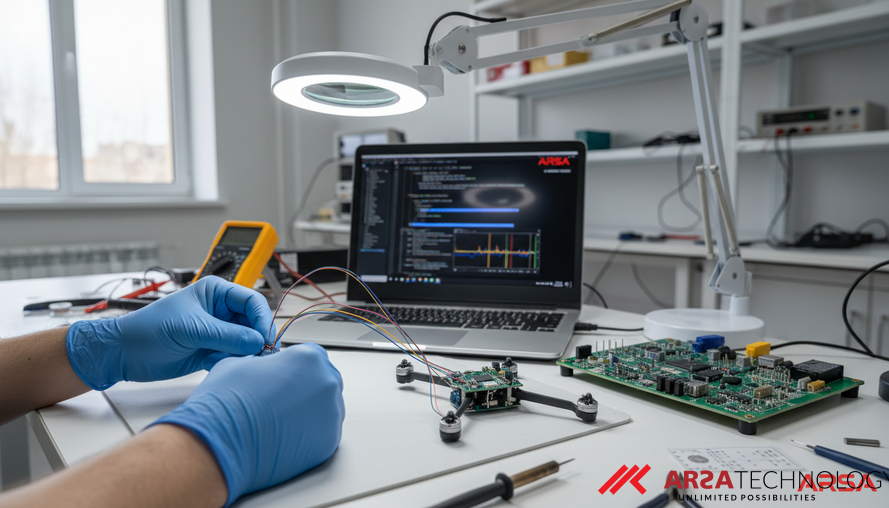
Unlocking the Black Box: Why Drone Firmware Matters
Consumer drones, from recreational quadcopters to sophisticated logistics platforms, have become ubiquitous, integrating advanced computing capabilities, imaging sensors, and wireless communication. Yet, a critical component of these devices—their embedded firmware, the core software that dictates every action—often remains a mystery. This "black box" scenario is particularly prevalent in low-cost models, which frequently lack robust security features and transparent documentation of their internal software. For security researchers, enterprises deploying drone fleets, and even educators, this inaccessibility poses a significant challenge. Without insight into the firmware, identifying vulnerabilities, ensuring data privacy, and validating operational integrity becomes nearly impossible.
The embedded firmware on drones is responsible for everything from flight stabilization and command execution to managing wireless communications and over-the-air updates. Despite these critical roles, manufacturers often provide minimal information regarding their firmware design or protection mechanisms. This lack of transparency has led to documented security weaknesses in various drone platforms, ranging from unsecured Wi-Fi control channels to inadequate authentication and the leakage of sensitive tracking metadata. For any organization relying on drone technology, understanding and securing this foundational software layer is not just an IT concern, but a strategic imperative that impacts operational safety, regulatory compliance, and overall trust.
The Quest for Firmware: Diverse Acquisition Methods
Gaining access to this proprietary firmware is the first step toward understanding and mitigating potential risks. A systematic approach is crucial, especially when dealing with heterogeneous hardware designs and undocumented memory maps found in low-cost consumer drones. Researchers have explored and validated several methods for firmware extraction using readily available, low-cost tools, moving beyond reliance on specialized, expensive equipment. This ensures that the process is reproducible and accessible, fostering broader security research and educational initiatives (Source: A Multi-Interface Firmware Acquisition and Validation Methodology for Low-Cost Consumer Drones).
Four primary acquisition methods prove effective:
- SPI Flash In-Circuit Reading: Many drone firmwares are stored on external Serial Peripheral Interface (SPI) NOR flash memory chips. These chips can be read directly while still soldered onto the circuit board using a specialized programmer. This method often yields complete firmware images.
- SWD/JTAG Debug-Port Access: These are standard debugging interfaces (Serial Wire Debug and Joint Test Action Group) found on many microcontrollers, acting as "backdoors" for developers. When enabled, they allow direct access to the device's memory, including the firmware. Identifying and connecting to these unlabeled ports on consumer drones can be challenging but offers a powerful way to extract internal data.
- UART Boot-Message Capture: Universal Asynchronous Receiver-Transmitter (UART) is a simple serial communication protocol. During a device's boot sequence, diagnostic messages or bootloader information can sometimes be captured via UART ports. While not always providing a full firmware image, it offers valuable insights into the boot process and potential entry points.
- Clip-Based Contact Approach: This non-invasive technique involves physically clamping a clip onto the pins of a surface-mounted chip (like an SPI flash) to read its contents without the need for desoldering. This method significantly reduces the risk of damaging the board and makes the acquisition process much more practical and efficient, especially for delicate components.
Ensuring Authenticity: A Three-Tier Validation Framework
Acquiring a raw data dump from a drone's memory is only half the battle. The next critical step is to validate the completeness and integrity of the extracted firmware image. Many acquisition attempts might appear successful at the tool level but result in incomplete or corrupted data. To address this, a robust three-tier validation framework is essential, distinguishing genuinely complete images from those that are superficially successful. This framework leverages established analytical techniques to ensure reliability.
The first tier involves sliding-window Shannon entropy profiling. Entropy is a measure of randomness in data. High entropy typically indicates meaningful data or code, while low entropy suggests empty space, repeated patterns, or encrypted/compressed sections. By analyzing the entropy across the firmware image in sliding windows, researchers can identify regions that likely contain executable code, data, or file systems, and differentiate them from meaningless filler data. This helps confirm the presence of actual firmware content.
The second tier utilizes structural-signature analysis with tools like Binwalk. Binwalk is a widely used firmware analysis tool that can identify common file system headers, executable code signatures, and other embedded structures within a binary file. By applying Binwalk to the extracted images, it's possible to confirm the presence of expected operating system components, libraries, and file systems, providing a structural verification of the firmware's content. The absence of such signatures would indicate an incomplete or invalid extraction.
The third tier employs static analysis frameworks such as EMBA. The Embedded Mobile Binary Analyzer (EMBA) framework is an automated system designed for comprehensive firmware analysis. It can identify operating system components, detect aging software library stacks, pinpoint known vulnerabilities (CVEs), and even highlight the absence of binary-hardening mechanisms. This deep analysis not only validates the presence of real firmware but also immediately surfaces critical security insights, such as outdated components or missing protections that increase the risk of exploitation. Enterprises leveraging edge AI systems or custom AI Video Analytics solutions should apply similar rigorous validation to ensure the integrity of their deployed devices.
Security Insights and Practical Implications
The study's findings on Holy Stone consumer drones are particularly revealing. Validated firmware images consistently contained identifiable OS components and older library stacks with known Common Vulnerabilities and Exposures (CVEs). Furthermore, these firmwares lacked crucial binary-hardening mechanisms, which are security features designed to make exploitation more difficult. This highlights a significant security gap in low-cost consumer drones.
The business implications of these findings are substantial. For consumers, it means increased exposure to cyber threats, potentially compromising home network security if drones connect to local Wi-Fi. For enterprises, particularly those in public safety, defense, or logistics that might use or interact with such drones, the risks are even greater. Exploitable firmware could lead to:
- Data Breaches: Sensitive operational data, flight paths, or captured imagery could be exfiltrated.
- Operational Disruption: Drones could be hijacked, reprogrammed, or disabled, leading to service interruptions, safety hazards, or even malicious activities.
- Compliance Violations: Lack of robust security and privacy controls could lead to non-compliance with data protection regulations.
- Reputational Damage: Incidents involving compromised drones could severely damage public trust and brand reputation.
The absence of binary hardening, in particular, makes these devices prime targets for attackers, as common exploitation techniques become much more effective. This underscores the need for organizations to not only vet the hardware they deploy but also to insist on transparency and robust security practices from their technology providers. Companies like ARSA Technology, with its on-premise SDK solutions, understand the critical need for full data control and privacy-by-design in sensitive deployments.
Paving the Way for Future Innovations and Secure Operations
The methodology and the resulting validated firmware corpus represent a significant step forward in embedded systems security research for consumer UAVs. This foundational work enables several critical applications:
- Firmware Rehosting: The ability to run drone firmware on virtual machines or emulators allows security researchers to analyze its behavior without needing physical hardware, accelerating vulnerability discovery.
- Vulnerability Analysis: With reliable images, automated tools can scan for known vulnerabilities and identify new attack vectors more effectively.
- Secure-Boot Assessment: Researchers can evaluate the integrity of boot processes and identify weaknesses that could allow malicious firmware injection.
- Embedded-Systems Education: The reproducible methodology and accessible firmware images provide invaluable resources for teaching embedded systems security and reverse engineering.
This research bridges the gap in the IoT firmware security literature, moving beyond network-level observations to address the practical challenges of obtaining high-quality firmware images from complete UAV systems. As consumer UAV adoption continues to expand, this deeper understanding of firmware internals becomes crucial for ensuring home-network security, airspace safety, and critical infrastructure protection. The insights gained from such methodologies directly inform the development of more secure and resilient AI and IoT solutions across various industries.
Conclusion: Strengthening the AI/IoT Ecosystem
The systematic acquisition and validation of consumer drone firmware, as demonstrated by this comprehensive study, provide an indispensable baseline for enhancing security in the rapidly expanding AI and IoT landscape. By converting inaccessible proprietary systems into transparent, analyzable assets, this work empowers the security community, fosters innovation, and directly informs the design of more robust, trustworthy, and resilient embedded platforms. For enterprises aiming to build the future with AI and IoT, such foundational research underpins the commitment to security, cost reduction, and new revenue streams.
To learn more about how advanced AI and IoT solutions can enhance your enterprise operations and security, we invite you to explore ARSA’s offerings and contact ARSA for a free consultation.