Volvo's Electric Renaissance: EX60 Leads a New Era of Software-Defined EVs
Explore Volvo's strategic shift with the new EX60, overcoming past EV challenges with advanced software, AI integration, and a focus on real-world performance for global markets.

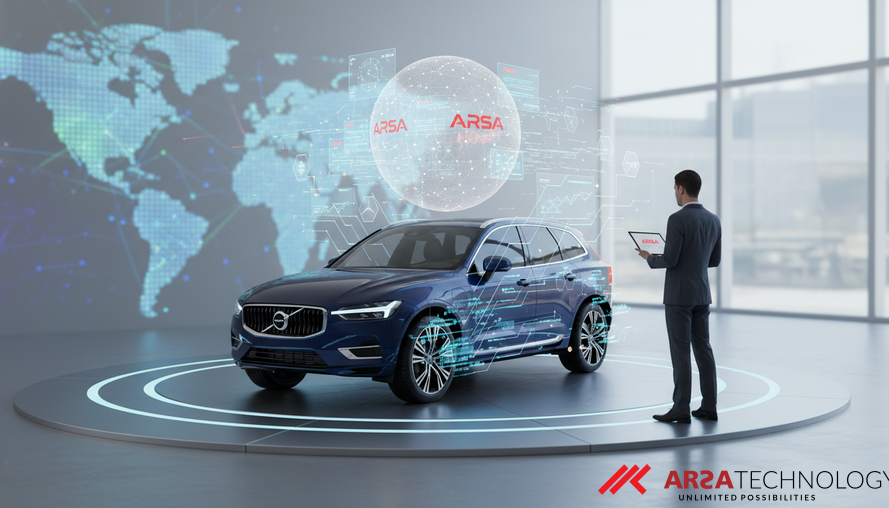
Volvo, a brand once known for its ambitious pledge to fully transition from internal combustion engines, is now navigating the intricate landscape of the electric vehicle (EV) market with a renewed focus. After encountering a series of challenges with earlier EV models, the Swedish automaker is signaling a strategic reset, spearheaded by the introduction of its new compact SUV, the EX60. This new model represents more than just a product launch; it's a re-assertion of Volvo’s commitment to sustainable mobility, grounded in lessons learned and a vision for a software-defined future.
The journey into electrification has been far from smooth for many automotive giants, and Volvo has had its share of "bumpy" moments. While the compact EX40 has enjoyed consistent success, other models faced significant hurdles. The flagship EX90, intended to be a beacon of Volvo's electric future, was beset by persistent software issues that necessitated an expensive hardware replacement. Similarly, the smaller EX30, initially positioned as an affordable mass-market EV, saw its U.S. rollout disrupted by tariffs, leading to its eventual discontinuation in that market. These experiences have provided critical insights, pushing Volvo to re-evaluate its approach to EV development and deployment.
Navigating a Shifting EV Market
The unveiling of the EX60 comes at a particularly challenging time for the global EV market, especially in the United States. Factors such as the elimination of the $7,500 federal EV tax credit, evolving policy landscapes, and increasing tariffs have made electric vehicles more expensive, contributing to a noticeable slowdown in sales growth in the American market. Despite growing global EV adoption, the U.S. faces specific headwinds that demand a robust and differentiated product strategy.
Volvo’s leadership, including CEO Håkan Samuelsson, acknowledges these market realities but expresses confidence in the EX60's intrinsic value. Samuelsson emphasized that the EX60 is designed to succeed not through subsidies, but by offering a superior proposition to consumers. Starting at $59,795, the EX60 is positioned as a premium offering, priced above its gas-powered XC60 counterpart but below the plug-in hybrid version—a telling detail given the current popularity of hybrid options. This pricing strategy reflects a belief that advanced features and a compelling user experience will drive adoption.
The EX60: A New Chapter in EV Design
The EX60 embodies Volvo’s revised approach, built from a "clean sheet" design philosophy. CTO Anders Bell noted that the development process intentionally shed legacy assumptions tied to combustion engines, opting instead for a modern, software-defined architecture. This foundational shift is crucial, allowing for greater flexibility, efficiency, and continuous improvement throughout the vehicle's lifecycle. The aim is to integrate all the "lessons, polishing, infrastructure, and learning" from past EV challenges directly into the EX60's core machinery and software.
One of the standout features of the EX60 is its impressive technical specifications: a projected range of 400 miles, an 18-minute fast-charging capability (from 10-80%), and a commitment to frequent over-the-air (OTA) software updates. These updates, planned quarterly, are expected to significantly enhance quality and stability, a direct outcome of building multiple vehicles on a shared digital architecture. Bell highlighted that the EX60 already demonstrated significantly greater stability during testing compared to previous Volvo EV models at similar development stages. For enterprises looking to deploy intelligent monitoring systems, reliable software is paramount, much like the robust performance expected from ARSA's AI Box Series in challenging environments.
Integrating AI for Enhanced Driving
Volvo is leveraging its adoption of Android Automotive as its core vehicle operating system to integrate advanced AI features, aiming to provide a competitive edge. A key development includes the EX60 providing Google’s Gemini AI chatbot with access to the vehicle’s external cameras. This integration enables Gemini to assist drivers by interpreting real-time data from lane markings and road signs, moving towards a more intuitive and responsive driving experience. The ability to process and interpret visual data in real-time for actionable insights is a critical application of AI, mirroring capabilities found in advanced AI Video Analytics systems.
Beyond the EX60, Volvo plans a significant rollout of Gemini’s capabilities to approximately 2.5 million older vehicles, dating back to model year 2020, through OTA software updates. This ambitious retrofitting program showcases the power of a software-defined architecture to extend the lifespan and enhance the functionality of existing vehicles. It demonstrates how AI can deliver new value years after a vehicle leaves the factory, a testament to forward-thinking engineering. For developers and enterprises seeking to integrate similar advanced AI capabilities, modular platforms like the ARSA AI API offer robust solutions for identity management and real-time data processing.
Strategic Market Focus and Future Outlook
The EX60, according to Samuelsson, is not intended to be a "global" car in the broadest sense, but rather a strategic play for the U.S. and European markets. He articulated a view of the global automotive industry increasingly bifurcating into two distinct spheres: one centered around China, and another encompassing Europe and North America. While Volvo benefits from access to Chinese technology through its parent company Geely, its immediate focus remains firmly on Western consumers.
This strategic pivot also includes a re-evaluation of Volvo's timeline for phasing out gas-powered vehicles. The previous target of 2030 has become more flexible due to slowing EV demand and concerns over charging infrastructure. Volvo is now broadening its scope to embrace advanced plug-in hybrids and extended-range EVs (EREVs). These new hybrids are designed to operate primarily as EVs, with a combustion engine serving as a backup for longer journeys, aiming to appeal to consumers who are not yet ready for a full battery-electric transition.
Despite past "complications" with EV launches, Volvo’s executives are committed to projecting a message of learning and readiness. Ongoing software updates for models like the EX90 are continuously refining the driving experience, addressing numerous issues and introducing significant improvements. Furthermore, the company is actively developing a new affordable EV to replace the discontinued EX30, demonstrating a comprehensive and responsive strategy. The EX60, with its robust engineering and software foundation, is poised to take on formidable competitors such as the Tesla Model Y, Rivian R2, and BMW iX3, signaling a confident step forward in Volvo’s electric future.
Source: The Verge
As industries worldwide accelerate their digital transformation, the integration of advanced AI and IoT solutions becomes critical for navigating evolving markets and consumer demands. To explore how practical AI can be deployed to enhance operations, drive security, and create new revenue streams for your enterprise, we invite you to contact ARSA for a free consultation.