Adaptive Defense: Orchestrating RAG Security Against Multi-Vector AI Attacks
Explore the Sentinel-Strategist architecture for Retrieval-Augmented Generation (RAG) systems. Learn how adaptive defense orchestration mitigates multi-vector threats like data poisoning and membership inference without sacrificing performance.

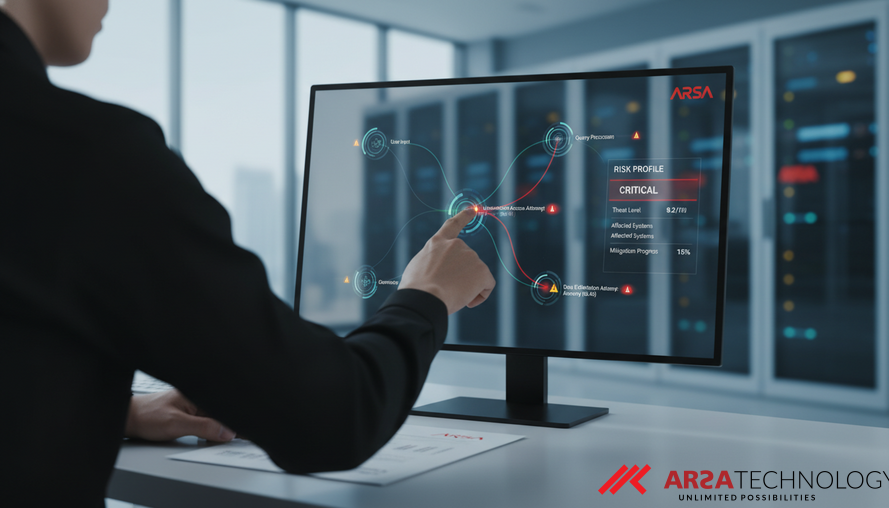
Retrieval-Augmented Generation (RAG) systems are rapidly becoming indispensable across critical sectors like healthcare, law, and finance. These powerful AI solutions combine the reasoning capabilities of Large Language Models (LLMs) with up-to-date, domain-specific knowledge bases, effectively overcoming common LLM limitations such as factual inaccuracies (hallucinations) and outdated information. By retrieving relevant contextual information before generating responses, RAG systems ground their outputs in verifiable evidence, making them invaluable for precision-demanding applications.
However, this integration with external, often sensitive, knowledge stores significantly expands the attack surface, introducing a new set of complex security challenges. As RAG systems handle private and proprietary data, they become prime targets for various adversarial tactics. Mitigating these risks without crippling system performance has emerged as a critical concern for enterprises leveraging these advanced AI capabilities.
Understanding Multi-Vector Threats in RAG Systems
The enhanced capabilities of RAG systems come with inherent vulnerabilities that extend beyond those of standalone LLMs. Adversaries can target both the retrieval mechanism and the underlying knowledge base, posing substantial threats to data privacy, integrity, and confidentiality. The academic paper "Adaptive Defense Orchestration for RAG: A Sentinel-Strategist Architecture Against Multi-Vector Attacks" highlights several critical attack vectors that demand robust solutions (Pallerla et al., 2026).
One prominent threat is Membership Inference Attacks (MIAs). In an MIA, an attacker attempts to determine if a specific sensitive document was part of the training data or knowledge base, often by carefully crafted queries. This can expose confidential information, undermining data privacy. Another significant concern is Data Poisoning, where malicious actors inject deliberately misleading or harmful documents into the knowledge base. These poisoned documents can then be surfaced by the retriever in response to specific trigger queries, influencing the LLM's generation towards attacker-controlled outputs and compromising data integrity. Finally, Content Leakage occurs when the RAG system inadvertently reproduces verbatim or near-verbatim segments from private retrieved documents, directly exposing confidential information.
The Security-Utility Paradox of Static Defenses
A common initial reaction to these threats is to activate all available security defenses simultaneously, creating an "always-on" defense stack. While intuitively appealing for maximum protection, this approach often leads to a severe degradation of system utility, creating what researchers call the "security-utility paradox." In real-world deployments, the overhead incurred by indiscriminately applying multiple defense mechanisms can be substantial.
For example, constantly perturbing query-document similarity scores for differential privacy (DP-RAG), aggressively filtering semantic outliers, and conservatively pruning relevant context can cumulatively disrupt the RAG pipeline. The paper's experiments reveal that a static full-defense stack can reduce contextual recall—the ability to retrieve relevant information—by more than 40%. This drastic reduction means the LLM generator is "starved" of sufficient context, severely impairing its ability to fulfill its intended tasks, even if the LLM itself remains technically unimpaired. This performance penalty makes an always-on defense impractical for many high-stakes enterprise applications that rely on timely and accurate responses.
Introducing the Sentinel-Strategist Architecture
To overcome the security-utility paradox, a novel framework called Adaptive Defense Orchestration (ADO) has been proposed, embodied by the Sentinel-Strategist architecture. This modular framework intelligently separates the assessment of risk from the enforcement of defense mechanisms. Instead of applying every defense to every query, ADO dynamically activates only those defenses warranted by the current threat level, preserving retrieval quality for benign operations while strengthening protection against detected adversarial signals.
This two-stage orchestrator mirrors the principles of Zero Trust Architecture (ZTA), where a centralized policy decision point continuously evaluates contextual risk. In the ADO model, the Sentinel acts as a continuous monitoring agent, and the Strategist serves as the dynamic policy enforcer. This conceptual separation streamlines auditing, allows for independent evolution of detection and defense components, and ensures more agile and resource-efficient security posture in RAG systems. This kind of intelligent monitoring and response system can be integrated into broader AI Video Analytics solutions for comprehensive security oversight.
How Sentinel and Strategist Collaborate for Adaptive Security
The Sentinel-Strategist architecture operates by creating a feedback loop between threat detection and defense deployment. The Sentinel continuously monitors lightweight signals within the RAG pipeline. These signals can include, for instance, the lexical overlap of a user query with known sensitive terms, or the vector-space dispersion among retrieved documents, which might indicate an attempt to probe the knowledge base. The Sentinel compresses these observations into a structured, per-query risk profile, providing a concise summary of potential threats.
Once a risk profile is generated, the Strategist takes over. It maps this profile to specific, targeted defense configurations across various enforcement hooks within the RAG pipeline. For example, if the Sentinel detects a high risk of membership inference, the Strategist might dynamically enable or tighten differentially private retrieval (DP-RAG) mechanisms. If data poisoning is suspected, it could activate TrustRAG-style clustering to filter out semantic outliers. For potential content leakage, attention-variance filters could be deployed to prune overly dominant context before the LLM generates its response. This dynamic and contextual activation ensures that system utility is preserved for legitimate queries, while robust defenses are deployed precisely when needed. Implementing such sophisticated intelligence often requires custom solutions, and providers like ARSA Technology excel in developing custom AI solutions tailored to specific security and operational needs.
Practical Benefits and Business Impact
The adaptive nature of the Sentinel-Strategist architecture yields significant practical benefits and positive business outcomes for enterprises deploying RAG systems. By eliminating the "security-utility paradox," organizations can achieve robust security without the crippling performance penalties of static defenses.
- Enhanced Security: The ADO framework has been shown to effectively eliminate multi-vector attacks (MBAs) such as membership inference leakage. For data poisoning, the strongest ADO variants reduce attack success to near zero, providing a critical layer of protection for sensitive knowledge bases.
- Optimized Performance: By selectively deploying defenses, ADO substantially recovers retrieval utility compared to a static defense stack. Experiments indicate that contextual recall can be restored to more than 75% of the undefended baseline, ensuring that RAG systems remain highly effective and responsive for benign workloads. This efficiency is crucial for maintaining operational productivity.
- Cost Efficiency and ROI: Avoiding an "always-on" defense stack reduces computational overhead and processing delays, translating into lower operational costs. Preventing successful attacks also mitigates the potentially enormous financial and reputational costs associated with data breaches and compromised information.
- Improved Agility and Compliance: The decoupled design of Sentinel and Strategist makes the control policy easier to audit and recalibrate as new threats emerge or regulatory requirements (like GDPR or HIPAA for privacy-sensitive data) evolve. This adaptive posture ensures long-term scalability and compliance readiness. For edge deployments where quick, localized decisions are paramount, solutions like the ARSA AI Box Series can facilitate the on-site processing required for such dynamic defense orchestration.
Conclusion
The advent of Retrieval-Augmented Generation (RAG) systems has revolutionized how Large Language Models interact with real-world knowledge, but it has also brought complex security challenges. The conventional wisdom of "more security is always better" proves counterproductive, leading to a significant trade-off in system utility. The innovative Sentinel-Strategist architecture, detailed in recent research, presents a compelling solution, demonstrating that adaptive, query-aware defense can drastically reduce this security-utility trade-off. By intelligently monitoring for threats and dynamically deploying targeted defenses, enterprises can safeguard their sensitive data while maintaining the high performance and reliability essential for mission-critical operations.
For organizations looking to implement robust, adaptive AI security solutions for their RAG systems, it's crucial to partner with experts who understand both advanced AI and real-world deployment challenges. Explore ARSA's enterprise AI solutions and contact ARSA for a free consultation on securing your AI deployments.