Advancing AI: Reconstructing 4D Hand-Articulated-Object Interactions from Single Videos
Explore ArtHOI, an AI framework leveraging foundation models to reconstruct complex 4D hand-articulated-object interactions from monocular videos, enhancing applications in robotics, AR, and human behavior analysis.

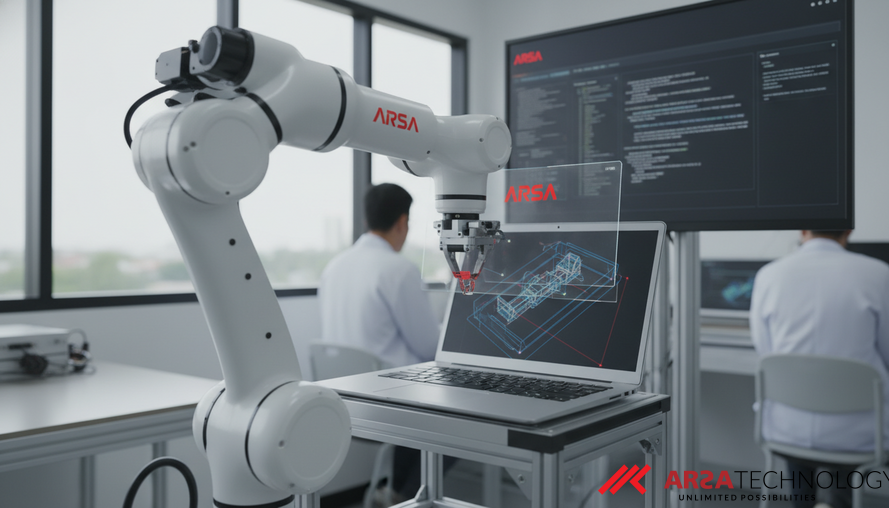
The Untapped Potential of 4D Hand-Object Interaction Analysis
Understanding how humans interact with objects is fundamental to numerous advanced technological applications, from intuitive human-robot collaboration and immersive augmented reality experiences to detailed human behavior analysis for safety and efficiency. This field, known as Hand-Object Interaction (HOI) reconstruction, traditionally focuses on creating a physically realistic 3D representation of hands, objects, and their interplay. However, a significant frontier remains largely unexplored: the accurate 4D reconstruction of interactions with articulated objects—those with multiple moving parts, such as scissors, eyeglasses, or laptops—from a single video source. Existing methods often fall short, requiring predefined object templates, prior 3D scans, or multiple camera views, which severely limits their utility in dynamic, real-world scenarios.
The core challenge lies in extracting comprehensive 4D (3D shape plus movement over time) data from a single monocular RGB video, a task inherently difficult due to limited visual cues and frequent occlusions. Imagine trying to precisely map the intricate movements of fingers manipulating a hinge or lever from a standard 2D video feed alone. This "ill-posed problem" is precisely where human intuition excels, drawing on vast accumulated experience. Inspired by this cognitive ability, new research is exploring how to harness the extensive "knowledge" embedded within modern AI foundation models to tackle this complex reconstruction task.
Leveraging Foundation Models: Beyond Simple Integration
Foundation models represent a paradigm shift in AI, offering powerful, pre-trained capabilities that can interpret various aspects of visual data. For 4D HOI reconstruction, these models can provide critical information: image-to-3D models can generate initial 3D shapes of objects, pose estimation models can calculate their 6-Degrees of Freedom (6-DoF) transformation (position and orientation) relative to the camera, and depth estimation models can infer metric geometry (real-world scale). Specialized models can reconstruct the 3D mesh of a hand, while Multimodal Large Language Models (MLLMs)—AI capable of understanding both visual content and text—can infer subtle interaction states and contact points between a hand and an object.
However, simply combining the outputs of these powerful models often leads to inaccurate or physically implausible results. For instance, image-to-3D models might produce a normalized object geometry that lacks true metric scale, making it impossible to accurately place the object in the real world. Furthermore, even if the object's 4D representation is largely correct, merely overlaying it with a reconstructed hand mesh can result in unrealistic outcomes like interpenetration (where the hand passes through the object) or disjointed contact due to spatial misalignments. This is where innovation is needed to "tame" these foundation models and integrate their priors into a coherent, physically accurate reconstruction.
ArtHOI's Innovations for Real-World Accuracy
A new framework called ArtHOI (from the paper "ArtHOI: Taming Foundation Models for Monocular 4D Reconstruction of Hand-Articulated-Object Interactions") introduces an optimization-based approach to resolve these inconsistencies and mismatches. ArtHOI's key contributions are two novel methodologies designed to ensure both accuracy and physical plausibility in 4D HOI reconstructions:
- Adaptive Sampling Refinement (ASR): This method precisely estimates an object's real-world metric scale and its 6-DoF pose. By optimizing these parameters, ASR correctly grounds the object's normalized 3D mesh within the actual world space, a crucial step for accurate motion reconstruction.
- MLLM-Guided Hand-Object Alignment: ArtHOI employs Multimodal Large Language Models (MLLMs) to infer detailed, frame-wise contact states between the hand and the object, down to individual fingers. This rich contact information then serves as optimization constraints, jointly refining the object's scale and the hand's pose to improve their spatial alignment and prevent unrealistic interactions. This ensures that the reconstructed interaction respects physical boundaries and contact points.
These innovations address the critical gaps in integrating disparate AI outputs, transforming raw foundation model predictions into a coherent and physically realistic understanding of complex hand-object dynamics.
The ArtHOI Pipeline: A Step-by-Step Approach
The ArtHOI framework operates through a meticulously structured four-stage pipeline, transforming a monocular video into a precise 4D interaction model:
1. Data Preprocessing: This initial stage leverages various vision models to extract essential information. This includes generating masks for hands and objects, estimating metric depths (true distances), and determining camera parameters. Crucially, a video inpainting model is used to intelligently restore parts of the object that might be temporarily hidden (occluded) by the interacting hand, providing a complete view for later stages.
2. Canonical Object Mesh Reconstruction: An image-to-3D model generates an initial 3D mesh of the object in a normalized, generic form. This is where ArtHOI's ASR method comes into play, scaling and orienting this mesh precisely in the world space, thus preparing it for accurate motion tracking.
3. Part-wise Object Motion Reconstruction: For articulated objects, understanding the movement of each individual part is vital. ArtHOI initializes coarse motion trajectories for each object part using a dense tracking model. These trajectories, combined with information about which parts are visible at any given moment, are then optimized to determine the precise SE(3) transformations (combined rotation and translation) for each part over time.
4. Hand-Object Alignment and Refinement: Finally, the hand's 3D mesh is reconstructed. The complex interaction between the hand and the articulated object is then refined using the MLLM-guided alignment method. By using contact reasoning as a constraint, the system ensures that the hand and object meshes interact in a physically plausible way, without interpenetration or unnatural separation. This level of granular analysis is similar to how AI Video Analytics can monitor complex scenarios.
Real-World Impact and Business Implications
The ability to accurately reconstruct 4D hand-articulated-object interactions from standard video has profound implications across numerous industries:
- Robotics: Enhanced understanding of human manipulation allows for the development of more sophisticated and adaptable robotic grippers and manipulation algorithms. Robots can learn to handle tools and objects with greater dexterity, mimicking human precision, which is crucial for advanced manufacturing or logistics tasks.
- Augmented Reality (AR) & Virtual Reality (VR): Creating truly immersive AR/VR experiences relies on seamless interaction with virtual objects. This technology can enable highly realistic digital twins of real-world interactions, making AR applications more intuitive and believable.
- Human Behavior Analysis: In environments like industrial settings, healthcare, or public safety, understanding detailed interactions can reveal safety hazards, optimize workflows, or even detect suspicious activities. For example, monitoring how workers interact with complex machinery can inform training programs or redesigns to reduce risk.
- Product Design & Ergonomics: Designers can gain unprecedented insights into how users naturally interact with prototypes, identifying ergonomic issues or opportunities for improvement before physical production.
ArtHOI's robustness and effectiveness have been validated through extensive experiments on new datasets (ArtHOI-RGBD and ArtHOI-Wild), demonstrating superior performance even against methods relying on pre-scanned object geometry. This underscores the potential for deploying advanced AI at the edge, leveraging systems like the ARSA AI Box Series, to bring such powerful analytics directly to operational environments. For organizations seeking to integrate such cutting-edge capabilities, custom AI solutions can be tailored to specific operational needs.
Conclusion: Bridging the Gap Between Research and Application
The ArtHOI framework represents a significant leap in computer vision, demonstrating how to effectively integrate and refine outputs from powerful foundation models to solve a complex, previously ill-posed problem. By enabling accurate 4D reconstruction of hand-articulated-object interactions from simple monocular video, this research unlocks new possibilities for intelligent systems across diverse sectors. ARSA Technology, experienced since 2018, focuses on transforming such advanced AI research into practical, production-ready solutions that deliver measurable impact for enterprises and governments globally.
To explore how advanced AI and IoT solutions can transform your operations and create competitive advantages, we invite you to contact ARSA for a free consultation.