Advancing Autonomous Driving: The Power of Neuro-Symbolic AI for Safe and Interpretable Navigation
Explore a neuro-symbolic AI framework that combines inductive and deductive reasoning for safer, more interpretable autonomous driving. Learn how LLMs and ASP deliver robust, kinematically feasible trajectories.

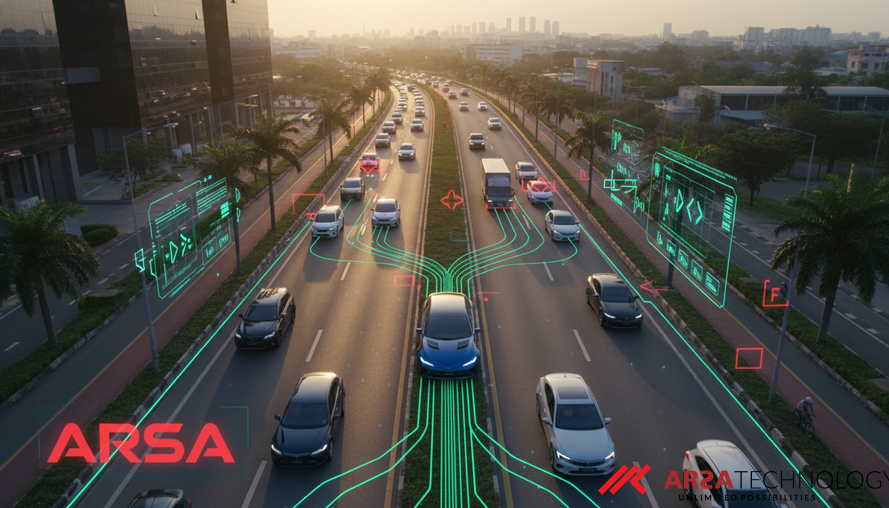
Autonomous driving systems hold immense promise, but their widespread adoption hinges on ironclad safety and reliability. Current state-of-the-art end-to-end models, while powerful, primarily rely on "black-box" neural networks that learn solely from vast amounts of data—a process known as inductive reasoning. While effective in common scenarios, this approach struggles with rare, complex, or unforeseen situations, often leading to unpredictable and potentially unsafe driving decisions that are difficult to debug or explain. This challenge necessitates a fundamental shift in how autonomous vehicles plan their movements.
To address these limitations, a novel neuro-symbolic trajectory planning framework has been proposed that seamlessly integrates rigorous deductive reasoning into end-to-end neural networks. This innovative approach moves beyond purely data-driven methods by incorporating explicit logic and rules, similar to how human drivers combine intuition with traffic laws. The goal is to create a system that not only learns from experience but also reasons logically, ensuring both performance and safety in a dynamic and unpredictable world. The research, titled "A Neuro-Symbolic Framework Combining Inductive and Deductive Reasoning for Autonomous Driving Planning," outlines a comprehensive system for achieving this balance. The full paper can be accessed at arXiv:2603.12421.
The Limitations of Purely Inductive AI in Autonomous Driving
Traditional end-to-end autonomous driving systems typically map raw sensor inputs directly to a vehicle's planned trajectory using a single, unified neural network. While impressive advancements have been made in perception, prediction, and planning, purely inductive models face significant theoretical hurdles. Because these systems learn patterns from data, they often lack an inherent understanding of common sense, physical laws, or explicit traffic rules. When encountering situations outside their training data, known as "out-of-distribution" scenarios, these black-box networks can generate trajectories that are illogical, unsafe, or kinematically impossible.
Furthermore, the opaque nature of purely inductive AI makes error attribution challenging. If a trajectory planning failure occurs, it's incredibly difficult for researchers or engineers to pinpoint why the system made a particular decision, hindering improvements and safety certifications. Previous attempts to mitigate these issues, such as simple displacement regression (which can lead to physically infeasible movements) or post-processing collision checks, only address symptoms without solving the underlying problem of lacking logical constraint during the planning process itself.
Integrating Deductive Reasoning with Neuro-Symbolic AI
The proposed neuro-symbolic framework tackles these dilemmas by combining the strengths of both inductive (data-driven) and deductive (logic-driven) reasoning. At its core, it leverages a Large Language Model (LLM) to dynamically interpret complex road scenes and extract relevant rules, effectively translating visual cues into a symbolic understanding of the environment. These extracted rules are then fed into an Answer Set Programming (ASP) solver, a form of declarative programming designed for knowledge representation and logical reasoning. The ASP solver, using a tool like Clingo, performs deterministic logical arbitration, generating safe, traceable, and discrete driving decisions (e.g., "turn left," "maintain speed limit," "yield").
This two-pronged approach ensures that decisions are not only contextually informed by the LLM but also rigorously consistent with predefined logical rules, overcoming the limitations of static, manually formulated rule sets or the potential for logical inconsistencies in LLM-only reasoning. This dynamic, adaptive rule extraction combined with formal logical arbitration represents a significant step towards more reliable autonomous decision-making. Enterprises seeking to integrate advanced AI capabilities into their operations can explore robust solutions like ARSA's Custom AI Solutions, which prioritize both performance and interpretability.
Bridging the Gap: Discrete Logic to Continuous Trajectories
One of the primary challenges in integrating symbolic logic with neural networks is bridging the gap between discrete logical decisions and continuous physical actions. The neuro-symbolic framework addresses this through a novel decision-conditioned decoding mechanism. The high-level logical decisions from the ASP solver are transformed into learnable embedding vectors, which then simultaneously constrain the planning query of the neural network and the physical initial velocity for trajectory generation.
To ensure physical realism, the framework introduces a differentiable Kinematic Bicycle Model (KBM). This KBM generates a physically feasible baseline trajectory that inherently satisfies fundamental kinematic constraints (e.g., turning radius, acceleration limits). The neural network then provides residual corrections—small, data-driven adjustments—to fine-tune this baseline trajectory, compensating for any modeling inaccuracies in the KBM. This combined approach guarantees that the generated trajectories are not only logically sound but also physically executable, providing a high degree of transparency and safety. The use of edge AI systems, such as ARSA's AI Box Series, could further enhance the real-time processing and low-latency requirements for such complex calculations in autonomous vehicles.
Superior Performance and Enhanced Safety
The efficacy of this neuro-symbolic framework has been demonstrated through rigorous testing. On the challenging nuScenes benchmark, the method showcased significant improvements over existing state-of-the-art purely inductive baselines, specifically MomAD. The framework substantially reduced the L2 mean error, a measure of the average deviation between predicted and actual trajectories, to an impressive 0.57 meters. Crucially, it dramatically decreased the collision rate to a mere 0.075%, a vital metric for autonomous driving safety. Furthermore, the trajectory prediction consistency (TPC), which measures the smoothness and stability of the predicted path over time, was optimized to 0.47 meters, indicating more reliable and comfortable driving experiences.
These results underscore the framework's ability to generate logically coherent and physically feasible planning behavior without overly relying on the sheer volume of training data. By integrating a dynamic LLM-ASP reasoning engine with a decision-conditioned physical residual decoder, this approach offers a path towards autonomous driving systems that are not only high-performing but also interpretable, safe, and adaptable to a wider range of real-world scenarios. This type of robust AI video analytics forms the backbone of advanced situational awareness in complex environments.
The neuro-symbolic approach represents a crucial evolution in autonomous driving AI, moving beyond the limitations of "black-box" systems. By combining the powerful pattern recognition of neural networks with the precision and interpretability of logical reasoning, it paves the way for a new generation of self-driving vehicles that can navigate the world with unprecedented safety, reliability, and human-like understanding.
To explore how ARSA Technology can assist your enterprise in deploying advanced AI and IoT solutions, from complex decision intelligence to real-time analytics, we invite you to contact ARSA for a free consultation.