Advancing Biomedical Imaging: The Power of AI in Photoacoustic Tomography with Time-Dependent Damping
Explore how AI-driven photoacoustic tomography, utilizing time-dependent damping models and CNN-guided inversion, is revolutionizing medical imaging for accurate disease detection.

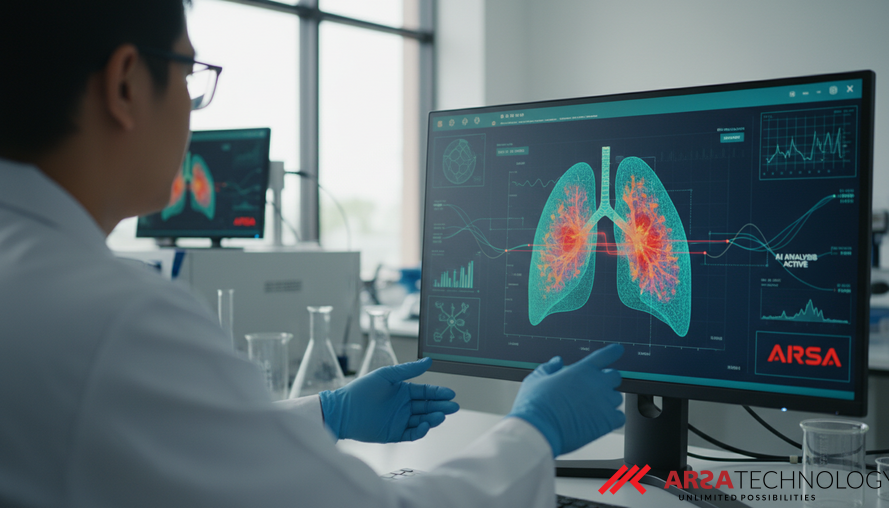
Revolutionizing Biomedical Imaging with Advanced AI and Photoacoustic Tomography
Biomedical imaging is a cornerstone of modern medicine, providing invaluable insights into the human body for diagnosis, treatment planning, and research. Among the array of sophisticated techniques, Photoacoustic Tomography (PAT) stands out as a promising hybrid modality. PAT combines the high contrast of optical imaging, which reveals how light interacts with tissues, with the high resolution of ultrasound imaging, which captures sound waves. This synergy offers a powerful tool for detecting and characterizing various conditions, from early-stage cancers to cardiovascular diseases. However, accurately interpreting PAT signals in real biological tissues presents significant challenges, particularly due to the complex way sound waves lose energy as they travel through different biological structures.
A recent academic paper, "Photoacoustic tomography with time-dependent damping: Theoretical and a convolutional neural network-guided numerical inversion procedure," delves into these complexities. It proposes a groundbreaking approach that models acoustic attenuation with a time-dependent damping term and employs a convolutional neural network (CNN) to guide the image reconstruction. This research represents a significant leap towards more accurate and reliable PAT, moving beyond simplified models to capture the intricate realities of biological media.
Understanding Photoacoustic Tomography (PAT)
At its core, PAT is a non-invasive imaging technique that works in two stages. First, a short pulse of non-ionizing laser light illuminates biological tissue. As the light propagates, a fraction of its energy is absorbed by molecules within the tissue, such as hemoglobin in blood or melanin in skin. This absorption causes rapid, localized heating, leading to a slight thermoelastic expansion of the tissue. This expansion generates transient ultrasound waves, known as photoacoustic waves.
In the second stage, these ultrasound waves propagate outward from their source and are detected by ultrasound transducers positioned on the surface of the tissue. By recording these acoustic signals, PAT aims to reconstruct the initial pressure distribution within the tissue, which is directly proportional to the absorbed optical energy. This initial pressure map serves as a "fingerprint" of the tissue's optical properties, offering crucial information for diagnostic purposes. Unlike traditional optical tomography, which often suffers from poor spatial resolution due to light scattering, PAT leverages sound waves that scatter much less, resulting in much sharper, higher-fidelity images.
The Challenge of Acoustic Attenuation in Biological Tissues
While PAT offers superior resolution, it’s not without its hurdles. One of the most critical challenges is acoustic attenuation – the phenomenon where ultrasound waves lose energy as they travel through biological tissue. This energy loss is due to various mechanisms, including absorption, scattering, and viscous losses, which can significantly distort the measured signals. If not properly accounted for, this attenuation can lead to systematic artifacts, blurred images, and a substantial loss of resolution in the reconstructed images.
Many earlier mathematical models for PAT, while capturing aspects like finite-speed propagation and variable sound speeds, often overlooked these intrinsic attenuation mechanisms or made simplifying assumptions, such as constant sound speed throughout the tissue. In reality, sound speed varies considerably across different tissue types, and the rate at which acoustic waves dampen can also change dynamically. Addressing this complexity is crucial for achieving truly accurate and high-fidelity photoacoustic images.
A New Model for Real-World Accuracy: Time-Dependent Damping
To tackle the complexities of acoustic attenuation, this research introduces a more sophisticated model: a damped wave equation featuring a spatially varying sound speed and, crucially, a time-dependent damping term. Imagine sound traveling at different speeds through various types of tissue, and the way this energy loss changes over time. This new model, expressed mathematically as a Cauchy problem, offers a more realistic representation of how pressure waves behave in heterogeneous biological media. The damping function, which is smooth and strictly positive, specifically accounts for cumulative attenuation phenomena like absorption and viscous losses, providing a finer-grained understanding of signal degradation.
This improved mathematical framework is pivotal because it moves beyond the limitations of constant damping assumptions, which simplify the real-world physics of sound propagation in tissue. By embracing time-dependent damping, researchers can now more accurately model the intricate interactions between sound waves and biological structures. This precision is essential for robust image reconstruction, particularly in environments where traditional time-reversal techniques, effective for constant damping, no longer apply directly.
Unlocking the Data: The Advanced Inversion Procedure
The core mathematical task in PAT is an inverse problem: how to reconstruct the initial pressure distribution (and thus the absorbed optical energy) inside the tissue from only the acoustic signals measured at the boundary. With the introduction of time-dependent damping, this problem becomes significantly more complex. The research makes two key contributions to solving this:
First, it establishes a uniqueness result, demonstrating that the initial pressure distribution is uniquely determined by the boundary measurements, even with a general time-dependent damping term. This theoretical proof, achieved through techniques like harmonic extension and eigenfunction expansion, ensures that a unique solution exists, providing a solid foundation for reconstruction. Second, for the special case of constant damping—a scenario still highly relevant in many practical applications—the paper derives an explicit series reconstruction formula. This formula allows for direct calculation of the initial pressure using time-convolutions of the measured data and its derivatives, offering a clear path to analytical reconstruction.
AI for Practical Image Reconstruction: The CNN-Guided Approach
For practical numerical reconstruction, especially in highly attenuating PAT, the paper introduces a robust, gradient-free numerical method. This method is based on Pontryagin's maximum principle (PMP) and implemented via the sequential quadratic Hamiltonian (SQH) algorithm. These are advanced optimization techniques designed to solve complex, non-smooth optimal control problems, which are directly applicable to inverse problems in imaging. The gradient-free nature of this approach makes it particularly resilient to noise and complexities inherent in real-world biological signals.
Crucially, the research further leverages a convolutional neural network (CNN) to guide this numerical inversion procedure. CNNs are highly effective in pattern recognition and feature extraction from complex data, making them invaluable for image reconstruction tasks. By integrating a CNN, the inversion process becomes significantly more robust and computationally viable. The network can learn to compensate for various forms of signal distortion and attenuation artifacts, providing intelligent guidance to the gradient-free optimization algorithm. This results in more accurate and artifact-free reconstructions of the initial pressure distribution, enhancing the diagnostic quality of PAT images. This novel combination ensures that the reconstructed images are not only mathematically sound but also practically achievable in demanding clinical settings.
The Impact on Biomedical Imaging and Beyond
The implications of this research are profound for the field of biomedical imaging. By accurately accounting for time-dependent acoustic attenuation and employing AI-guided inversion, PAT systems can deliver significantly more precise images of biological tissues. This enhanced accuracy can lead to:
- Improved Cancer Diagnosis: More reliable detection of malignant tissues, which often have distinct optical and acoustic properties.
- Better Disease Characterization: Deeper insights into tissue composition and physiological processes, aiding in the understanding and staging of various diseases.
- Enhanced Treatment Monitoring: The ability to monitor treatment efficacy non-invasively, providing real-time feedback to clinicians.
- Reduced Reconstruction Artifacts: Cleaner, sharper images mean less ambiguity for medical professionals, leading to more confident diagnoses and fewer false positives.
For enterprises looking to integrate cutting-edge AI into their medical diagnostic tools or industrial inspection systems, this research highlights the importance of sophisticated modeling and AI-driven optimization. Companies like ARSA Technology, with experience since 2018 in delivering production-ready AI and IoT systems, are at the forefront of translating such sophisticated research into deployable solutions. Their expertise in AI Video Analytics and custom AI solutions, including the deployment of edge AI for real-time processing, makes them well-equipped to handle the complex data processing and optimization required for next-generation imaging technologies.
This academic breakthrough provides a robust framework for developing advanced PAT systems that overcome long-standing challenges. It underscores the critical role of theoretical rigor combined with practical AI implementation in pushing the boundaries of medical diagnostics and other fields requiring high-fidelity imaging.
To explore how ARSA Technology can help your organization leverage advanced AI and IoT for mission-critical applications, including complex image processing and analytics, we invite you to schedule a free consultation with our expert team.