Advancing Cancer Immunotherapy: AI-Powered Data Augmentation for CAR-T/NK Cell Imaging
Explore how new AI data augmentation methods are revolutionizing CAR-T/NK cell immunotherapy research by enhancing image analysis for critical cancer biomarkers.

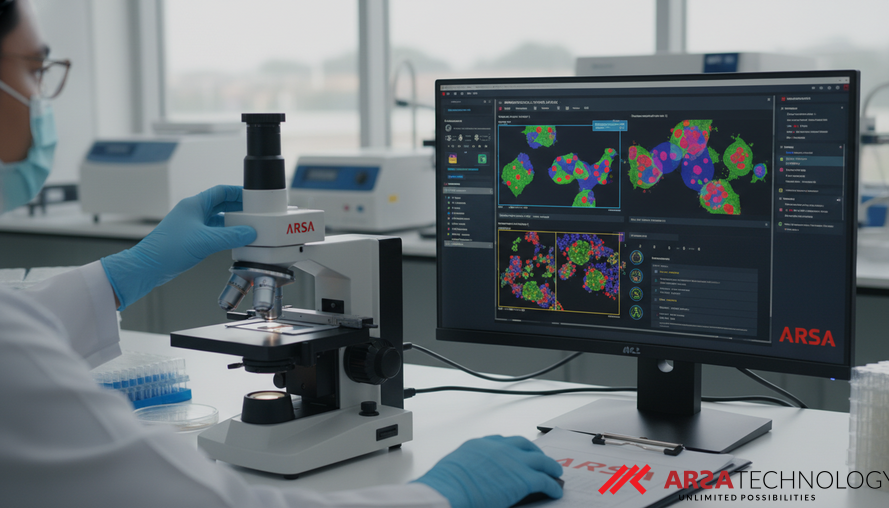
Cancer immunotherapies, particularly those involving Chimeric Antigen Receptor (CAR)-T and Natural Killer (NK) cells, represent a monumental leap in cancer treatment. These groundbreaking therapies harness the body's immune system to fight malignant cells, offering new hope for patients. A critical aspect of evaluating the success of these treatments lies in understanding the "immunological synapse" (IS) – the vital junction where CAR-T or NK cells interact with cancer cells. The quality of this interaction is increasingly recognized as a potential biomarker for predicting how effectively a patient will respond to therapy.
To accurately assess these intricate cellular interactions, researchers rely heavily on advanced imaging techniques and quantification. Artificial Neural Networks (ANNs) have emerged as powerful tools for detecting and segmenting IS structures within microscopy images, promising to make the process faster and more reliable than manual methods. However, the development of robust ANNs for this purpose faces a significant hurdle: the limited availability of high-quality, annotated microscopy datasets. This scarcity of data often restricts an ANN's ability to learn and generalize effectively, thereby impacting its accuracy and reliability. This article delves into how advanced data augmentation strategies are addressing this challenge, revolutionizing the way we approach CAR-T/NK IS image analysis, as detailed in recent research (Zhang et al., 2026, arXiv:2602.00949).
The Challenge of Limited Data in Biomedical Imaging
In biomedical research, particularly when dealing with microscopic images of cells, acquiring vast, precisely annotated datasets is incredibly challenging. Manual annotation of thousands of images, detailing the exact boundaries and characteristics of cellular structures like the immunological synapse, is a labor-intensive, time-consuming, and often subjective process. Yet, machine learning models, especially deep learning-based ANNs, thrive on large, diverse datasets to achieve high accuracy and the ability to generalize across different samples and conditions.
Traditional data augmentation techniques, such as cropping, flipping, or adjusting image brightness, offer a partial solution by creating variations of existing images. More advanced methods, like Generative Adversarial Networks (GANs), can synthesize new images. However, many existing augmentation methods struggle to generate images with both visual realism and accurate segmentation masks – the precise outlines that define objects within an image. For critical tasks like detecting and segmenting specific cell structures, these masks are paramount. Distorted or biologically implausible synthetic samples can inadvertently introduce noise, degrading the model's performance and leading to unreliable outcomes. This calls for a sophisticated approach that can generate new, diverse, and anatomically faithful data.
Introducing Next-Generation Data Augmentation Frameworks
To overcome these limitations, researchers have developed two complementary data augmentation frameworks: Instance Aware Automatic Augmentation (IAAA) and Semantic-Aware AI Augmentation (SAAA). These methods work in tandem to expand limited microscopy datasets, enabling ANNs to achieve superior performance in CAR-T/NK IS detection and segmentation.
The first approach, Instance Aware Automatic Augmentation (IAAA), is an automated method designed to generate synthetic CAR-T/NK IS images along with their corresponding segmentation masks. IAAA applies carefully optimized augmentation policies to existing IS data, ensuring that the critical structural integrity and individual characteristics (instances) of the cellular objects are preserved. This is crucial for biomedical data, where even subtle distortions can lead to misinterpretations. IAAA is versatile, supporting various imaging modalities like fluorescence and brightfield, and can be directly applied to patient-derived samples, making it highly practical for real-world research.
Complementing IAAA, the Semantic-Aware AI Augmentation (SAAA) pipeline offers a powerful alternative for scalable image synthesis. SAAA leverages a combination of a diffusion-based mask generator and a Pix2Pix conditional image synthesizer. In simple terms, the diffusion-based mask generator creates diverse, anatomically realistic segmentation masks from scratch, providing a broad range of plausible cellular configurations. The Pix2Pix component then acts as a "conditional image synthesizer," taking these generated masks and translating them into high-fidelity CAR-T/NK IS images that are visually consistent with the underlying biological structures. This dual approach allows SAAA to generate an almost unlimited volume of diverse training data, going beyond what IAAA alone can provide.
Impact on Immunotherapy Research and Beyond
The combined power of IAAA and SAAA significantly enhances the robustness and accuracy of AI models used for immunological synapse quantification. By generating synthetic images that closely mimic real IS data in both visual and structural properties, these methods lead to substantial improvements in CAR-T/NK IS detection and segmentation performance. This advancement has profound implications for cancer immunotherapy:
- Improved Biomarker Development: More accurate and reliable IS quantification means researchers can develop more robust imaging-based biomarkers to predict patient response to CAR-T/NK immunotherapy. This allows clinicians to better identify which patients are most likely to benefit from these cutting-edge treatments.
- Accelerated Research and Drug Discovery: With reliable automated analysis, the pace of research can accelerate. Scientists can process and analyze vast numbers of cell images quickly, freeing up valuable time and resources for more complex tasks. This efficiency can shorten drug discovery cycles and bring new therapies to patients faster.
- Reduced Costs and Enhanced Efficiency: Automating image analysis reduces the need for extensive manual annotation, cutting down on operational costs and increasing throughput in labs. This aligns with the broader industry trend towards leveraging AI for efficiency, much like how ARSA's Self-Check Health Kiosk automates vital sign monitoring to reduce healthcare facility burdens and lower costs.
- Scalable AI Deployment: The ability to generate unlimited, high-fidelity data means that AI models for biomedical imaging can be trained to a far greater degree of sophistication and scale. This paves the way for wider deployment of AI-powered diagnostic and analytical tools in clinical settings. ARSA, as a provider of advanced AI Video Analytics, understands the critical importance of reliable data processing and analysis for effective real-world deployments across various industries, including healthcare.
By providing powerful tools to augment limited biomedical datasets, these innovative data augmentation techniques are driving forward the capabilities of AI in medical imaging. The implications extend far beyond the laboratory, offering a pathway to more precise diagnostics, personalized treatments, and ultimately, better outcomes for cancer patients. This research underscores the transformative potential of AI in tackling some of humanity's most pressing health challenges.
ARSA Technology is a trusted AI and IoT solutions provider with extensive experience in delivering practical, precise, and adaptive AI solutions for various industries, including healthcare. We understand the critical role of data quality and advanced analytics in deploying effective AI systems that enhance security, efficiency, and operational visibility.
To explore how ARSA Technology's AI and IoT solutions can support your organization's digital transformation journey, we invite you to connect with our experts. Schedule a free consultation to discuss your specific needs and discover tailored solutions.