AI drug discovery AI's Bold Foray into Drug Discovery: Opportunities and Realities Explore how leading AI firms are disrupting pharmaceutical R&D, the potential of AI in drug discovery, and the essential human element needed for real-world impact.
ECG recognition Advancing Cardiac Care: Domain Knowledge and Graph AI for Superior ECG Recognition Explore how integrating medical domain knowledge with Temporal-Spatial Graph Convolution Networks revolutionizes ECG analysis, enhancing detection for common and rare cardiac conditions.
Digital Pathology Revolutionizing Digital Pathology: Smarter WSI Indexing with Redundancy Reduction Discover how ARReST's innovative approach to whole-slide image patching drastically cuts storage costs and accelerates AI-driven diagnostics in digital pathology.
LLM manipulation Safeguarding Healthcare: Addressing LLM Manipulation and Ethical AI Deployment Explore the critical risks of Large Language Model manipulation in healthcare and how ethical frameworks and robust AI solutions are vital for secure, patient-centric deployments.
Neonatal HIE HRVConformer: Revolutionizing Neonatal HIE Classification with AI-Powered Heart Rate Analysis Explore HRVConformer, a novel deep learning architecture transforming neonatal Hypoxic-Ischemic Encephalopathy (HIE) classification using raw heart rate signals for earlier, more accurate diagnosis.
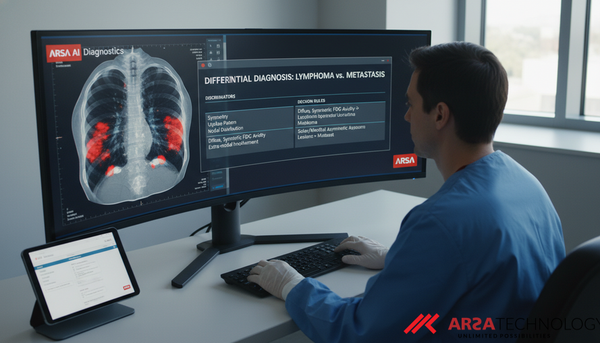
medical AI MedExpMem: Revolutionizing Medical Diagnosis with AI Experience Memory Discover MedExpMem, an innovative AI framework that equips medical Vision-Language Models with crucial differential diagnosis expertise by learning from past errors in a privacy-preserving manner.
AI in healthcare AI in Healthcare: Why "Perfect" Internal Metrics Aren't Enough for Clinical Deployment Explore why AI models with high internal accuracy often fail in real-world healthcare settings due to overlooked calibration, uncertainty, and deployment readiness. Learn key lessons for robust AI.
Interpretable AutoML Advancing Healthcare with Interpretable AutoML: A Framework for Reproducible Risk Prediction Explore a new log-driven AutoML framework for healthcare risk prediction, emphasizing reproducibility, interpretability, and pipeline optimization for challenging medical datasets.
AI in healthcare AI-Powered Forecasting: Revolutionizing Emergency Department Operations Through Predictive Boarding Time Analytics Explore how advanced AI forecasting models can predict emergency department boarding times, enabling hospitals to proactively manage congestion, reduce costs, and significantly improve patient care.
medical AI Bridging the Learnability Gap: Advancing AI for Rare Medical Conditions Discover the "learnability gap" in medical latent diffusion models and how innovative AI techniques are enhancing diagnostic accuracy for rare diseases. Explore practical applications and ARSA's role in delivering robust healthcare AI solutions.
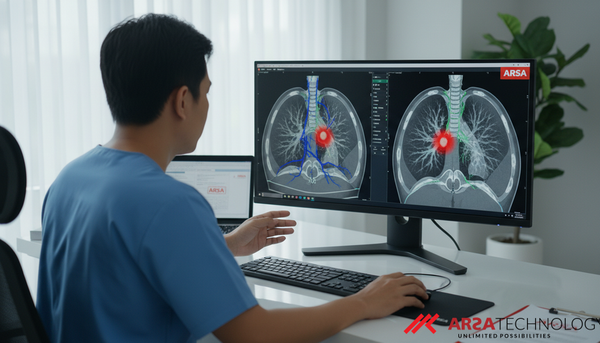
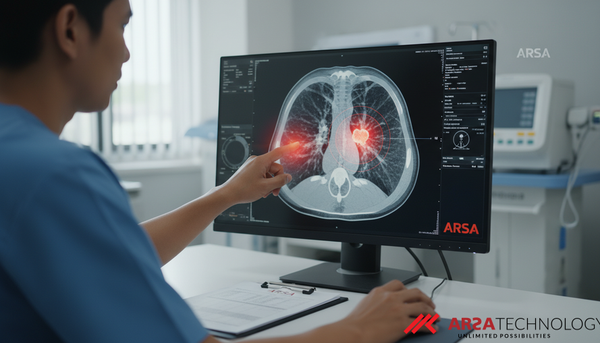
AI in healthcare Advancing Lung Cancer Screening: How Clinical-Inspired AI Networks Enhance Diagnostic Accuracy and Trust Explore M3Net, an AI-powered 3D network revolutionizing pulmonary nodule classification in CT scans. Discover how its clinically-inspired, multi-scale approach enhances explainability and diagnostic accuracy for early lung cancer detection.
Sleep stage classification Advancing Sleep AI: How Spectrograms and Domain Adaptation Improve Cross-Dataset Classification Explore STDA-Net, an innovative AI framework using EEG spectrograms and unsupervised domain adaptation to deliver robust, accurate sleep stage classification across diverse clinical datasets.
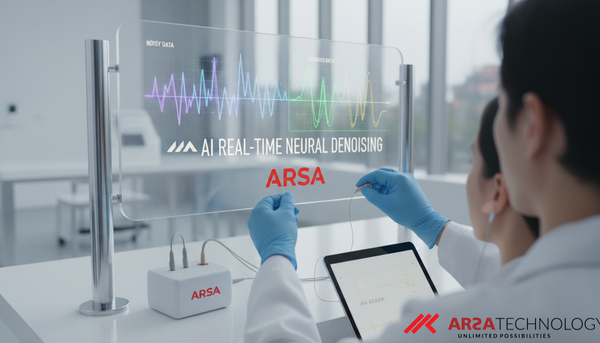
EEG denoising Unlocking Wearable EEG Potential: How Intelligent Partitioning Enables Unsupervised Deep Denoising Discover iPSD, an innovative AI method enabling unsupervised deep learning denoising for wearable EEG. Learn how it tackles noise challenges, improves diagnostic accuracy, and transforms health monitoring, even in low SNR environments.
CT image reconstruction AI Revolutionizes CT Image Reconstruction with Region-Adaptive MeanFlow Discover RA-CMF, a novel AI-powered approach for CT image reconstruction. Learn how conditional MeanFlow and reinforcement learning enhance diagnostic accuracy, reduce noise, and improve image quality for critical medical applications.
AI in healthcare Enhancing Healthcare AI Safety: A Dual-Stream Memory Architecture for Clinical Discrepancy Detection Discover how a Dual-Stream Memory Architecture and Reconciliation Engine can enhance the safety and accuracy of AI health coaching agents by reconciling patient self-reports with electronic health records.
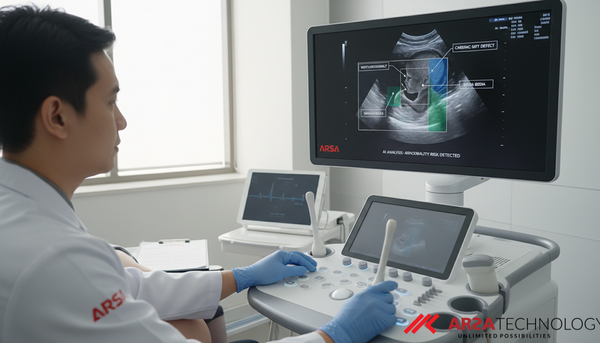
Healthcare AI startup Navigating Healthcare AI: Lessons from BioticsAI on FDA Approval and Sustainable Innovation Learn how BioticsAI secured FDA approval for its AI ultrasound copilot, offering crucial insights into regulatory strategy, investor relations, and team motivation for healthcare AI startups.
EEG decoding Mastering Real-World AI: Deep Learning's Quest for Cross-Subject Generalization in EEG Decoding Explore how deep learning tackles inter-subject variability in EEG decoding for applications like clinical diagnostics, motor imagery, and emotion recognition, ensuring robust AI performance.
PPG affect recognition Advancing Affect Recognition: A Deep Dive into PPG-Based Emotion Detection with AI Explore the latest deep learning architectures—CNN, Transformer, and Mamba—for PPG-based affect recognition from wearables. Understand their performance, practical implications, and optimal deployment for real-world emotional intelligence.
Patient-Trial Matching Revolutionizing Patient-Trial Matching: A Lightweight AI Approach for Scalable Healthcare Discover a new AI framework combining RAG and LLMs for efficient, scalable patient-trial matching. Reduce costs, improve accuracy, and accelerate clinical research with privacy-preserving solutions.
AI in healthcare Optimizing Psychiatric Intake: How AI-Driven Question Selection Transforms Clinical Information Recovery Explore how AI-driven adaptive questioning, developed in a Johns Hopkins study, revolutionizes psychiatric intake by optimizing information recovery from a large question bank, enhancing patient care.
AI in healthcare AI-Powered Glaucoma Detection: Revolutionizing Early Screening with Electronic Health Records Explore how deep learning algorithms, validated with EHR data, are transforming glaucoma detection, enabling scalable pre-screening and improving patient outcomes without specialized equipment.
Brain Network Analysis Enhancing Brain Network Analysis with LLM-Powered Graph Neural Networks: The BLEG Breakthrough Explore BLEG, a novel method integrating Large Language Models (LLMs) with Graph Neural Networks (GNNs) to overcome data limitations in fMRI brain network analysis for advanced neurological diagnostics.
AI in healthcare Navigating the AI Frontier in Health: Insights from NIH-Funded Research Explore key findings from an analysis of NIH-funded AI research, revealing funding trends, the gap between AI development and clinical deployment, and implications for health equity.
AI in healthcare AI Revolutionizes Surgical Prioritization: Unsupervised Learning for Medical Transcription Classification Discover how unsupervised neural networks classify surgical urgency levels from medical transcriptions using BioClinicalBERT, optimizing patient care and hospital efficiency.
Graph Neural Networks Unlocking Brain Secrets: How Graph Neural Networks Decode Visual Perception Explore how Graph Neural Networks (GNNs) analyze fMRI data to reveal how the brain processes visual categories. Learn about this advanced interpretable AI in neuroscience.